 Whalesbook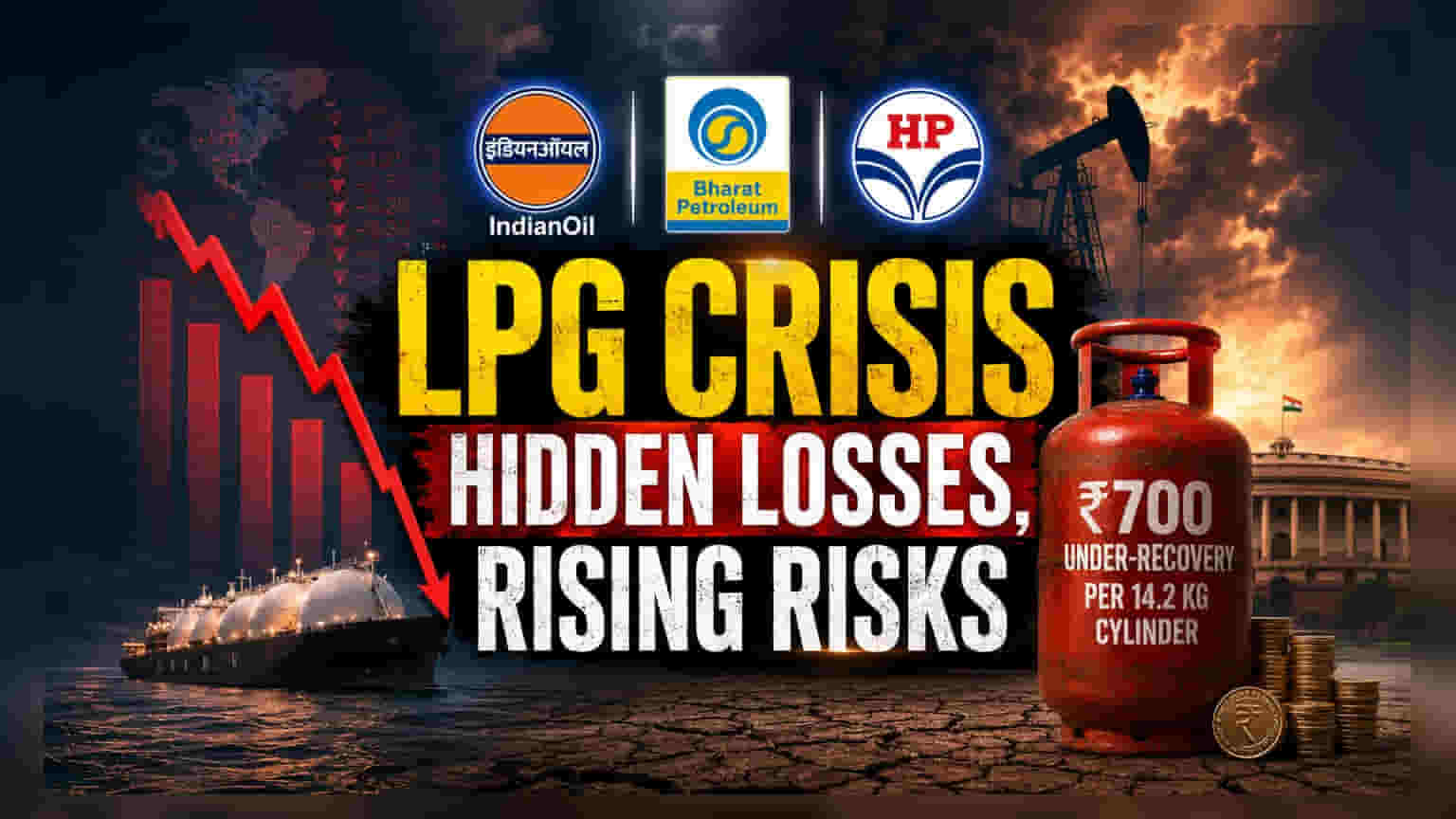


The Under-Recovery Crisis
While household LPG rates remain insulated from the full impact of volatile global energy markets, the financial burden on Oil Marketing Companies (OMCs) like Indian Oil Corporation (IOCL), Bharat Petroleum (BPCL), and Hindustan Petroleum (HPCL) has become increasingly critical. Recent data indicates that despite various government interventions and supply-side optimizations, these state-run entities continue to incur under-recoveries of nearly Rs 700 on every 14.2-kg domestic cooking gas cylinder sold. This figure highlights the persistent gap between the administered retail price and the actual cost of importing and distributing the fuel, which remains heavily dependent on international pricing benchmarks.
Assessing the Margin Compression
Marketing margins for these firms have faced significant strain throughout the current fiscal year. While FY26 saw a notable earnings rebound for companies like Indian Oil Corporation, that performance was largely driven by a combination of improved refining margins and the recognition of significant government compensation for LPG losses. Without these specific fiscal buffers, the operational impact of high global crude prices would have been significantly more severe. Industry analysts estimate that cumulative LPG under-recoveries for the sector reached roughly Rs 19,400 crore early in the current quarter, with total gross under-recoveries—including petrol and diesel—projected to reach over Rs 1 lakh crore if global crude prices sustain their current elevated levels above $100 per barrel.
The Forensic Bear Case
From an institutional perspective, the reliance on state intervention creates a structural vulnerability for OMC balance sheets. Unlike private competitors who can adjust prices freely based on market conditions, OMCs are effectively proxies for government energy policy. This restricts their ability to pass on costs to consumers, leading to periodic, sharp erosions in quarterly profitability. Furthermore, the mandatory 'One Household, One Connection' policy and income verification drives reflect a desperate effort to contain the subsidy burden, yet these measures are often insufficient against the backdrop of rising import dependency, which has climbed to approximately 59% in recent years. Should government compensation packages fall short of the actual under-recovery levels, these companies face a heightened risk of EBITDA pressure and diminished book value, complicating their ability to fund future capital expenditure requirements.
Future Outlook
Market participants continue to monitor the 1st-of-the-month pricing cycles for commercial LPG as a lead indicator for how the government may eventually navigate the domestic segment. With geopolitical instability in West Asia unlikely to subside in the immediate term, the sustainability of current domestic prices remains a point of contention for analysts. Forward-looking guidance depends heavily on the government’s willingness to sustain high subsidy outflows, particularly as the sector remains sensitive to any further widening of the cost-plus gap.