 Whalesbook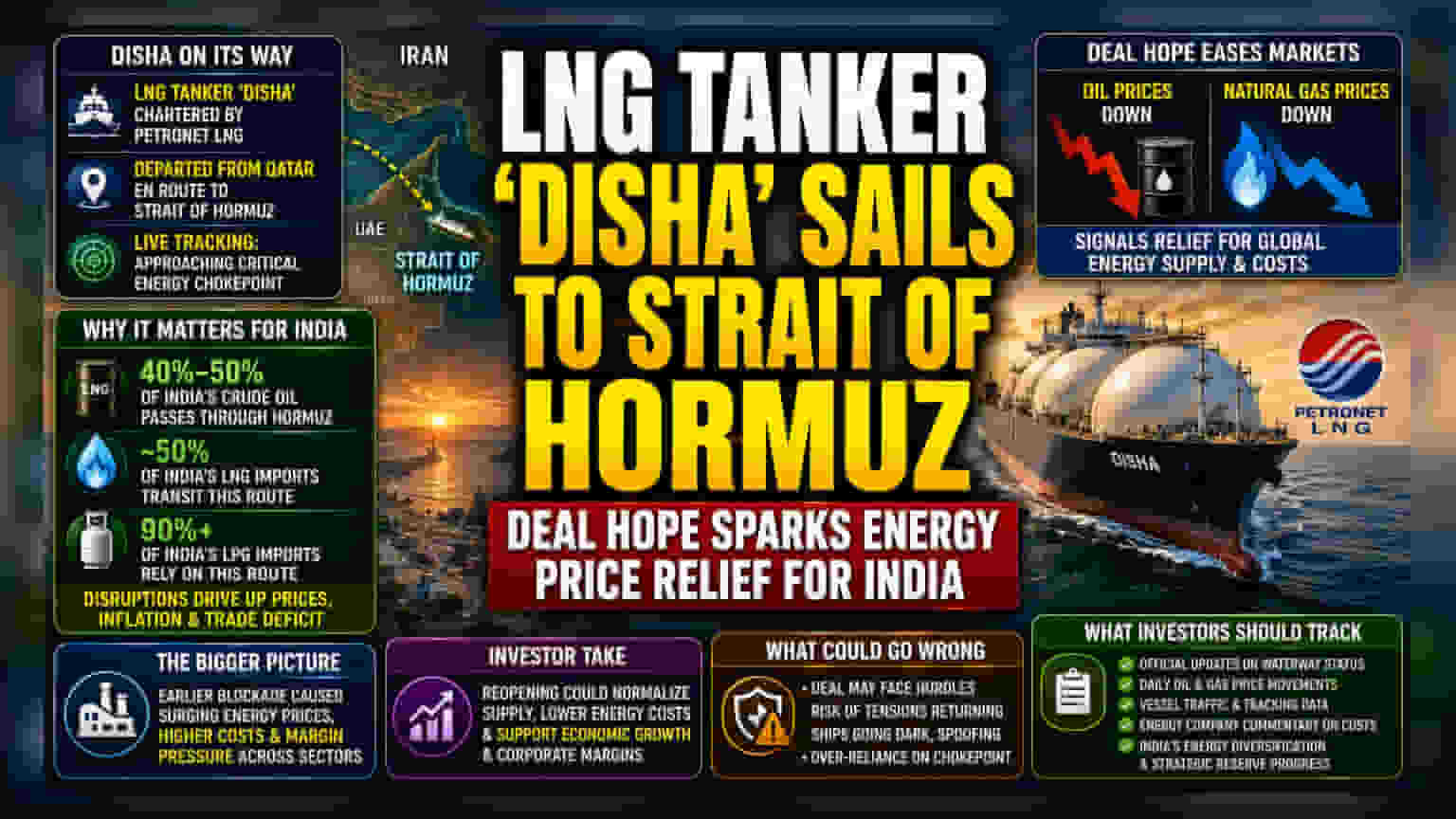


The LNG tanker 'Disha' is heading toward the Strait of Hormuz amid reports of a US-Iran deal to reopen the key energy waterway. This signal has cooled global oil and natural gas prices, offering potential relief for India’s energy import costs after months of supply disruption. Investors are closely watching for confirmation of the deal, as the strait is a vital artery for India's crude, LNG, and LPG supplies.
What Happened
The liquefied natural gas (LNG) tanker 'Disha,' chartered by India's Petronet LNG, has been tracked sailing toward the Strait of Hormuz. This movement follows reports of a potential US-Iran agreement aimed at reopening the strategic waterway, which has faced significant disruptions since late February 2026. The vessel, which departed from Qatar, is currently being monitored as it approaches this critical global energy chokepoint. The news of a possible reopening has triggered an immediate reaction in global energy markets, with oil and natural gas prices seeing notable declines in early trading.
Why This Matters For Investors
For Indian investors, the stability of the Strait of Hormuz is not just a geopolitical headline but a direct driver of the domestic economy. India relies heavily on this narrow passage for a large portion of its energy imports. Before the recent crisis, approximately 40% to 50% of India's crude oil, roughly half of its LNG, and over 90% of its liquefied petroleum gas (LPG) imports transited through this route. When the strait effectively closed earlier this year, it caused energy prices to surge, putting pressure on India's inflation, trade deficit, and the profit margins of energy-intensive sectors like fertilizers and petrochemicals. A reopening could help normalize supply chains, reduce energy import bills, and provide relief to companies that have been grappling with high raw material costs and fuel price volatility.
The Bigger Business Context
The global energy market has been under severe strain throughout 2026 due to the Hormuz blockade. During the peak of the crisis, Indian crude oil prices reportedly saw significant spikes, impacting everything from refinery operations to household fuel costs. Companies in the oil and gas sector have had to navigate these supply shortages and rising costs, leading to a period of high uncertainty for both producers and downstream consumers. For a company like Petronet LNG, which manages long-term contracts for gas supply, the reliable transit of vessels is essential for maintaining consistent operations at terminals like Dahej.
How Investors May Read This
While the movement of the 'Disha' tanker and the reports of a deal are positive signals, the situation remains fluid. The energy markets are highly sensitive to geopolitical developments, and price movements can shift rapidly based on official confirmations. Investors may note that the easing of supply bottlenecks could lead to a correction in energy prices, which generally benefits the broader Indian economy by cooling inflationary pressures. However, traders and analysts will likely remain cautious until there is clear evidence of the waterway fully reopening for standard shipping traffic, as past tensions have demonstrated how quickly situations can change.
What Could Go Wrong
Geopolitical agreements regarding maritime chokepoints are complex and often face implementation hurdles. Concerns remain regarding monitoring, the potential for 'ships going dark' to avoid detection, and the risk of transponder spoofing. If the deal fails to materialize or if tensions re-escalate, the market could see a reversal of the recent price drops. Furthermore, the reliance on a single chokepoint remains a long-term structural risk for India’s energy security, meaning that even a temporary resolution does not eliminate the underlying need for supply diversification.
What Investors Should Track
Moving forward, the primary monitorables include official statements from the involved governments confirming the status of the waterway, daily energy price fluctuations, and vessel tracking data to see if a broader flow of ships follows the 'Disha.' Investors should also monitor upcoming commentary from energy companies regarding their import costs and supply chain reliability. Maintaining a long-term view on the diversification of energy sources and the progress of India’s strategic fuel reserves will also be important for assessing the country's resilience to such chokepoints in the future.