

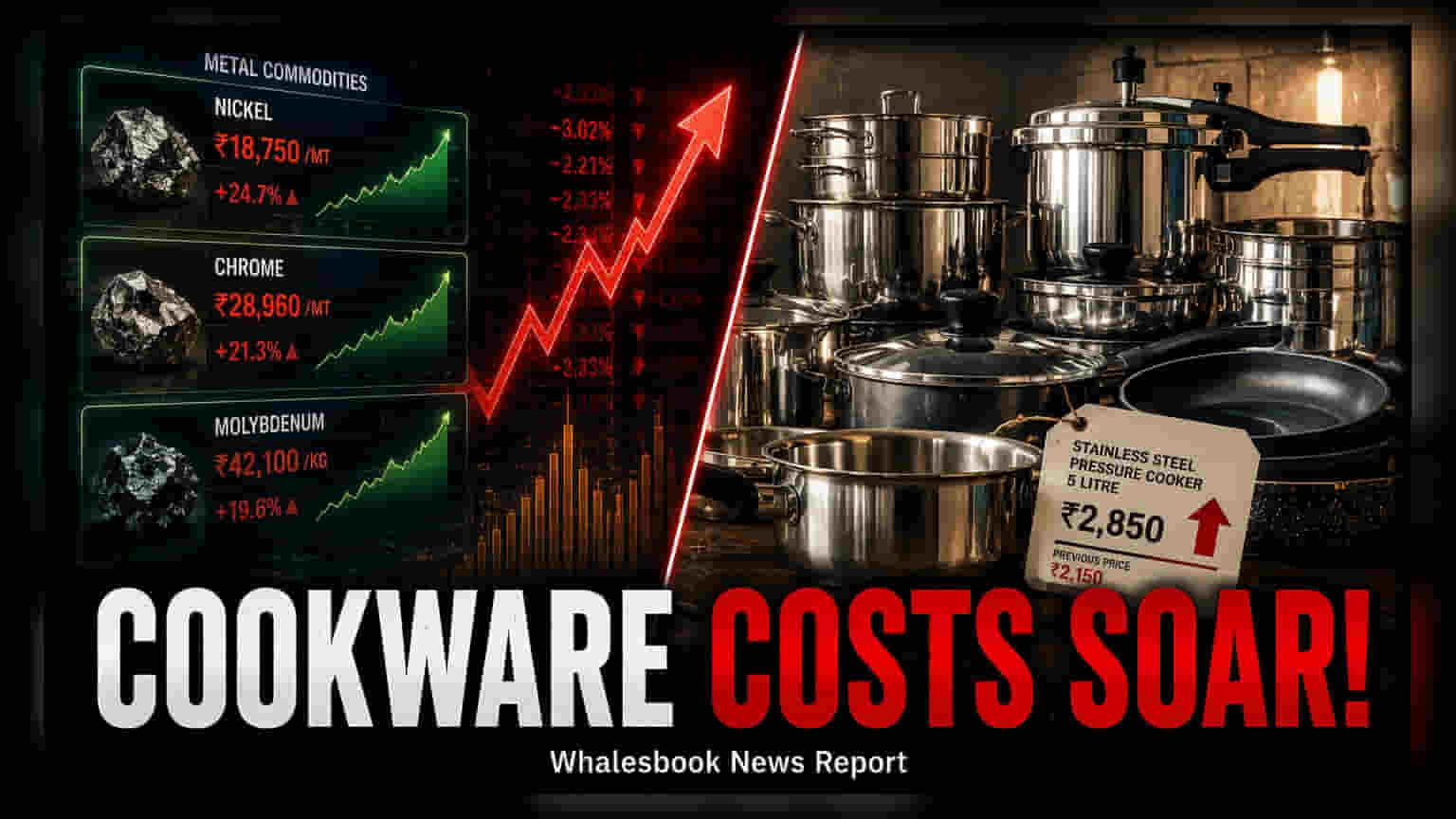
Stainless steel utensil prices rose 7.1% year-on-year in June, driven by higher global metal and energy costs. Analysts expect these elevated production expenses to continue impacting consumer prices through the third quarter of 2026.
Households across India are facing higher costs for kitchen essentials as the price of stainless steel utensils climbed by 7.1% in June compared to the same period last year. This represents an acceleration in inflation from the 6.4% recorded in May, reflecting a broader trend of rising input costs for manufacturers.
Impact on Cookware and Utensils
The price increase is not limited to raw stainless steel items. Products such as pressure cookers and pans experienced a 4.7% price rise, while non-stick cookware saw an increase of 4.8%. These figures highlight how manufacturers are passing on increased production expenses to retail consumers. According to economic analysis, the trend is largely fueled by higher global metal prices, which have been influenced by ongoing geopolitical tensions in West Asia.
Raw Material and Production Challenges
The financial pressure on manufacturers stems from the rising costs of key components required for high-grade steel production. Specifically, the costs of 304-grade stainless steel have been driven up by expensive nickel and ferro-alloy inputs. Furthermore, elevated energy costs and supply constraints—particularly from major nickel exporters like Indonesia—have limited raw material availability. These factors combined have made it difficult for companies to maintain stable profit margins without adjusting retail prices.
Outlook for the September Quarter
Market expectations suggest that these inflationary pressures will persist through the second quarter of the fiscal year, covering the July-September period. Because the costs of essential alloys like nickel, chrome, and molybdenum remain firm on the global stage, relief for consumers in the form of lower prices is not immediately expected. While some moderation in these costs is anticipated toward the end of 2026 and into early 2027, the near-term outlook remains one of high costs for both households and businesses operating in the metal-based consumer goods sector.
For investors and industry followers, the next important development will be whether consumer demand remains resilient despite these price hikes or if companies begin to see a decline in sales volume. The ability of manufacturers to manage these input costs while maintaining their profit margins will be a crucial monitorable in the upcoming quarterly results.