

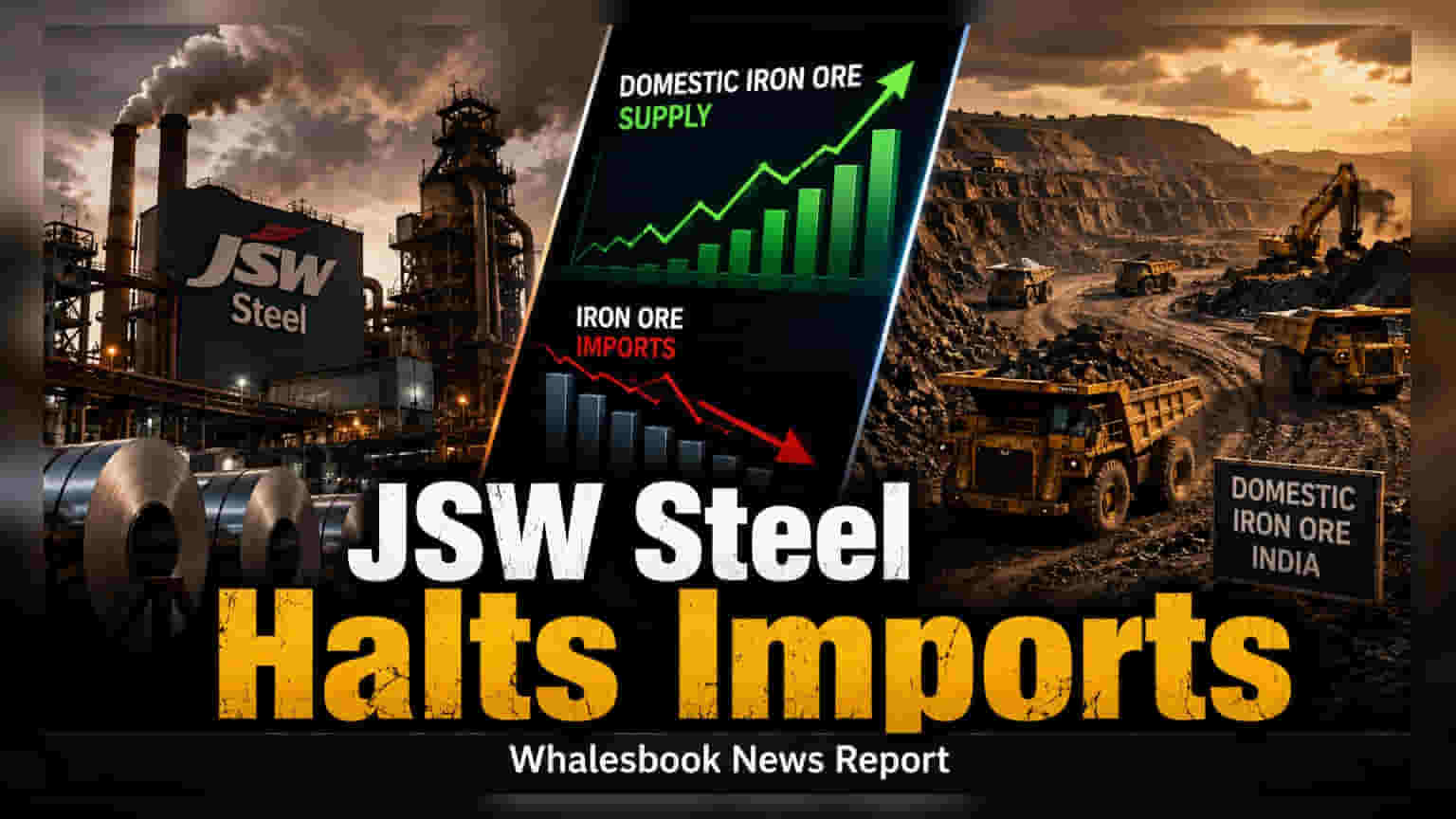
JSW Steel is set to transition entirely to domestic iron ore, moving away from heavy imports. The strategic shift aims to insulate the company from global price volatility and control input costs. Investors are tracking how the steel giant manages logistics and secures high-grade ore to support its massive capacity expansion plans.
JSW Steel, the country's leading steel producer, is preparing to end its dependence on imported iron ore. The company plans to transition entirely to domestic sources as internal production capacity and local supply chains improve. This strategic move, confirmed by senior management at a recent industry event, is designed to reduce the company’s vulnerability to the price swings often seen in global commodities markets.
In the fiscal year ending 2026, India’s iron ore imports reached a seven-year high of 12.35 million tonnes. JSW Steel accounted for the majority of these shipments. For a company focused on cost control, moving away from these imports is a logical step to stabilize raw material expenses. Puneet Jagatramka, executive vice president of procurement at JSW Steel, noted that utilizing India's abundant mineral resources is a natural advantage. To make this switch work, JSW Steel is actively participating in mine auctions and investing in logistics infrastructure.
Moving heavy commodities like iron ore from mines to factories involves significant transport costs. The company is exploring pipelines and better connectivity to ensure that domestic ore reaches its plants efficiently, making it cost-competitive with sea-borne imports. This operational shift comes as the company continues to scale its business. In the first quarter of fiscal year 2027, JSW Steel reported a consolidated net profit of ₹4,696 crore. The company is currently on a path of deleveraging its balance sheet while also expanding its steelmaking capacity. With plans to reach a production capacity of 79 million tonnes by 2032—up from 35 million tonnes currently—securing a steady, cost-effective, and domestic supply of iron ore is essential for long-term growth.
However, the road to total self-sufficiency has challenges. While domestic supply is growing, logistical bottlenecks can still make inland transport expensive compared to shipping ore via sea to port-based plants. Additionally, steel manufacturing often requires specific high-grade iron ore. Ensuring consistent access to this high-quality material from domestic mines will be a key monitorable for the business. Investors should also be aware of the inherent regulatory risks associated with the Indian mining sector, including past issues related to permits and operational site requirements that can occasionally delay projects. The next important steps for the company will be the successful integration of its new captive mine blocks and the timeline for completing its planned logistics infrastructure projects.