

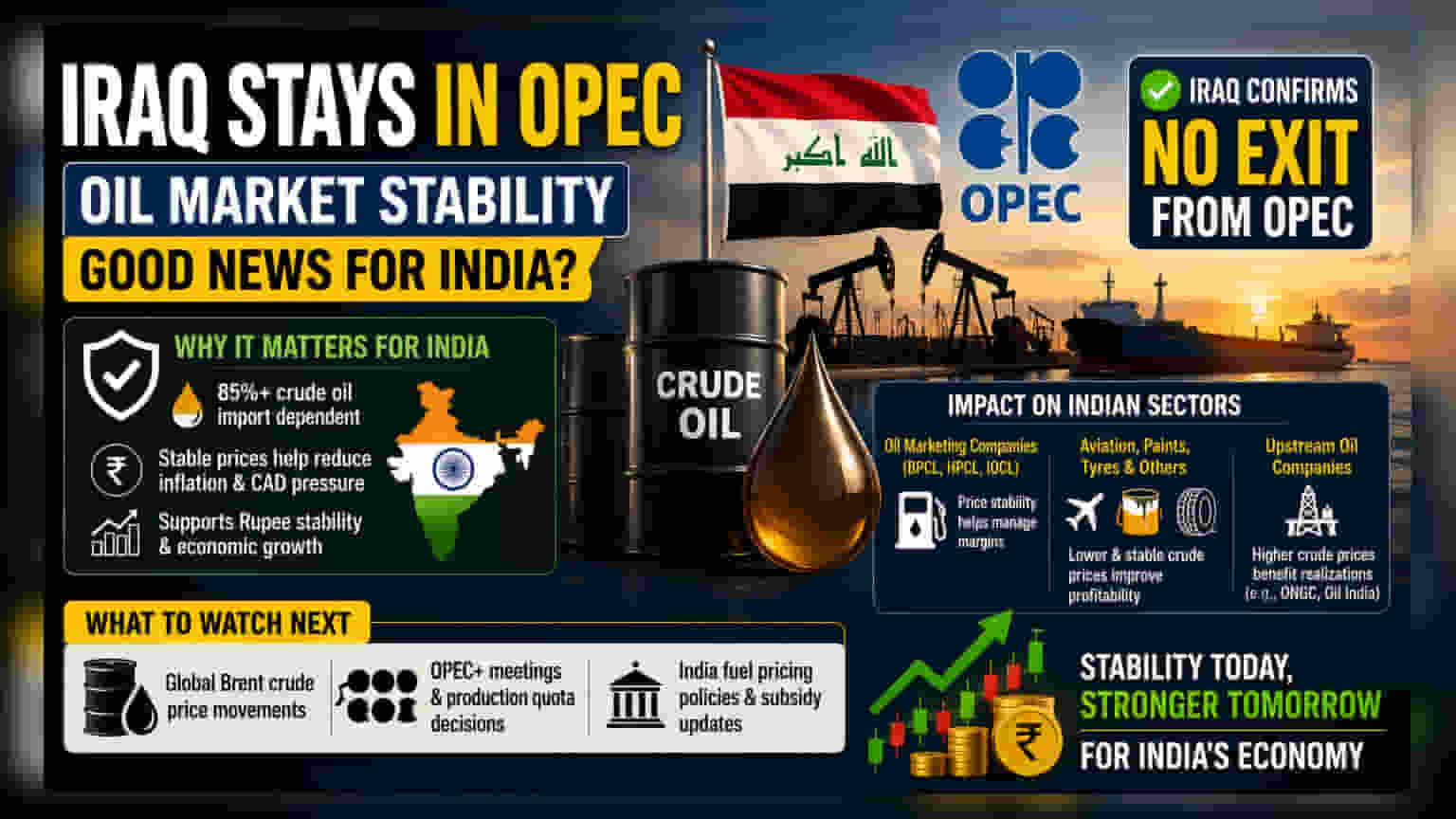
Iraq’s Oil Ministry has clarified that the nation will remain in OPEC, ending speculation about a potential withdrawal. This decision maintains the status quo in global oil supply management. For Indian investors, this news provides stability, as unexpected shifts in global crude production often lead to price volatility, which directly impacts India’s import bill, inflation, and fuel-dependent sectors.
What Happened
Iraq, the second-largest producer within the Organization of Petroleum Exporting Countries (OPEC), has officially confirmed it will not leave the oil cartel. The Ministry of Oil in Baghdad issued a statement clarifying that recent reports regarding a potential withdrawal were inaccurate and did not represent the government's official position. This statement was released to address confusion that emerged after comments from an official suggested that Iraq might exit the group if it was not allowed to increase its production quotas.
By reaffirming its commitment to the organization, Iraq has signaled that it will continue to follow the group’s collective production management strategies. This move is significant because any exit by a major producer like Iraq could have disrupted global supply agreements, potentially causing sudden price spikes or market instability.
Why This Matters For India
India is heavily dependent on energy imports, sourcing over 85% of its crude oil requirements from global markets. Because of this high import dependency, the domestic economy is sensitive to global oil price fluctuations. When uncertainty hits the global oil market, it often leads to higher crude prices, which can widen India’s current account deficit, weaken the Indian Rupee, and add pressure on domestic inflation.
For Indian investors, the stability of OPEC’s production framework is generally viewed as a positive factor. It helps in keeping global crude prices within a more predictable range, allowing companies and the government to better manage costs related to fuel imports.
Impact On Domestic Sectors
Several sectors in the Indian stock market are directly influenced by global crude oil price trends. Oil Marketing Companies (OMCs) like Bharat Petroleum (BPCL), Hindustan Petroleum (HPCL), and Indian Oil Corporation (IOCL) are key players that watch these movements closely. Stability in crude prices allows these companies to better manage their marketing margins, as they can plan their product pricing without the shock of sudden, extreme volatility.
Other sectors, such as aviation, paints, and tyres, also rely on oil-based products as key raw materials. When global crude prices remain stable or decline, these industries typically see an improvement in their profit margins as their input costs become more predictable. Conversely, any supply disruption from a major producer would increase their costs, putting pressure on their bottom lines.
On the other hand, upstream oil companies like ONGC and Oil India generally benefit when crude oil prices are higher, as they receive better realizations for the oil they extract. Therefore, a decision that prevents market volatility is often seen as a neutral or stabilizing event for the broader energy sector.
What To Watch Next
Investors should continue to track global Brent crude oil price movements, as these remain the primary benchmark for Indian companies. Furthermore, the outcomes of upcoming OPEC+ meetings regarding production quotas will be the next major trigger for global energy prices. Domestically, the focus will remain on whether these global trends lead to any changes in fuel pricing policies or government subsidies, which are essential factors for the profitability of Indian oil companies.