 Whalesbook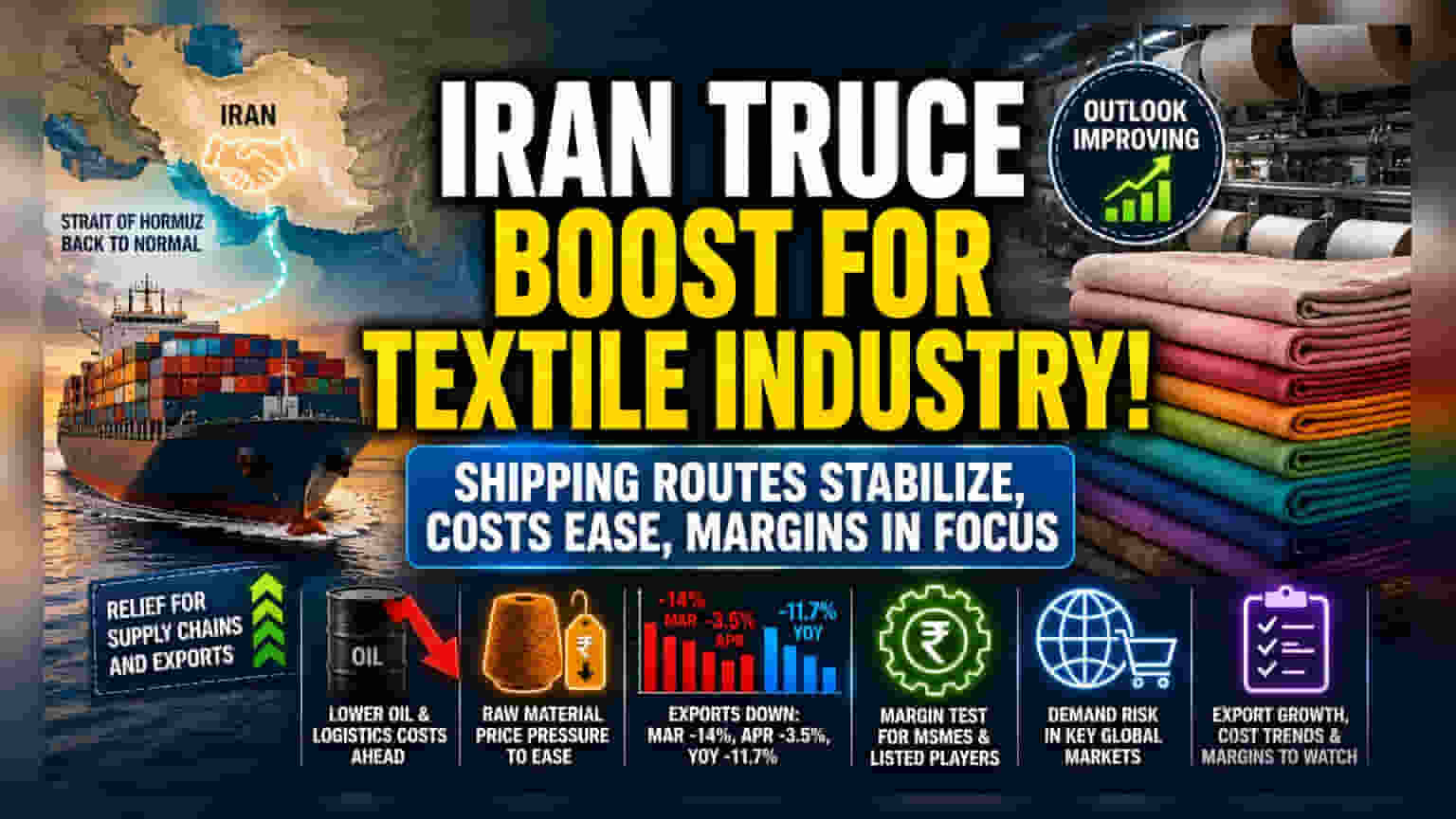


A de-escalation of tensions in Iran is expected to stabilize critical trade routes, potentially easing raw material costs for India’s textile exporters. While supply chain relief is a positive step, investors should watch for a sustained recovery in demand from key markets like Europe and West Asia, as margin improvement will depend on both lower logistics costs and stable export volumes.
What Happened
The recent truce and de-escalation of conflict in Iran marks a significant shift for the textile industry. This development is expected to restore stability to vital shipping routes, particularly the Strait of Hormuz, which is a major chokepoint for trade between India and the West Asian and European markets. For the textile sector, this is being viewed as a potential relief from recent logistics and supply chain disruptions that had hindered trade flows.
The Impact on Raw Material Costs
One of the most immediate benefits of stabilized shipping routes is the potential reduction in raw material costs. Many synthetic textiles, such as those made from polyester, are derivatives of crude oil. Geopolitical instability often leads to higher logistics costs, insurance premiums, and energy prices, which directly inflate the production costs for manufacturers. Industry participants expect that a smoother supply chain will help contain these input costs, providing some breathing room for companies that have been struggling with narrow profit margins.
Understanding the Export Decline
The textile and clothing export sector has faced substantial pressure in early 2026. Data indicates that export shipments saw a decline of approximately 14% in March compared to the previous month, followed by a 3.5% drop in April. On a year-on-year basis, exports were down by nearly 11.7% in April. During this same period, manufacturers grappled with rising input prices, as polyester costs surged by roughly 25%, which also exerted upward pressure on cotton prices.
The Margin Test
Many textile units in India are categorized as MSMEs (Micro, Small, and Medium Enterprises) and often operate with limited financial buffers. These businesses are highly sensitive to sudden spikes in raw material and freight costs. For larger, listed textile players, the impact of these disruptions is often reflected in quarterly operating margins. Investors should watch if the easing of these external pressures actually translates into improved operating margins in the upcoming quarterly results. While lower costs are helpful, profitability will also be driven by whether these companies can pass on efficiencies or if they must discount products to reclaim lost market share.
The Demand Risk
While the easing of supply chain problems is positive, investors must distinguish between supply-side relief and demand-side strength. The primary challenge for Indian textile exporters remains the sluggish demand in key destination markets like Europe and parts of West Asia. Even if logistics improve, export volumes may not rebound unless consumer spending in these regions picks up. Therefore, a recovery in shipment numbers will be a more important indicator of health than just the reopening of shipping lanes.
What Investors Should Track
Investors should look beyond the news of the truce and monitor specific business performance indicators. The first is export growth data for the coming months, which will reveal if global buyers are increasing their orders. Second, keep an eye on management commentary regarding input cost trends and whether they are seeing an actual reduction in logistics expenses. Finally, margin performance in the upcoming earnings reports will provide the clearest picture of whether these external cost pressures are truly easing or if other factors are keeping profitability under pressure.