 Whalesbook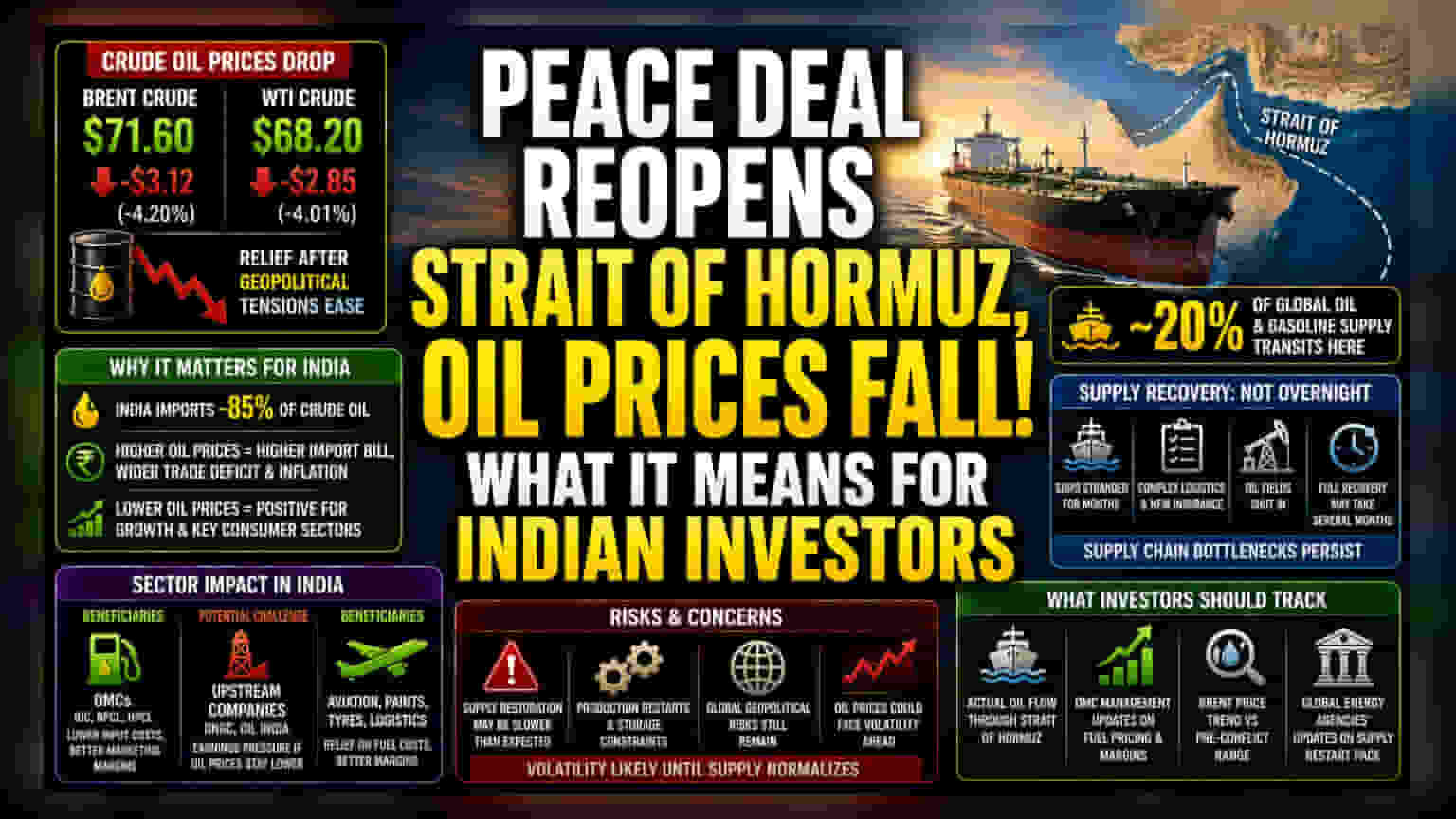


Global oil prices dipped following an Iran peace deal and the reopening of the Strait of Hormuz. While this brings relief to India's heavy import bill, experts warn that supply chain restoration will take months. Indian investors should monitor the impact on OMCs, upstream producers, and inflationary pressures.
What Happened
Global energy markets reacted on Monday to a significant geopolitical development: a peace deal involving Iran that includes the reopening of the vital Strait of Hormuz. The announcement has triggered an initial decline in crude oil prices, providing some relief from the elevated levels seen during the recent period of tension. Brent crude fell by over $3, while the U.S. benchmark also saw a notable decline. This waterway is essential for energy transport, historically handling about one-fifth of global oil and gasoline supply, making its status a major factor in global energy price movements.
Why This Matters For Indian Investors
For Indian markets, this news is highly significant because India imports approximately 85% of its crude oil requirements. A large portion of these imports transit through the Middle East, including the Strait of Hormuz. When crude oil prices rise, it increases the country's import bill, affects the current account deficit, and puts pressure on inflation. Any sustained cooling in oil prices is generally viewed as a positive for the broader economy and sectors that rely heavily on fuel, such as aviation, paints, tyres, and logistics. However, the market is tempering this optimism with caution regarding how quickly supply can actually return to the global market.
The Reality Of Supply Recovery
While the peace deal is a major step, energy experts emphasize that a return to normal supply levels is not an overnight process. The supply chain is complex, involving the movement of ships that have been stranded for months, the logistics of loading and transporting oil, and the need for new insurance coverage for vessels in the region. Furthermore, some producers in the Middle East had halted extraction, a process known as shutting in, due to limited storage capacity. Restarting these complex oil field operations and clearing the logistical bottlenecks will likely take several months. Investors should therefore be prepared for a period of supply uncertainty despite the improved geopolitical situation.
Sector Impact In India
This news creates different implications for various segments of the Indian energy sector. State-run Oil Marketing Companies (OMCs) like Indian Oil Corporation, BPCL, and HPCL often benefit from lower crude oil prices, as reduced input costs can help improve their marketing margins and overall profitability. On the other hand, upstream companies like ONGC and Oil India may see their earnings impacted if crude prices remain lower, as their revenue is directly tied to the price at which they sell oil. Additionally, downstream industries such as airlines and manufacturers that consume high amounts of energy may see a reduction in cost pressure, provided the lower prices are sustained.
Risks And Concerns
Despite the dip in prices, investors should remain aware of potential risks. The path to full recovery is prone to delays, such as potential issues with production restart times, especially for countries that faced major shutdowns. The global energy market remains sensitive to any further shifts in geopolitical stability. If the promised supply restoration is slower than expected or if logistical hurdles persist, oil prices could face volatility. Investors should not assume that the current price dip guarantees a long-term downward trend without considering these supply-side complexities.
What Investors Should Track
Moving forward, the primary monitorable for investors will be the actual movement of crude oil supply through the Strait of Hormuz over the coming months. It will be important to observe how management at Indian OMCs comment on fuel pricing and marketing margins in upcoming updates. Additionally, tracking the trend of Brent crude prices relative to the pre-conflict range will provide a clearer picture of whether the current relief is sustainable or just a temporary market reaction. Watching for any updates from major global energy agencies regarding the pace of production restart will also be crucial for understanding the medium-term outlook for energy prices.