

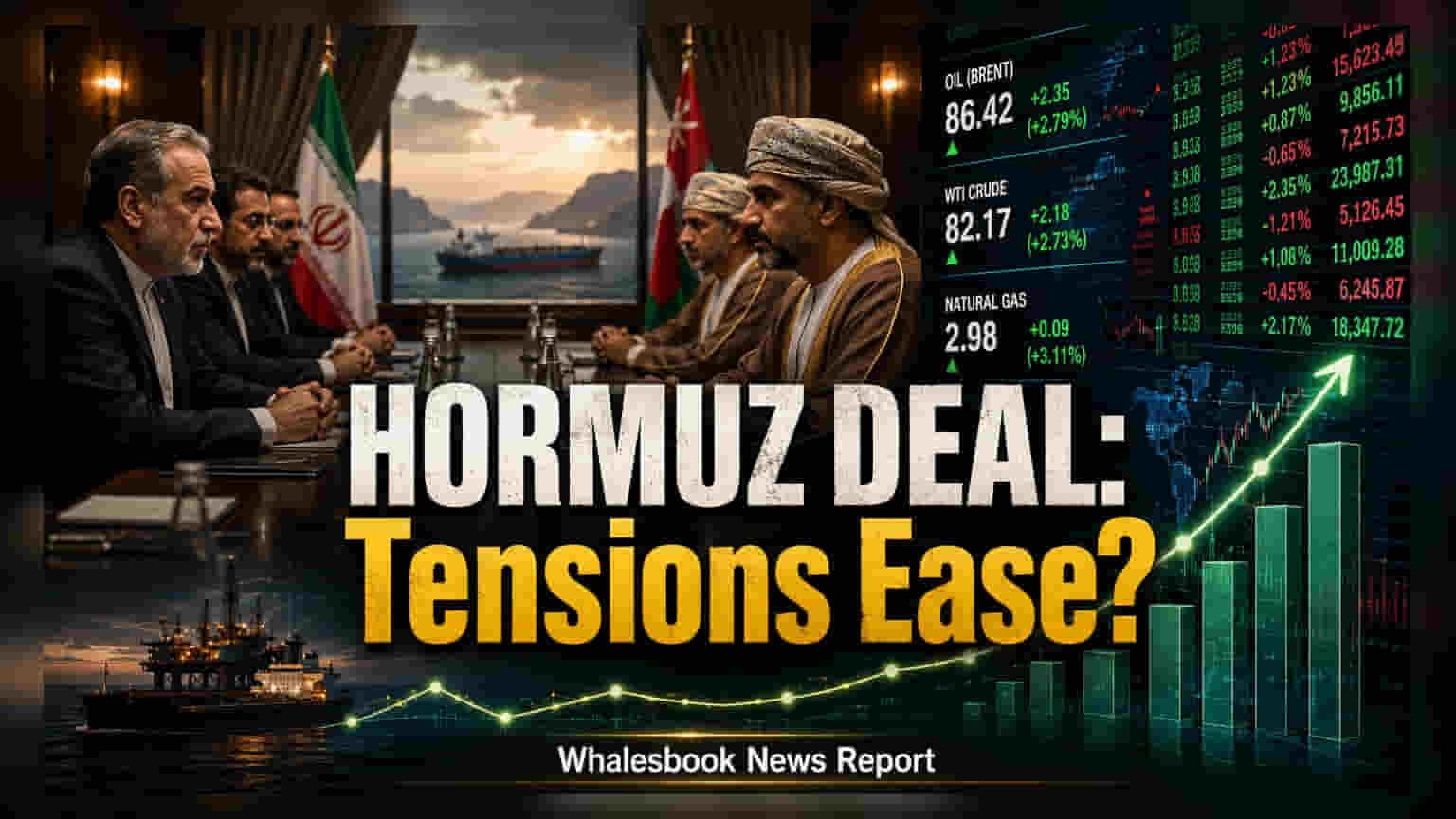
Iran and Oman have announced a preliminary agreement on a shipping route through the Strait of Hormuz, leading to a dip in global oil prices. For Indian investors, this is important because the Strait is a vital energy transit point; stability here can help reduce crude import costs and ease inflationary pressure. However, the deal is in the early stages, and ongoing regional tensions continue to pose supply risks.
Iran and Oman have reached a preliminary agreement regarding a shipping route through the Strait of Hormuz, a critical waterway for global energy supplies. The announcement on August 6, 2026, signals potential progress in managing transit through this key passage, which has been a major point of tension between Tehran and several international powers. Following the news, global oil prices saw downward pressure, with Brent crude trading near $79 a barrel and West Texas Intermediate around $75.
For Indian markets, this development is relevant because the Strait of Hormuz is the world's most important oil chokepoint. A large portion of India's crude oil imports travels through this region. Sustained stability or improved shipping security in this area could help control energy import costs, which directly impact the country’s current account deficit, inflation, and the operating margins of oil-dependent sectors such as paints, chemicals, and aviation.
While the announcement offers a glimpse of relief, market analysts are maintaining caution. The agreement is currently in the drafting phase and is not yet finalized or fully implemented. Reports indicate that the proposal involves temporary measures, potentially lasting two to four months, and may involve Iranian oversight on vessel transit. This is a significant point of concern for international stakeholders, as the extent of control Iran would exercise over global shipping remains unclear.
Investors should be aware that the situation on the ground remains volatile. Despite the diplomatic discussions, there have been reports of security incidents, including explosions involving a commercial tanker in the Strait on August 6, 2026. These events highlight that diplomatic progress does not immediately eliminate the physical risks to maritime traffic. Continued regional instability and the potential for conflicting interpretations of the agreement could easily reverse the recent dip in oil prices.
Going forward, the key factor for investors will be whether the agreement is formally signed and implemented without further disruptions. Market participants will likely track energy price trends closely, as any escalation in regional conflict or failure to operationalize this route could lead to renewed supply chain uncertainty and price volatility. For sectors sensitive to energy costs, monitoring updates from the region remains essential for assessing operational and margin risks in the coming quarters.