

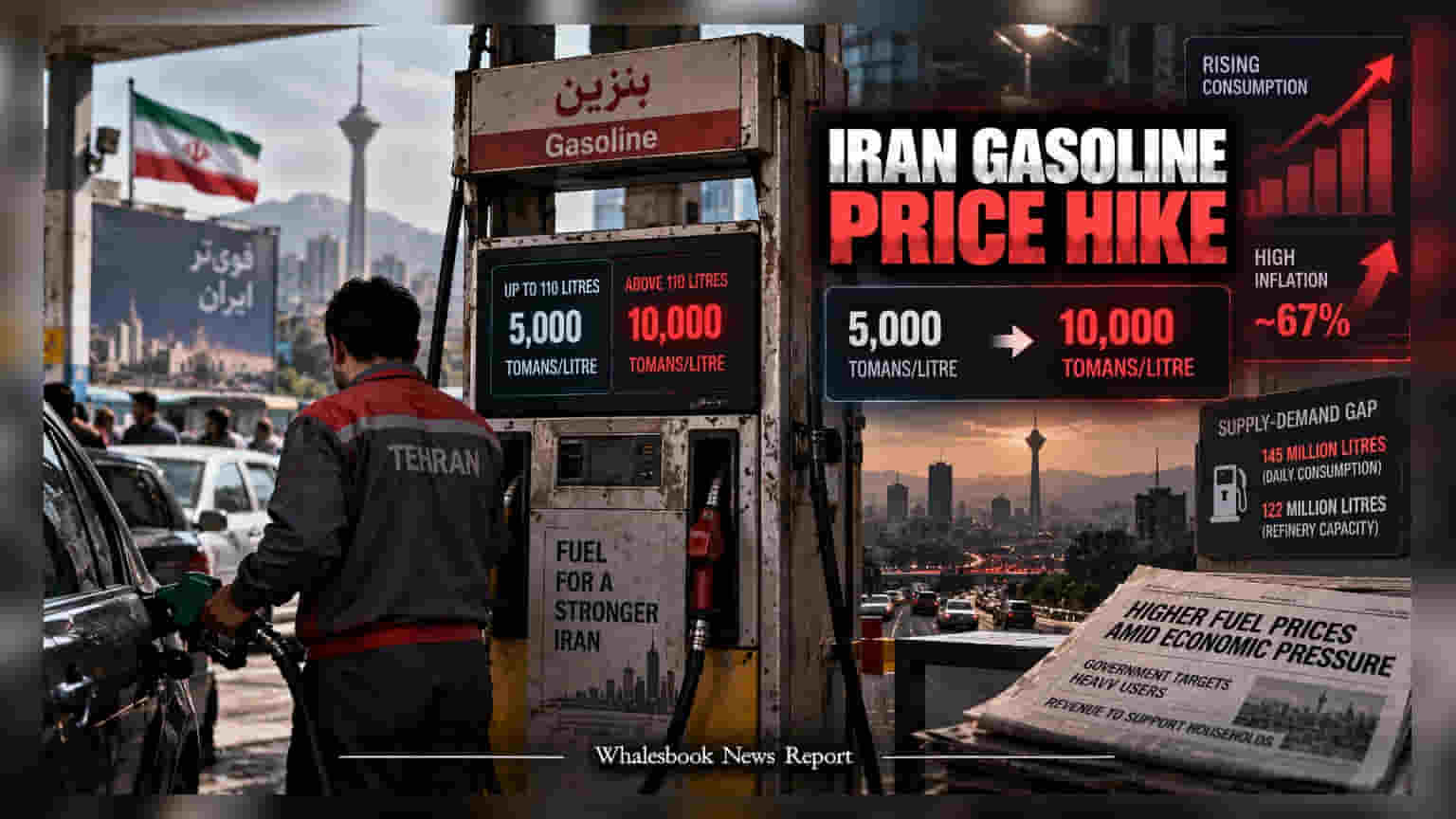
Iran has increased gasoline prices for high-volume users, effective September 8, 2026, as domestic demand continues to outpace refinery production. This policy change, impacting roughly 15% of the population, aims to reduce fuel wastage and manage fiscal strain. The government is navigating a difficult economic environment, marked by high annual inflation and significant currency devaluation, while balancing the risk of social instability.
The Iranian government has implemented a significant price hike for gasoline consumers who exceed the monthly quota of 110 litres. Under the new directive that took effect on September 8, 2026, rates for heavy users have doubled, rising to 10,000 tomans per litre from the previous 5,000 tomans. The price structure for the first 110 litres remains unchanged, a move clearly intended to shield the majority of the population while targeting the most intensive fuel users.
This decision is driven by a critical supply-demand mismatch within the country. In August 2026, daily gasoline consumption reached a record high of 145 million litres, significantly higher than the domestic refinery capacity of 122 million litres. The resulting deficit forces the nation to rely on expensive imports, which puts severe pressure on national financial reserves and creates a need for consumption management.
From an economic standpoint, the situation is complex. Iran is currently battling an annual inflation rate of approximately 67%, and its currency has faced prolonged weakness, trading at over 2.2 million rials against the US dollar in parallel markets. For the government, this price adjustment is a fiscal necessity to manage subsidies that have become increasingly difficult to sustain. The administration has pledged to redistribute revenue generated from this hike back to households, aiming to soften the impact on consumer purchasing power.
Energy policy remains a sensitive topic in the region, with a historical precedent of public opposition to subsidy reforms. Past attempts to rationalize fuel costs have occasionally led to social unrest. The current administration is attempting to manage this delicate situation by limiting the price increase to only 15% of the population, thereby avoiding a broad-based shock to the economy.
For global oil markets and observers, the development highlights the ongoing instability in one of the world's major energy-producing nations. While Iran's oil sector operates under international sanctions, any domestic disruption or policy shift in a key producing country is noted by energy analysts. Global oil prices are sensitive to supply concerns, and any prolonged domestic struggle within Iran regarding fuel availability or affordability is closely tracked for its potential to impact global sentiment. Investors in the energy sector often monitor these dynamics, as they can influence regional stability and, by extension, the broader global energy supply narrative.