

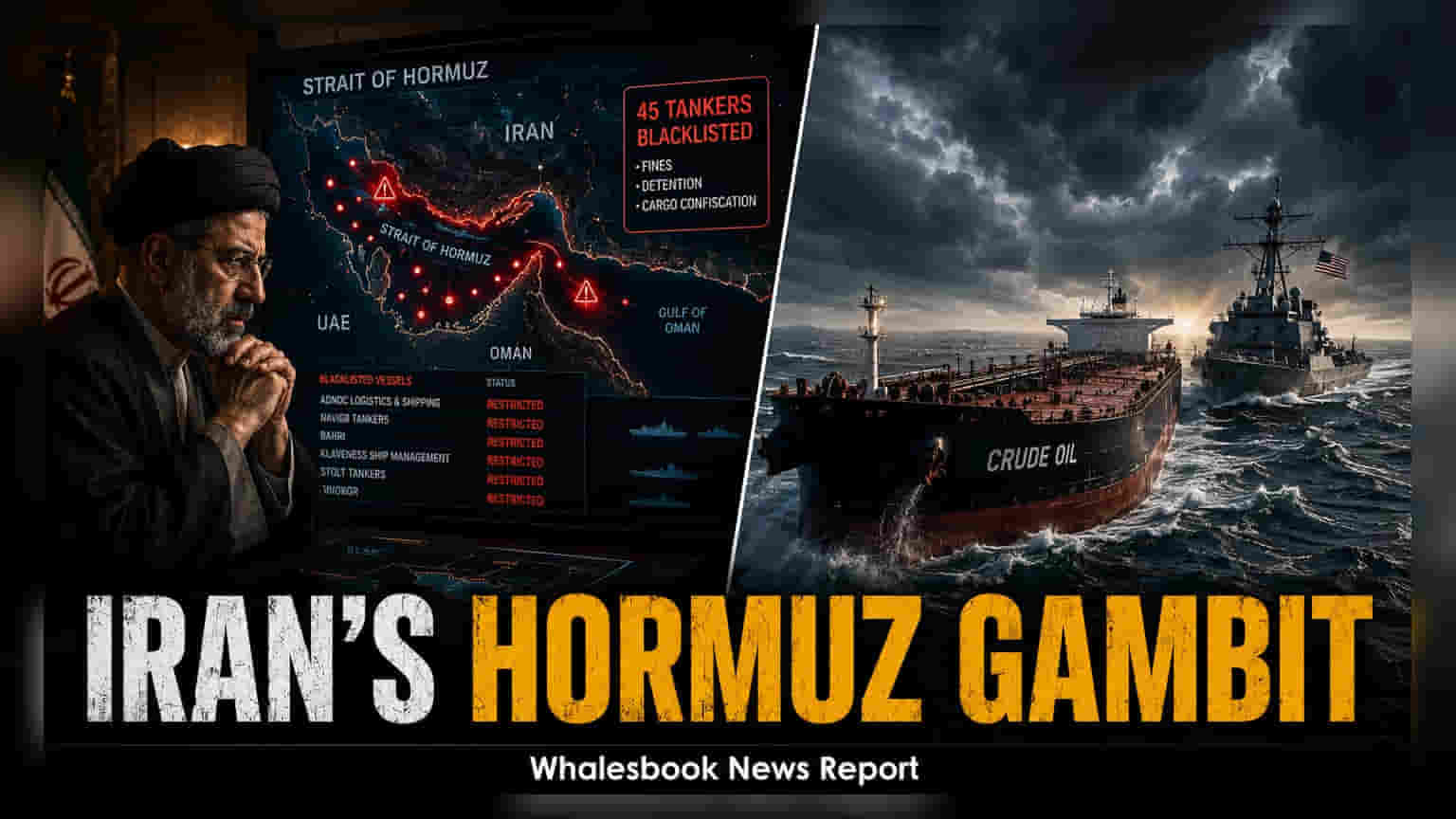
Iran’s newly formed Persian Gulf Strait Authority has blacklisted 45 tankers, threatening fines and cargo seizure for alleged transit violations. The move targets major shipping firms like ADNOC L&S and Bahri, creating uncertainty in energy shipping routes. For investors, this escalation could influence insurance premiums, global oil prices, and the operational stability of companies relying on the critical Strait of Hormuz chokepoint.
Iran’s newly formed Persian Gulf Strait Authority (PGSA) has placed 45 tankers on a blacklist, accusing them of violating transit rules in the Strait of Hormuz. This development, which emerged over the weekend, threatens vessel operators with fines, potential detention, and cargo confiscation. Because this narrow waterway handles a significant portion of the world's daily crude oil and liquefied natural gas (LNG) supply, the move has drawn immediate attention from global commodity markets.
Which Companies Are Affected?
The restricted list includes vessels linked to major international players, including the United Arab Emirates’ ADNOC Logistics and Shipping, its subsidiary Navig8 Tankers, and Saudi Arabia’s national shipping firm, Bahri. Other companies with flagged vessels include Klaveness Ship Management, Stolt Tankers, and South Korea’s Sinokor. The authority’s directive is broad, stating that any vessel conducting ship-to-ship transfers with these blacklisted ships will also face the same restrictions. This creates a ripple effect, as it may limit the operational flexibility of these fleets and their partners within the region.
What This Means for Investors
For investors, the primary concern is the potential for supply chain friction. India relies heavily on energy imports that transit through this vital route. When geopolitical tensions rise in such a critical chokepoint, the immediate financial impact often appears in the form of higher insurance premiums for shipping companies. If insurance costs rise or if shippers choose to divert routes or avoid the area due to the threat of detention, it can lead to increased freight rates and operational costs.
While shipping stocks globally tend to move based on freight capacity and demand, sudden geopolitical friction introduces an element of uncertainty that can affect short-term profit margins. Furthermore, any sustained tension in the Strait of Hormuz often adds a risk premium to global crude oil prices. This is particularly relevant for Indian Oil Marketing Companies (OMCs), as changes in global oil benchmarks can influence their input costs and, consequently, their financial performance.
Key Monitorables
The situation remains fluid, and investors should look for further updates from the involved shipping companies regarding how they plan to manage these restrictions. The most important factor for the market will be whether this leads to actual disruptions in energy shipments or if it remains a form of diplomatic and geopolitical pressure. Investors may also track global oil price volatility and official statements from major shipping firms, as these will provide clearer signals on whether the restriction is significantly impacting daily maritime logistics.