

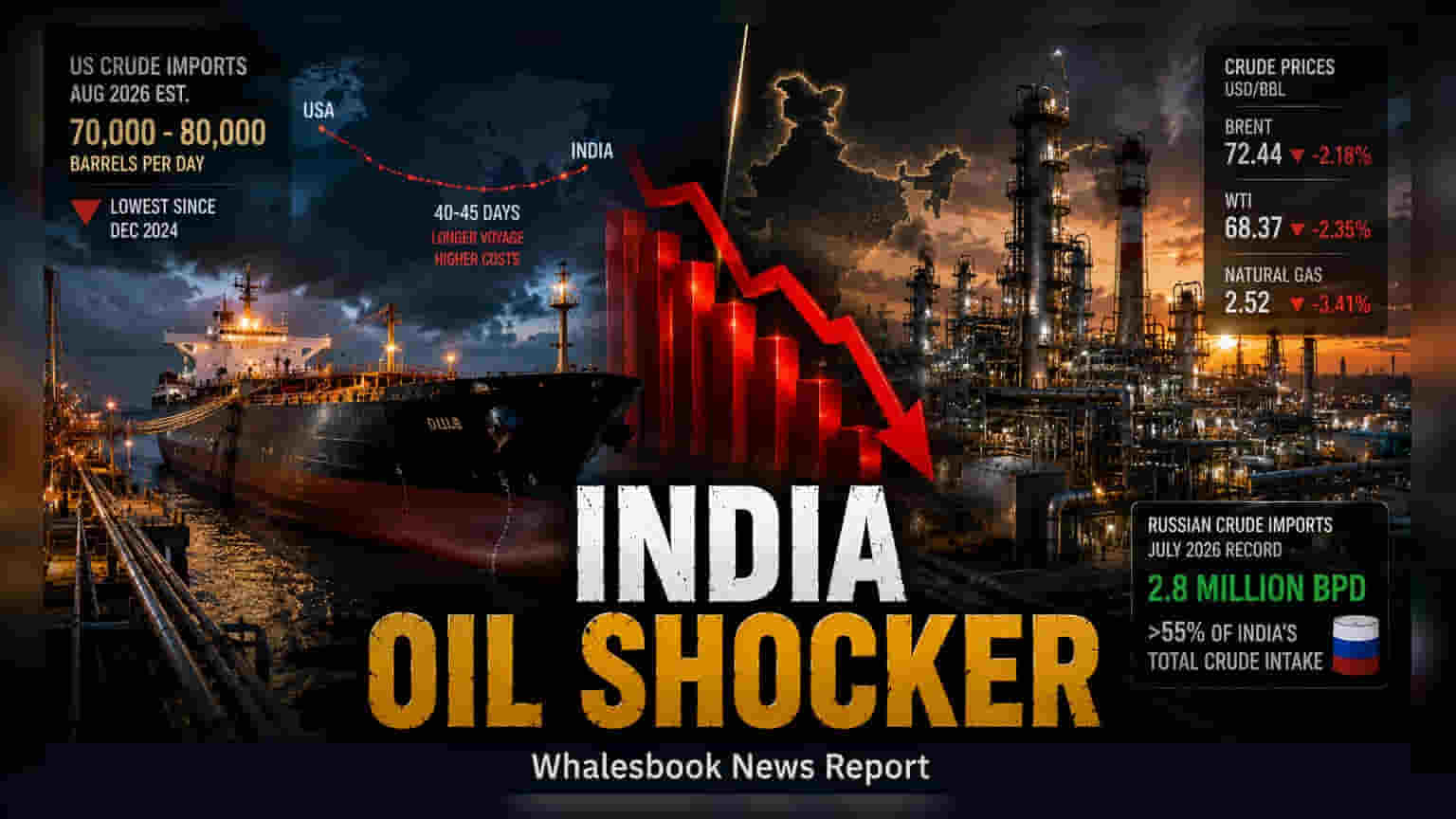
India’s imports of US crude oil are projected to drop to their lowest level since December 2024, estimated at 70,000–80,000 barrels per day. The decline is driven by technical refinery mismatches and high logistics costs. Investors should watch how this procurement shift, alongside a heavy reliance on discounted Russian oil, impacts the refining margins of major Indian oil companies.
India's energy import strategy is shifting, with crude oil purchases from the United States expected to touch their lowest point since December 2024 in August 2026. Current estimates suggest these imports will hover between 70,000 and 80,000 barrels per day. This marks a notable change in sourcing patterns for Indian refiners who are balancing technical needs, logistical hurdles, and cost efficiency.
Refinery Technicals and Logistics Constraints
The primary reason for the drop is not a lack of availability, but a mismatch in product quality. Most Indian refineries are designed to process 'sour' crude—a heavier, higher-sulfur oil common in the Middle East and Russia. Conversely, the oil typically exported by the United States is 'light, sweet' crude. Processing this lighter crude in plants built for heavier varieties is often less efficient or requires costly adjustments to the refining setup.
Logistics have further complicated the trade. Increased geopolitical tension in regions like the Strait of Hormuz and the Bab-el-Mandeb has disrupted traditional shipping lanes. A voyage from the US to India now takes between 40 and 45 days, significantly inflating freight and insurance costs. When these higher logistics expenses are factored in, American crude becomes less economically attractive compared to alternatives that are closer or can be shipped more efficiently.
The Shift Toward Russian Supplies
Indian refiners have increasingly prioritized cost-effective feedstock to maintain healthy refining margins. This has solidified the role of Russian crude in India’s energy basket. In July 2026, Russian oil imports reached a record high of approximately 2.8 million barrels per day, accounting for over 55% of India’s total crude intake. This heavy reliance on a single supplier provides a cost advantage today, but it remains a strategic point of focus for the market. Any sudden change in global trade policies, potential new sanctions, or fluctuations in these discounted rates could create volatility for Indian oil marketing companies (OMCs) and private refiners.
Investor Monitorables
For investors, the key area to monitor is the impact on gross refining margins (GRMs). While the current strategy helps keep costs lower, it limits the flexibility of the supply chain. If geopolitical disruptions worsen, logistics costs for all crude imports—not just US supplies—could rise, putting pressure on profit margins. Additionally, the heavy concentration of Russian imports means that any shift in international trade relations or banking sanctions related to Russian oil could force Indian companies to scramble for more expensive, alternative sources on short notice.
Future updates on import volumes, quarterly refining margins from major OMCs and private refiners, and the stability of global shipping routes will be important factors in determining how these refiners manage their profitability in a complex energy environment.