

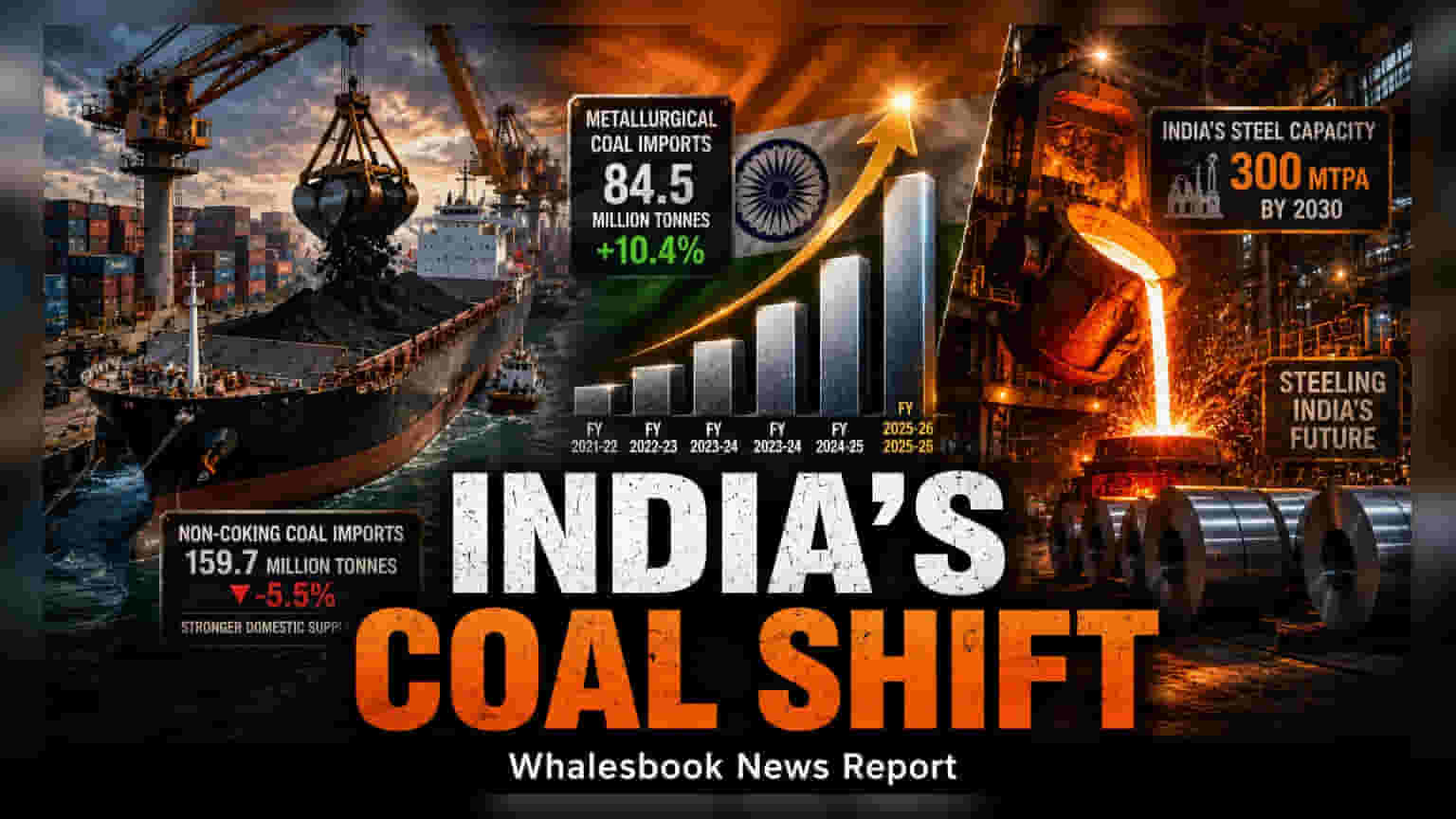
India's coal imports have shifted focus as the steel sector grows, with metallurgical coal imports rising 10.4% to 84.5 million tonnes in FY2025-26. Meanwhile, thermal coal imports dropped 5.5% to 159.7 million tonnes due to better domestic supply. This move highlights India's heavy reliance on imported coking coal to fuel its expanding steel capacity, creating new risks linked to global price volatility and supply chain stability.
India’s coal import profile has seen a significant change in the fiscal year 2025-26, reflecting a clear pivot toward industrial demand. While total coal imports remained steady at approximately 244.2 million tonnes, the composition of these imports has shifted away from power generation and toward steel production. This development is a direct result of India's ongoing efforts to ramp up domestic steel manufacturing capacity.
Steel Industry Fueling Import Demand
The most notable trend is the surge in metallurgical (coking) coal imports, which climbed 10.4% to 84.5 million tonnes. This category includes both standard coking coal and pulverised coal injection (PCI) grades, which are essential inputs for the blast furnace route of steelmaking. Currently, approximately 64% of the upcoming steel manufacturing capacity in India is designed around this coal-intensive technology, locking in long-term demand for high-quality imported coal.
Conversely, non-coking coal imports, which are primarily used by thermal power plants, fell by 5.5% to 159.7 million tonnes. This decline was supported by an improvement in the availability of domestic coal, which reduced the need for utilities to buy from international markets. For investors, this suggests that the domestic mining sector is effectively meeting power sector needs, while the steel industry remains highly dependent on external sources.
Strategic Risks and Supply Dependence
This shift brings a set of unique challenges for Indian steel producers. India remains approximately 90% dependent on imports for its metallurgical coal requirements. This high level of dependency exposes the domestic steel sector to global commodity price swings and supply chain disruptions. Furthermore, as India pushes toward its target of 300 million tonnes per annum (MTPA) of crude steel capacity by 2030, the demand for imported coking coal is expected to remain firm.
Supplier dynamics are also evolving as India seeks to diversify. While Australia remains the largest supplier of premium coking coal, Russia has increased its shipments, and the United States has also grown its share in the Indian market to about 15%. However, relying on diverse global suppliers introduces logistical complexities, including higher freight costs for non-Australian shipments, which can put pressure on the profit margins of steel companies.
What Investors Should Track
Investors may monitor how steel manufacturers manage the cost impact of these imports, especially during periods of global price volatility. Future updates to track include the progress of India’s crude steel capacity expansion, trends in international coal pricing, and any government policy shifts aimed at reducing import dependence through coal gasification or alternative steelmaking technologies. The long-term profitability of steel companies will depend heavily on their ability to manage these input costs while maintaining production volume.