

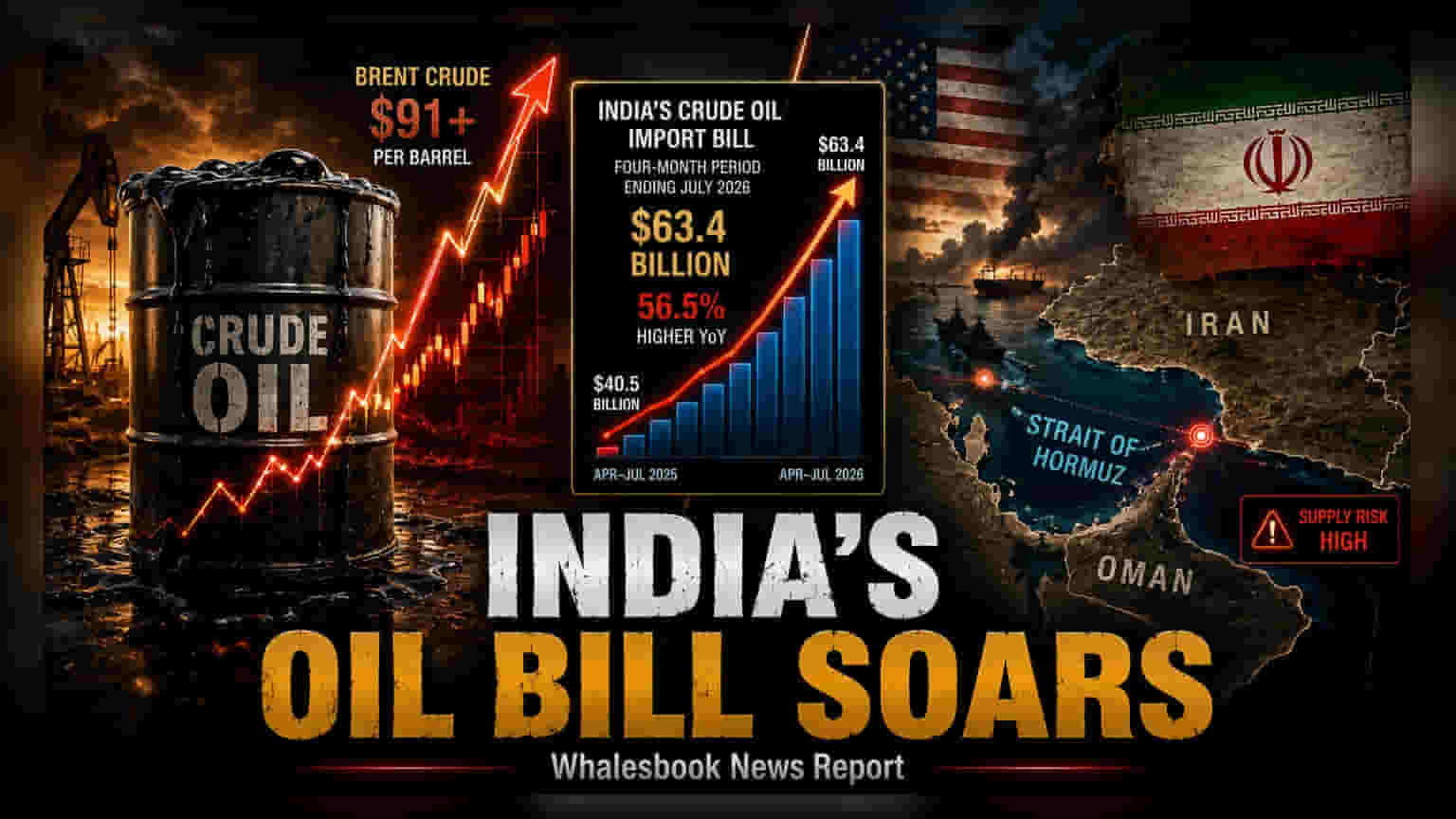
India’s crude oil import bill surged 56.5% to $63.4 billion between April and July 2026, driven by rising global prices amid US-Iran tensions. This sharp cost increase impacts the country's trade balance and inflationary outlook. Investors are now monitoring the effects on domestic oil marketing companies, currency stability, and potential shifts in government fuel policy.
India’s spending on imported crude oil reached $63.4 billion for the four-month period ending July 2026, marking a 56.5% increase compared to the same period last year. While the volume of oil imported remained largely steady, the surge in the total bill highlights the impact of volatile global energy prices on the Indian economy.
Geopolitical Tensions and Price Rallies
The primary driver of this cost increase is the rise in global crude oil prices, which have been heavily influenced by geopolitical instability. Heightened tensions between the United States and Iran, coupled with disruptions around the Strait of Hormuz, have tightened global supplies. By mid-August 2026, Brent crude prices were trading above $91 per barrel, reflecting market anxiety over potential supply chain blockages. In July alone, India’s import bill saw a significant 41% jump to $13.7 billion, even as import volumes rose by roughly 13%.
Impact on Market and Economy
For Indian investors, the rising oil import bill carries several implications that often affect different sectors of the stock market. First, oil marketing companies (OMCs) are under close observation. These companies—such as Indian Oil Corporation (IOC), Bharat Petroleum (BPCL), and Hindustan Petroleum (HPCL)—must manage the difference between what they pay for crude and what they charge at the pump. When global prices rise significantly, profit margins can come under pressure if retail fuel prices do not adjust accordingly.
Second, the situation creates a broader macroeconomic risk. As the world’s third-largest oil importer, meeting over 85% of its demand from overseas, India is sensitive to energy price shifts. A higher import bill requires more dollars, which can put downward pressure on the Indian Rupee. Furthermore, higher energy costs act as a hidden tax on the economy, potentially raising transportation and manufacturing costs, which can fuel domestic inflation.
What Investors Should Monitor
Upstream companies, such as ONGC and Oil India, often benefit from higher crude oil realizations. However, investors frequently watch for government policies, such as windfall taxes, that may be implemented to manage the revenue impact of these price rallies.
Looking ahead, the key monitorables for the market include the stability of Brent crude prices and the government's stance on fuel pricing. If crude prices remain persistently high, it may limit the Reserve Bank of India’s flexibility regarding interest rates, as higher inflation typically discourages the central bank from easing policy. Market participants will also watch for any official updates regarding oil supply security and potential adjustments to the fuel subsidy burden.