

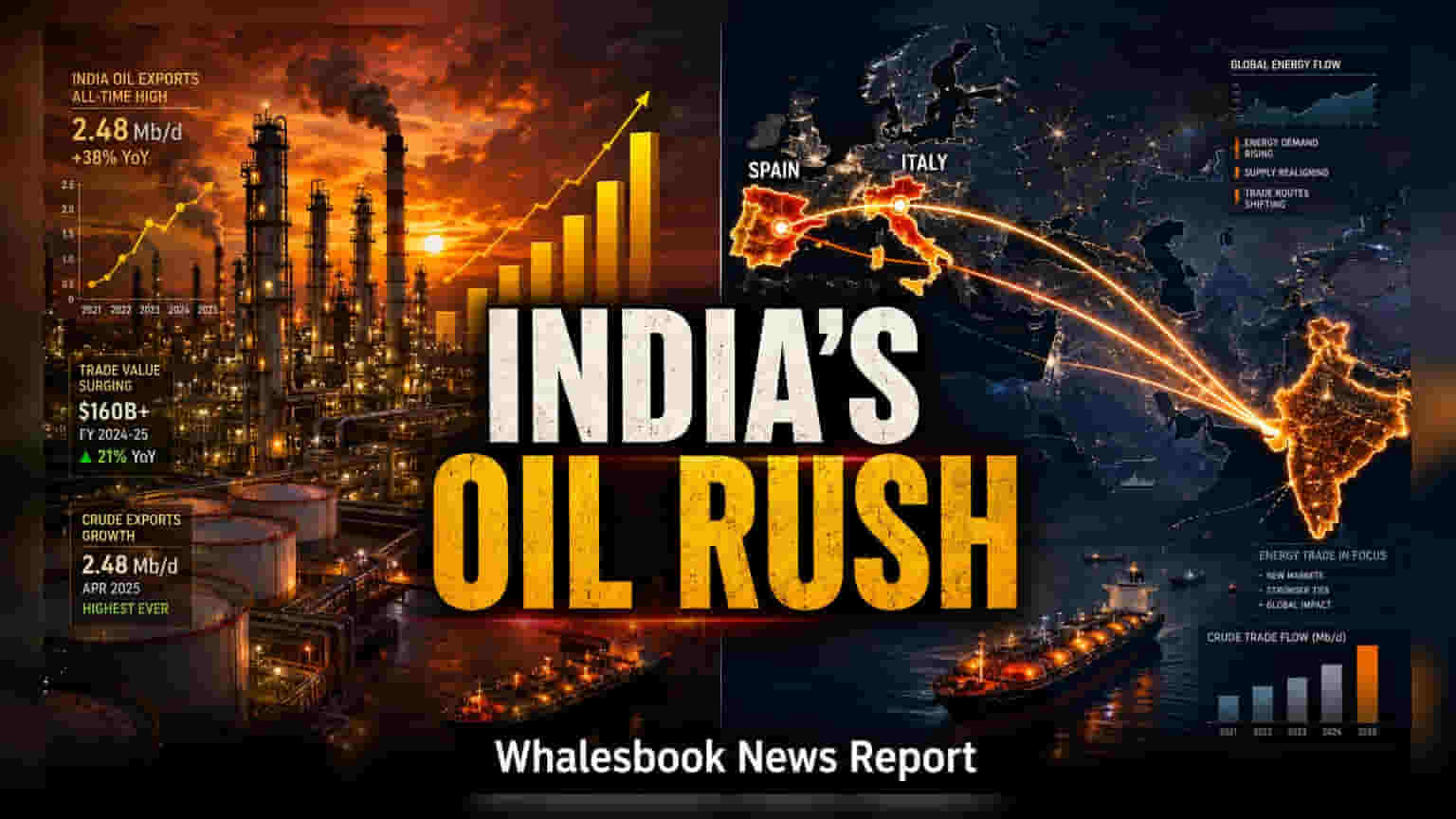
Global supply chain disruptions from the West Asia conflict have prompted a surge in Indian oil product exports to Europe and Africa. While demand from markets like Italy, Spain, and Singapore has spiked, the Indian government recently increased windfall taxes on August 3, 2026, which may impact refinery profit margins.
The ongoing conflict in West Asia is significantly changing how global oil products move, and Indian refineries are playing a larger role in filling the supply gap. With traditional shipping routes facing challenges, countries such as Italy, Spain, and Tanzania have increased their reliance on Indian refined petroleum products to meet their energy needs.
This shift has resulted in a notable increase in trade volumes. For instance, data shows that India's exports to Spain and Italy have jumped significantly compared to the previous year, as these nations seek alternative sources for refined fuels. Similarly, Singapore has strengthened its position as a key hub for receiving Indian oil products, with export values reaching into the billions of dollars. This trend highlights the flexibility of Indian refiners in navigating global energy trade shifts to capture new demand.
However, this export growth is happening under a specific regulatory framework. To manage domestic fuel prices and capture excess profits generated by high export rates, the Indian government implements a dynamic windfall tax on petroleum exports. As of August 3, 2026, the government revised these rates upward, setting the tax at ₹3.5 per litre for petrol, ₹25.5 per litre for diesel, and ₹22 per litre for aviation turbine fuel (ATF). These taxes are adjusted fortnightly based on international oil price trends and export margins.
For investors, this situation presents a mix of volume growth and regulatory cost. While the higher demand for Indian refined products supports revenue growth, the windfall tax acts as a check on potential profitability. Refiners are operating in a environment where they benefit from global supply shortages, but they also face a tax structure that reduces the profit they can keep from those exports.
Beyond taxes, there are broader macroeconomic factors for investors to track. Sustained conflict in West Asia keeps global oil prices volatile and raises shipping and insurance costs for crude oil imports. This puts pressure on India's current account deficit and creates potential for domestic inflationary risks if energy prices remain high. The financial health of the sector will depend on how efficiently refineries can manage these logistical challenges, the impact of fluctuating crude costs on their bottom line, and future adjustments to the government’s export tax policy.