 Whalesbook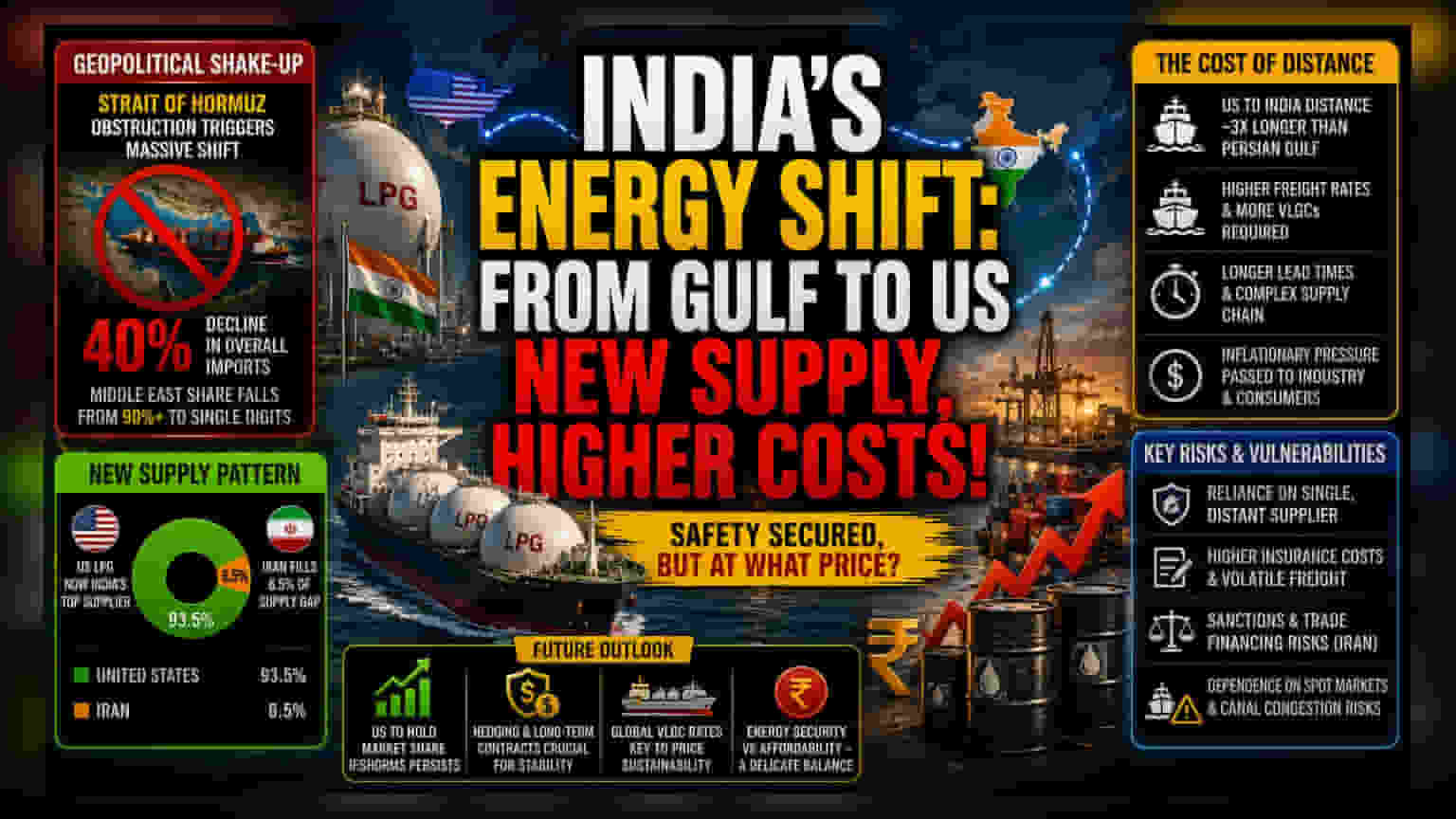


The Geopolitical Shift in Energy Procurement
The systemic obstruction of the Strait of Hormuz has forced a monumental recalibration of India’s energy procurement, shifting reliance away from traditional Gulf suppliers toward North American markets. While the headline figures highlight a 40% aggregate decline in import volumes, the underlying reality is a total restructuring of the supply chain. India's reliance on the Middle East, which historically accounted for over 90% of imports, has been replaced by a logistical pivot toward US-sourced propane and butane, significantly altering the cost structure of landed energy in the subcontinent.
The Cost of Long-Haul Logistics
Transitioning from short-haul West Asian shipments to long-haul US transits is not merely a geographic swap; it is a fundamental shift in economic efficiency. Shipping distances from the US Gulf Coast to Indian ports are roughly triple those from the Persian Gulf. This transition demands a higher number of Very Large Gas Carriers (VLGCs) to maintain consistent throughput, effectively locking Indian importers into higher freight rates and extended lead times. As the US market cements its position as the primary supplier, Indian domestic retailers and industrial users must absorb the inflationary pressure inherent in these more complex, long-distance supply networks.
The Forensic Bear Case: Vulnerabilities and Risks
While the current influx of US LPG prevents immediate shortages, the situation presents significant institutional risks. The primary concern remains the reliance on a single, distant geographic supplier, which exposes India to heightened maritime insurance premiums and volatile freight pricing. Furthermore, the expansion of Iranian imports to fill the 6.5% supply gap introduces potential regulatory friction, particularly regarding international sanctions compliance that could complicate trade financing. Unlike the integrated, pipeline-heavy infrastructure typical of regional Gulf trade, the US-India route depends entirely on spot market fluidity and specialized vessel availability, leaving the energy market vulnerable to any spike in global shipping demand or logistical bottlenecks at the Panama Canal.
Future Outlook and Market Equilibrium
Analysts are now monitoring how Indian state-run oil companies plan to hedge against sustained high freight costs. Should the Strait of Hormuz remain effectively compromised, the current import mix is expected to stabilize, with US exporters holding their newfound market share. However, the sustainability of this model rests on the assumption that global VLGC rates remain stable. If shipping capacity tightens further, the current shift may lead to localized price hikes for Indian consumers, forcing a difficult trade-off between energy security and affordability.