

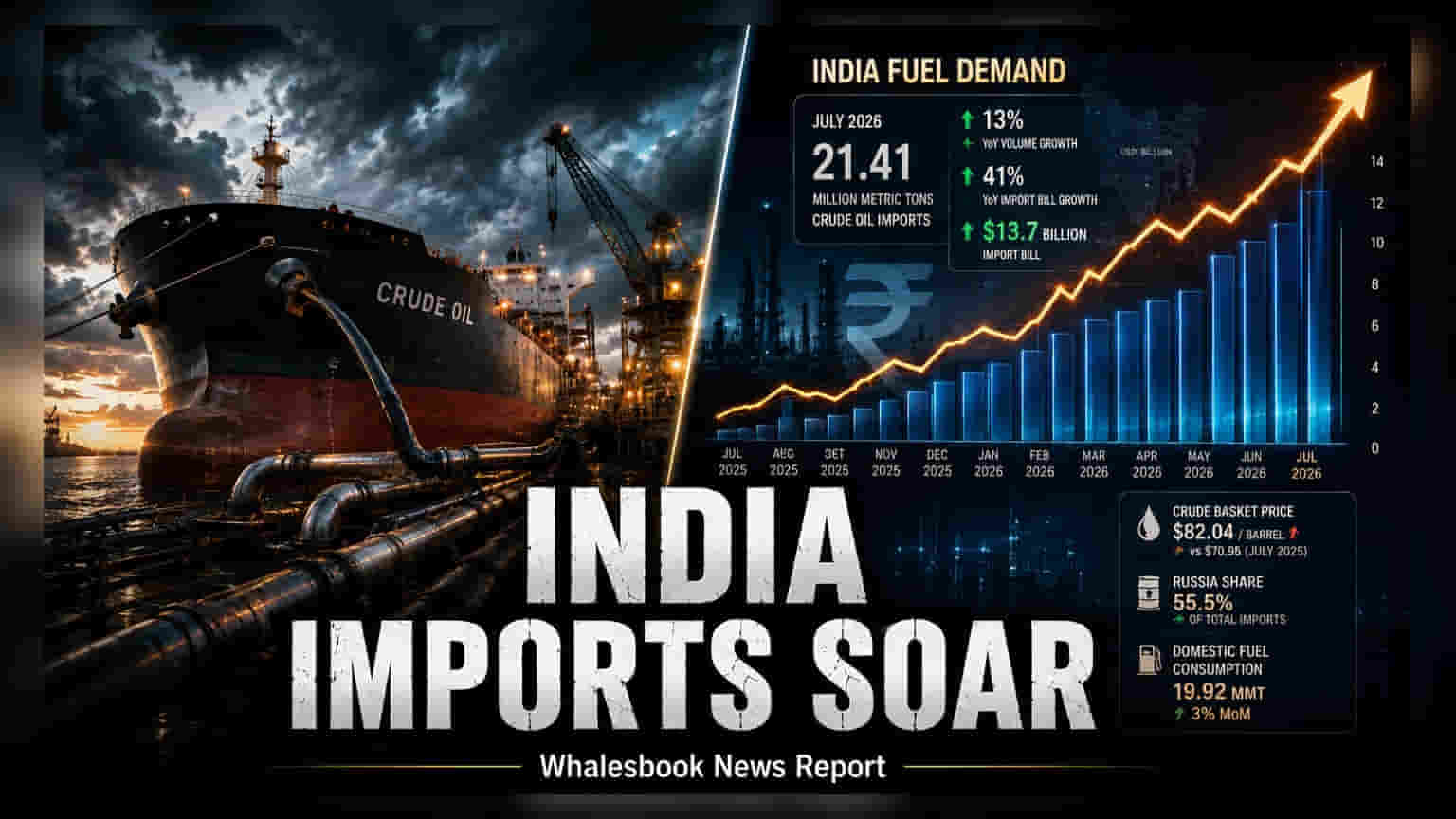
India’s crude oil imports jumped 13% to 21.41 million metric tons in July 2026, driven by high local fuel demand. While this reflects strong economic activity, the import bill surged 41% to $13.7 billion due to higher global crude prices. This shift puts pressure on the Indian Rupee and increases inflationary risks for import-dependent sectors.
India’s appetite for energy intensified in July 2026, with the country importing 21.41 million metric tons of crude oil. This represents a 13% increase compared to the same month last year. While the rise in imports highlights robust economic activity and industrial demand, the financial cost of these supplies has grown at a much faster rate, creating new challenges for the economy.
Rising Costs Challenge Economic Stability
The total crude oil import bill for July touched $13.7 billion, a sharp 41% increase from the previous year. This difference between the 13% growth in volume and the 41% rise in cost is primarily due to higher global crude prices. The Indian crude basket averaged $82.04 per barrel in July 2026, significantly higher than the $70.95 per barrel recorded during the same period in 2025. This indicates that India is paying a premium for its energy requirements, which directly impacts the country’s current account deficit and total foreign exchange outflows.
Domestic fuel consumption also grew by approximately 3% month-on-month, reaching 19.92 million metric tons. While this growth suggests that transportation, manufacturing, and logistics activities are picking up pace, the dependency on imports remains high. Russia continued to be the largest supplier, accounting for 55.5% of India's total crude oil imports in July, providing a steady supply chain amid geopolitical tensions in West Asia.
How the Import Surge Affects Different Sectors
The rapid rise in the import bill creates ripple effects across various sectors. When oil prices stay elevated, the Indian Rupee often faces depreciation pressure because more dollars are required to pay for the same amount of fuel. This adds to the cost of importing other goods and services, potentially fueling wider inflation.
Industries that rely heavily on petroleum derivatives, such as aviation, paints, chemicals, and tire manufacturing, are particularly vulnerable. For example, airlines face higher costs for aviation turbine fuel, which can squeeze their profit margins if they are unable to pass these expenses on to passengers. Similarly, chemical and paint manufacturers often see higher input costs, which can complicate their ability to maintain stable earnings. Conversely, India's petroleum product exports remained resilient, rising over 8% annually, which offers a slight buffer against the widening trade gap.
Investors and market observers are now watching for signals on whether global crude prices will stabilize. The main monitorables for the coming months will be the movement of the Indian Rupee against the dollar, the central government's response to rising energy costs, and how domestic industries manage the impact of expensive raw materials on their quarterly profit margins.