 Whalesbook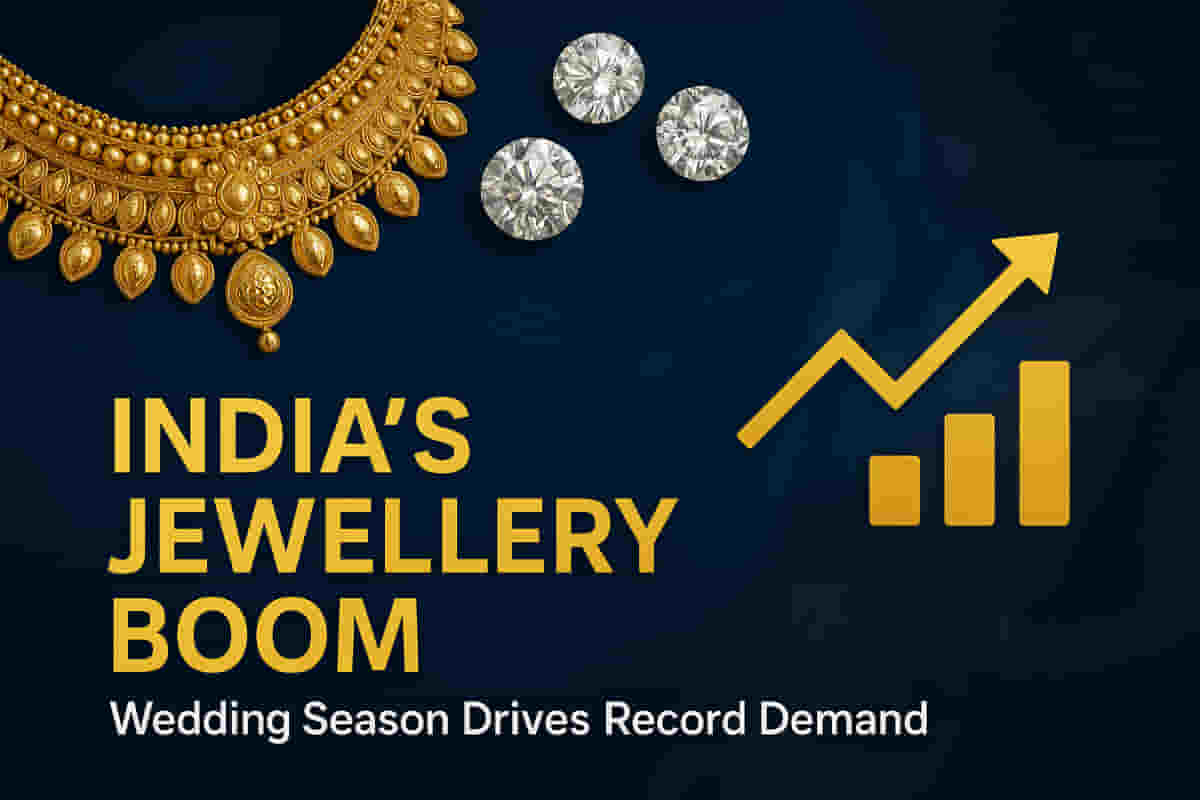


India's jewellery industry is currently riding high on one of its strongest demand cycles in recent years, primarily driven by the peak wedding season. Industry leaders report buoyant sentiment across the value chain, even with elevated gold prices and a volatile global commodities backdrop.
The core driver is the unwavering importance of weddings as consumption events in India. Consumers have largely accepted the surge in gold prices, which peaked in October. According to the Confederation of All India Traders (CAIT), an estimated 46 lakh weddings are scheduled in the next 45 days, significantly boosting the jewellery market.
Kaushlendra Sinha, CEO of the Indian Gem and Jewellery Export Promotion Council (IAGES), noted that the market has adjusted well to current pricing. He stated, "Whatever escalations we have seen recently have stabilised, and the market has accepted the new price levels." Consumers are purchasing not just for immediate wedding needs but also as an investment, showing confidence in the market.
Demand is broad-based, with gold remaining the primary focus. However, diamonds, silver, polkis, and kundans are also witnessing strong traction. This diversification in demand is attributed to evolving consumer tastes and rising disposable incomes.
Shreyansh Kapoor, Vice President of Kashi Jewellers, highlighted that the wedding jewellery cycle is extending beyond the traditional November-January period, emphasizing that jewellery is indispensable for Indian weddings. He also pointed out the strong performance of diamonds and silver as complementary categories.
Industry estimates suggest India's wedding economy is valued at around ₹6.5 lakh crore, with jewellery contributing a substantial share. Pankajkumar Jagawat, CMD of Shanti Gold, reported record sales in both volume and value, estimating gold jewellery alone could reach ₹2 lakh crore this season.
Retailers like Saiyam Mehra, Director of Unique Chains, mentioned that while some families advanced purchases due to rising rates, the post-Diwali slowdown was temporary, with demand expected to increase again in January.
Despite high gold imports impacting India’s trade deficit, the industry is optimistic that potential softer global prices in November-December could alleviate pressure while supporting steady retail buying.
Impact
This news directly impacts the Indian jewellery retail sector, including manufacturers, wholesalers, and retailers. It reflects strong consumer spending power and confidence in a significant traditional market, influencing related sectors and overall retail sales figures. The robust demand is positive for companies involved in the jewellery value chain.
Impact Rating: 7/10
Difficult Terms
Buoyant sentiment: A positive and optimistic feeling in the market.
Elevated gold prices: Gold prices that are significantly higher than their historical averages.
Volatile global commodities backdrop: A situation where prices of raw materials worldwide are unstable and prone to rapid fluctuations.
Non-negotiable consumption events: Purchases or activities that consumers consider essential and will not postpone or cancel, regardless of price or economic conditions.
Value chain: The entire sequence of businesses and processes involved in creating and selling a product, from raw materials to the final customer.
Polkis: Uncut diamonds, typically set in gold.
Kundans: A traditional Indian style of jewellery making that involves setting gemstones in gold, often with intricate designs.
Traction: Growing interest or demand for a product or service.
Disposable incomes: The amount of money an individual or household has left for spending or saving after paying taxes and essential living expenses.
Premiumisation: A consumer trend towards purchasing higher-quality, more expensive, and often branded goods and services.
Trade deficit: An economic situation where a country imports more goods and services than it exports.