

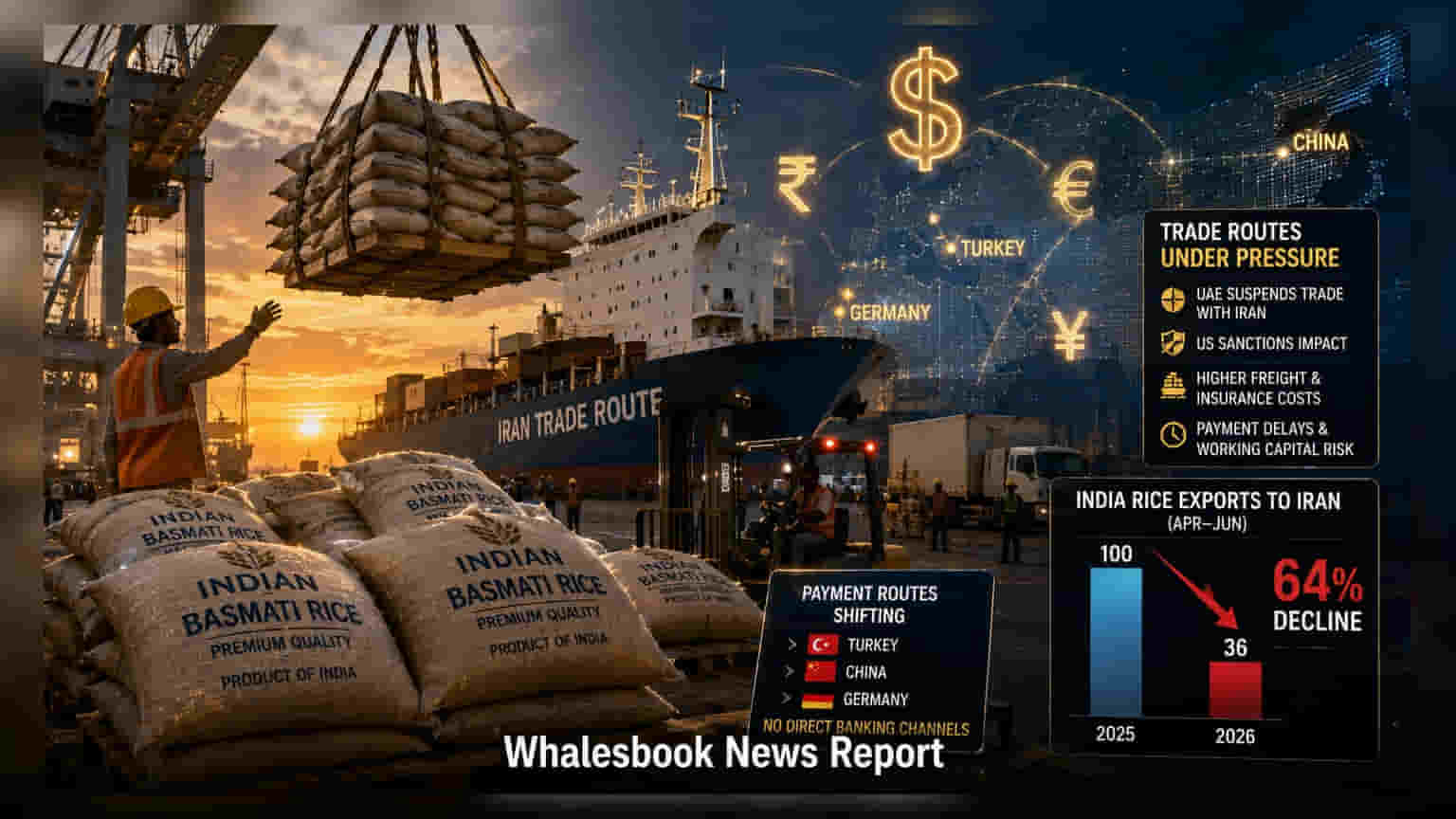
Indian rice exports to Iran dropped 64% in the April-June 2026 quarter as fresh US sanctions and the UAE’s withdrawal from trade routes disrupted supply chains. While traders are attempting to pivot to alternative payment corridors, the sector faces risks from higher insurance costs and potential payment delays.
Indian rice exporters are facing a difficult environment in their trade with Iran, marked by a 64% decline in export volumes during the April-June 2026 quarter compared to the same period in 2025. This contraction follows the imposition of fresh US sanctions and the decision by the UAE—previously a major intermediary for payments and shipping—to suspend trade and financial transactions with Iran.
Disruption in Trade Routes
For years, Indian exporters relied on the UAE to facilitate payments and route shipments, which allowed them to bypass direct contact with restricted Iranian banks. With that pathway closed, companies are now working to establish alternative corridors through countries such as Turkey, China, and Germany. This shift is complex and expensive, as it requires setting up new financial and logistics arrangements in a volatile regulatory environment. The primary challenge remains the lack of direct banking channels, which complicates the realization of payments for goods already shipped.
Humanitarian Status and Cost Pressures
Industry participants maintain that their rice shipments fall under the classification of humanitarian goods, a category that generally faces less restrictive regulatory pressure compared to other commodities. This distinction is the bedrock of the ongoing trade, as rice is a staple food in Iran. However, the operational reality for exporters is increasingly difficult. As traditional routes have been blocked, the cost of doing business has risen sharply. Exporters are reporting significantly higher freight surcharges and insurance premiums, which eat into profit margins. Furthermore, there is growing concern regarding working capital; as payment cycles lengthen, exporters face the risk of capital being tied up in receivables for extended periods.
Risks to Consider
Investors monitoring the agricultural export sector should be aware of several material risks. The US Treasury has issued warnings regarding secondary sanctions, which could potentially impact Indian entities that continue to trade with Iranian counterparts. While the essential nature of food products offers some protection, the threat of stricter enforcement cannot be ignored. Additionally, the reliance on third-party countries to facilitate trade introduces an added layer of uncertainty; if these nations also face pressure to restrict their financial corridors, the remaining trade routes could be compromised.
Looking Ahead
Market participants will track upcoming export data to see if the pivot to alternative payment corridors in countries like Turkey and China can stabilize shipment volumes. The key monitorable for the coming quarters will be the ability of exporters to maintain cash flow without excessive delays in payment realization. Any significant surge in insurance or freight costs for these non-traditional routes will remain a critical factor affecting the bottom line for major rice milling and exporting companies.