 Whalesbook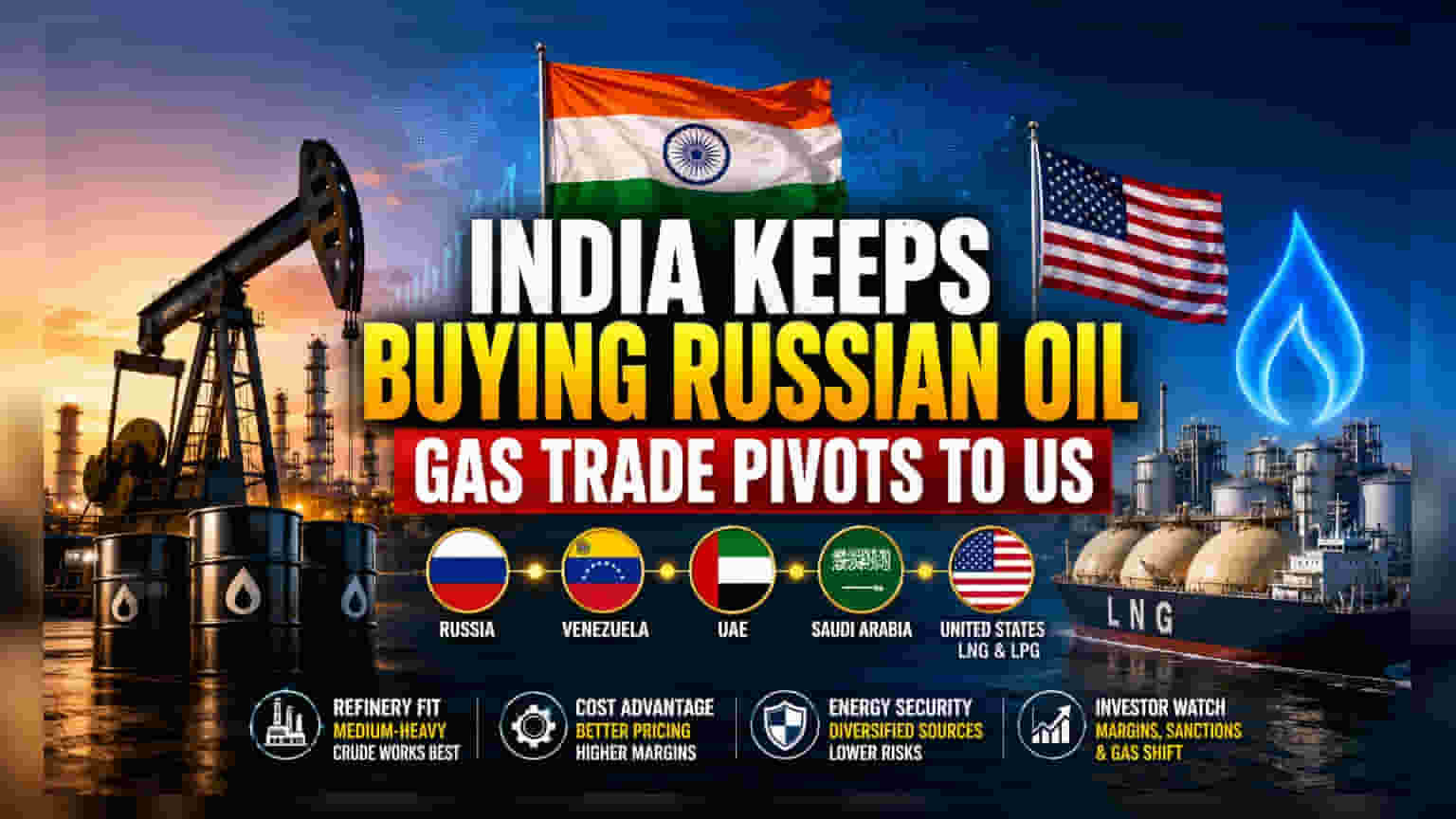


What Happened
India continues to procure crude oil from Russia at significant levels, maintaining its strategy of prioritizing energy security and cost-efficiency. Despite calls from the US earlier this year to reduce these purchases, official trade flows show that Russian oil remains a primary component of India's import mix. While Russia continues to be a major supplier, India is also diversifying its basket by sourcing from countries like Venezuela, the UAE, and Saudi Arabia to secure its energy requirements.
Why Refiners Favor Russian Crude
The preference for Russian oil is not purely political; it is deeply tied to the technical infrastructure of India's massive refining sector. Most Indian refineries are designed to process 'medium to heavy sour' crude oil, which is the type typically produced in Russia and parts of the Middle East. In contrast, crude oil exported from the US is largely 'light sweet' crude.
For an oil refinery, changing the type of crude it processes requires significant capital spending and operational adjustments. Processing the 'wrong' type of crude can lower the Gross Refining Margin (GRM), which is the profit a refinery makes by turning crude into fuel. Because Russian crude is readily available, fits current refinery configurations, and is competitively priced, it remains the most economically viable option for Indian state-owned and private refiners. For investors, this technical compatibility is a key factor in why refiners are hesitant to switch to US-sourced light sweet crude, as the logistics and conversion costs would likely pressure profitability.
The Strategic Pivot to Gas
While crude oil dominates the current energy discourse, the long-term energy trade dynamic between India and the US is shifting toward natural gas. India is investing heavily in gas infrastructure, including LNG terminals and city gas distribution networks, to lower its carbon footprint and modernize its energy mix. Consequently, the US has emerged as a preferred supplier for Liquefied Natural Gas (LNG) and Liquefied Petroleum Gas (LPG). Analysts see this as a more sustainable trade bridge than crude, as India seeks to reduce supply chain risks by diversifying away from its traditional reliance on West Asian oil routes.
Key Risks and Investor Monitorables
The primary risk for stakeholders remains geopolitical and regulatory. Any change in international sanction waivers could force Indian refiners to seek alternative, potentially more expensive sources of crude, which would directly impact their bottom line and profit margins. Additionally, the ongoing instability in the Strait of Hormuz remains a constant logistical threat to global oil shipments, potentially driving up freight costs and insurance premiums for all suppliers.
Investors should track the sustainability of current import trends, particularly regarding any shifts in sanction policies. The focus for shareholders of oil marketing companies and refiners will be on their ability to maintain stable margins despite volatile global energy prices. Future updates on supply diversification efforts and the speed at which India increases its reliance on US-sourced gas will also be essential for understanding the long-term shift in the country's energy import strategy.