 Whalesbook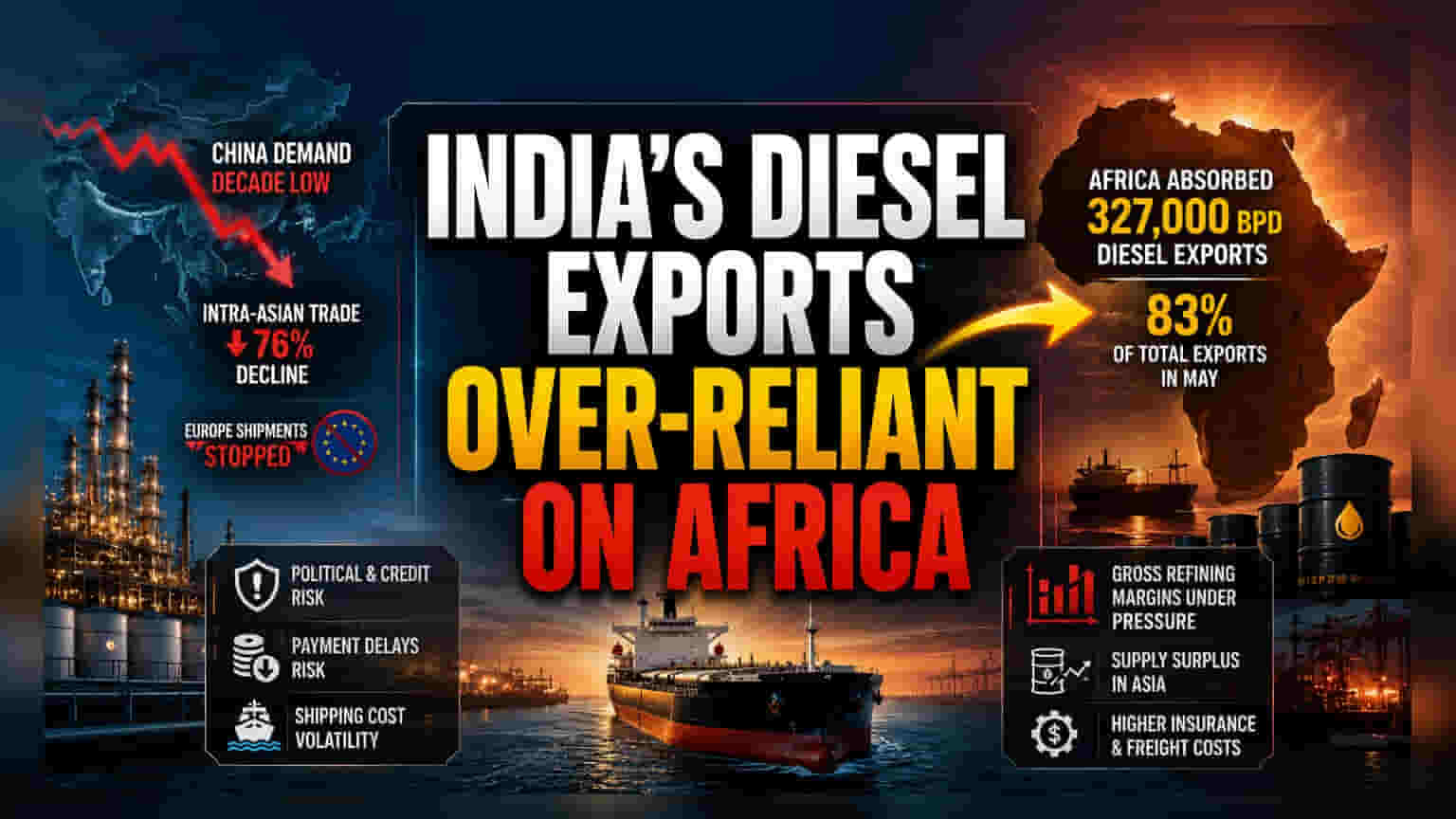


The Compression of Market Diversification
Indian refiners are witnessing an unprecedented concentration of export risk as the continent of Africa absorbed 327,000 barrels per day (bpd) of diesel in May. This massive influx represents 83% of total export volume, a sharp escalation from the 32% recorded just one month prior. While this provides an immediate outlet for surplus production amid a regional glut, it fundamentally alters the risk profile for major domestic energy producers like Reliance Industries and Nayara Energy. Reliance on a single geographical buyer base typically diminishes pricing power and leaves refiners exposed to localized political instability and credit risks inherent in emerging market energy infrastructure.
The Anatomy of a Trade Vacuum
This shift is not merely a strategic choice but a forced reaction to a severe contraction in trans-Asian energy trade. Diminishing crude oil demand in China, which recently hit a decade-long low, has left Asian refineries operating at surplus capacity, effectively shutting the door on Indian product imports. Furthermore, the complete cessation of shipments to European markets—coupled with a 76% collapse in intra-Asian trade—suggests that Indian diesel is currently filling a supply vacuum in Africa that may lack the long-term infrastructure stability of traditional markets. While volume remains steady at 394,000 bpd, the move toward a less transparent, single-continent buyer profile introduces structural inefficiencies and shipping cost volatility that could erode gross refining margins in upcoming quarters.
The Forensic Bear Case: Concentration Risk
The pivot toward Africa acts as a double-edged sword for India’s oil sector. A primary concern is the fiscal health of the importing nations, as many African energy importers face severe foreign exchange constraints that complicate payment timelines. Furthermore, the absence of European demand removes a high-margin premium buyer, forcing Indian firms to compete on price in a fragmented, logistics-heavy environment. Analysts noting the current supply surplus in Asia suggest that if domestic Indian demand softens alongside these export challenges, refiners will face significant inventory buildup, forcing potential production cuts to maintain local price floors. Regulatory headwinds also remain a threat; as geopolitical volatility continues, the cost of maritime insurance and freight for routes skirting traditional transit points continues to climb, eating into the net realized price per barrel.
Forward Trajectory and Sector Sensitivity
Industry consensus points toward a period of extreme margin sensitivity as companies attempt to navigate this bottleneck. With Chinese demand showing few signs of an immediate V-shaped recovery, Indian refiners will likely face sustained pressure to retain their African market share. Market participants are watching for shifts in export data over the coming months to determine if this move is a transient response to temporary refinery imbalances or a permanent realignment that necessitates a fundamental revaluation of India’s energy export strategy.