 Whalesbook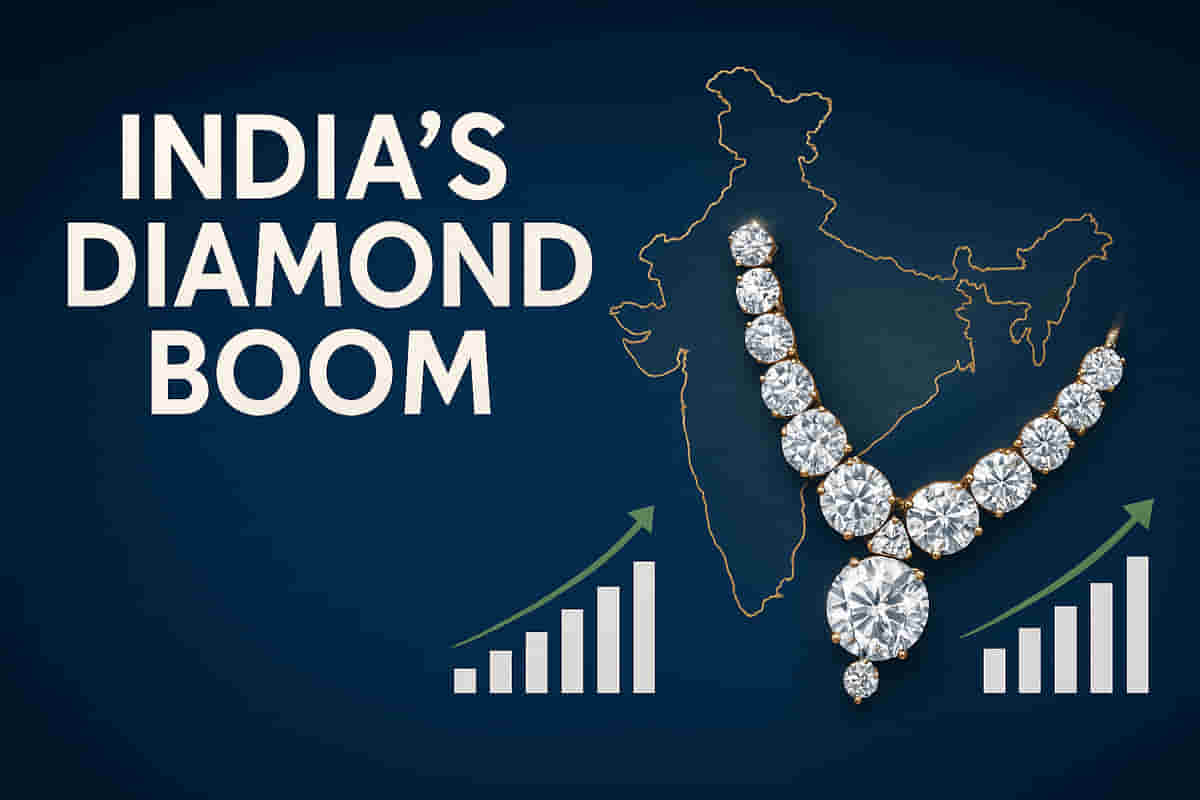
Natural diamonds, historically symbols of royalty and prestige in India, are now captivating a new generation of affluent individuals and younger consumers. The Indian natural diamond market is poised for substantial growth, expected to expand from $18 billion in 2025 to $28 billion by 2030, growing at nearly 9% annually. This surge is largely fueled by millennials and Gen Z, who view diamonds as investments in personal expression, authenticity, and lasting value, rather than just traditional adornments for special occasions.
Impact:
This news significantly impacts the Indian stock market, particularly within the consumer discretionary and luxury goods sectors. Companies involved in jewelry retail, diamond sourcing, and manufacturing are likely to see increased investor interest and potential growth. The shift in consumer preference towards natural diamonds as a tangible asset and store of value could bolster the financial performance and market valuation of relevant Indian businesses. The projected growth indicates strong market momentum.
Rating: 8/10
Definitions:
- Millennials: Individuals born roughly between 1981 and 1996.
- Gen Z: Individuals born roughly between 1997 and 2012.
- CAGR: Compound Annual Growth Rate, a measure of investment growth over a period longer than one year.
- Tangible Assets: Physical assets such as real estate, commodities, or precious metals that have intrinsic value.
- Disposable Incomes: The amount of money that households have available for spending and saving after income taxes have been accounted for.