 Whalesbook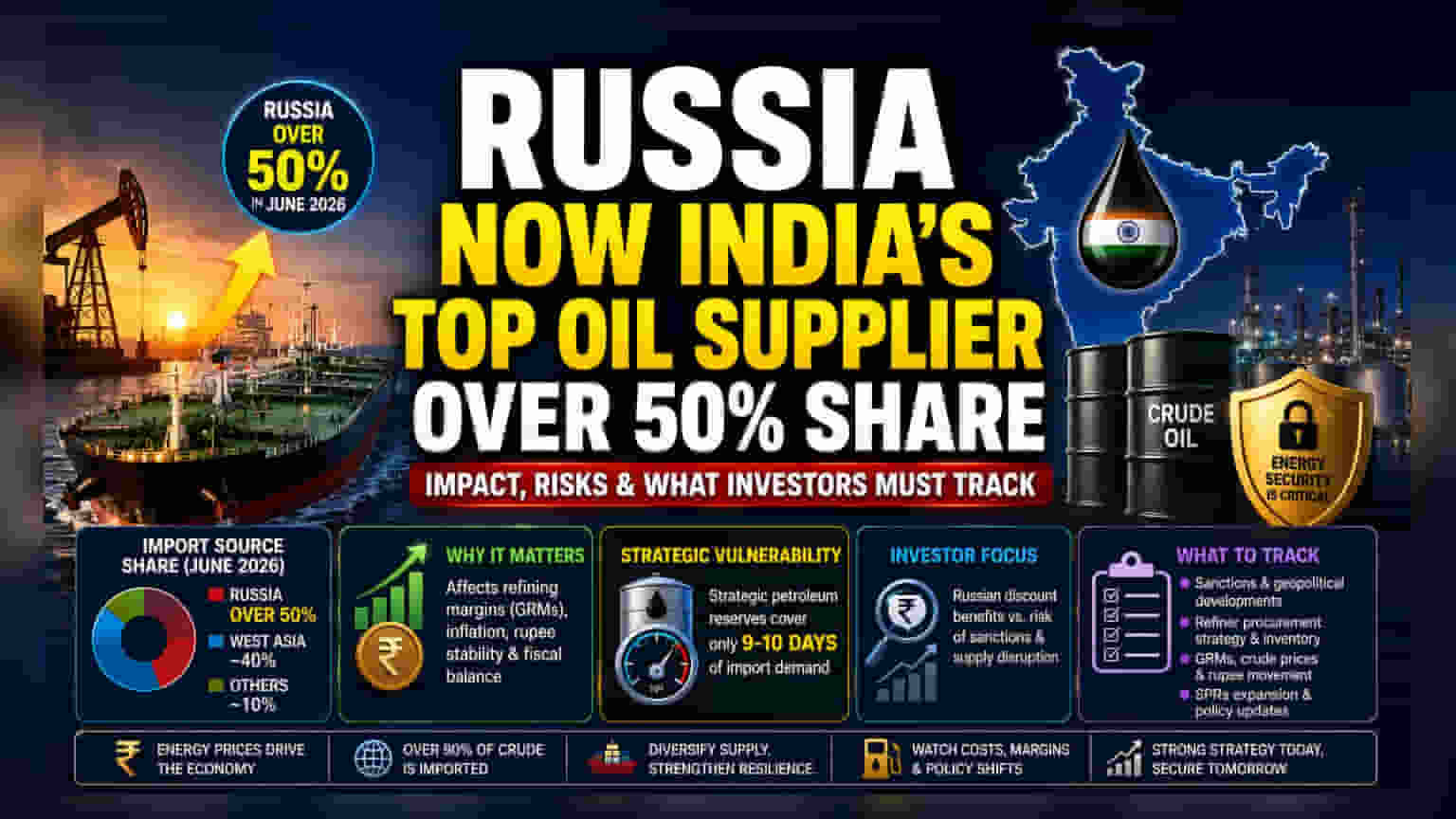


India’s dependence on crude oil imports remains near 90%, with Russian oil now accounting for over half of total supplies. This massive shift, while cost-effective, exposes the economy and refiners to potential sanction risks and logistical disruptions, making energy security a key investor concern.
What Happened
India has seen a fundamental change in its crude oil import profile over the last few years. Recent data indicates that Russia has become the largest supplier of crude oil to India, with its share rising significantly to over 50% in June 2026. This is a sharp contrast to the pre-2022 era when Russia’s contribution to India’s import basket was negligible. While India continues to rely on West Asian suppliers for a significant portion of its needs, the heavy concentration of imports from a single source has prompted closer examination by energy analysts and policymakers.
Why This Matters For Investors
The reliance on a concentrated supplier base has deep implications for the broader economy and the profitability of listed oil marketing companies (OMCs). For India, which imports nearly 90% of its crude oil, energy prices act as a direct input cost for the entire economy. Sudden changes in supply, whether due to geopolitical tension or international sanctions, can affect the stability of the Indian Rupee, inflation levels, and the fiscal balance. For investors, the primary concern is the potential impact on Gross Refining Margins (GRMs). Refiners have historically benefitted from purchasing discounted Russian crude, which allowed them to produce and export petroleum products more competitively. However, any move that restricts this access—such as tougher sanctions or logistical constraints—could force refiners to switch to more expensive sources, potentially narrowing profit margins.
The Strategic Vulnerability
Beyond the cost of oil, energy security is a critical metric for long-term economic stability. Recent assessments highlight that India’s strategic petroleum reserves are sufficient to cover only about 9-10 days of import demand. This is considerably lower than the buffer maintained by many other major import-dependent economies. This limited reserve capacity means that any major disruption to supply lines, particularly in the Gulf region—a key transit route for traditional oil suppliers—could lead to immediate volatility. While Indian refiners have been proactive in using alternative logistical routes to bypass key chokepoints like the Strait of Hormuz, the operational complexity and potential for higher freight and insurance costs remain constant variables.
How Investors May Read This
Investors are watching how the current geopolitical environment interacts with India's import strategy. With global powers potentially tightening sanctions, the risk premium on oil could rise. For Indian refiners, the focus is on whether they can maintain the price advantage they gained from Russian oil or if they will need to pivot back to traditional suppliers, which would fundamentally change their cost structure. The ability to blend different grades of crude and adapt to changing supply realities is a key operational strength that investors are now scrutinizing more closely.
What Investors Should Track Next
Going forward, the key monitorables for shareholders and market participants include any changes to US or international sanctions policy that could affect the availability of Russian crude. Investors should also pay close attention to management commentary from major refiners regarding their procurement strategies, inventory levels, and their ability to hedge against potential price or supply shocks. Furthermore, tracking India's trade balance and its impact on the Rupee will remain essential, as energy costs are a major component of the country’s import bill. Finally, any policy updates regarding the expansion of strategic petroleum reserves or government measures to promote long-term energy diversification will be critical indicators of the country's improved energy resilience.