

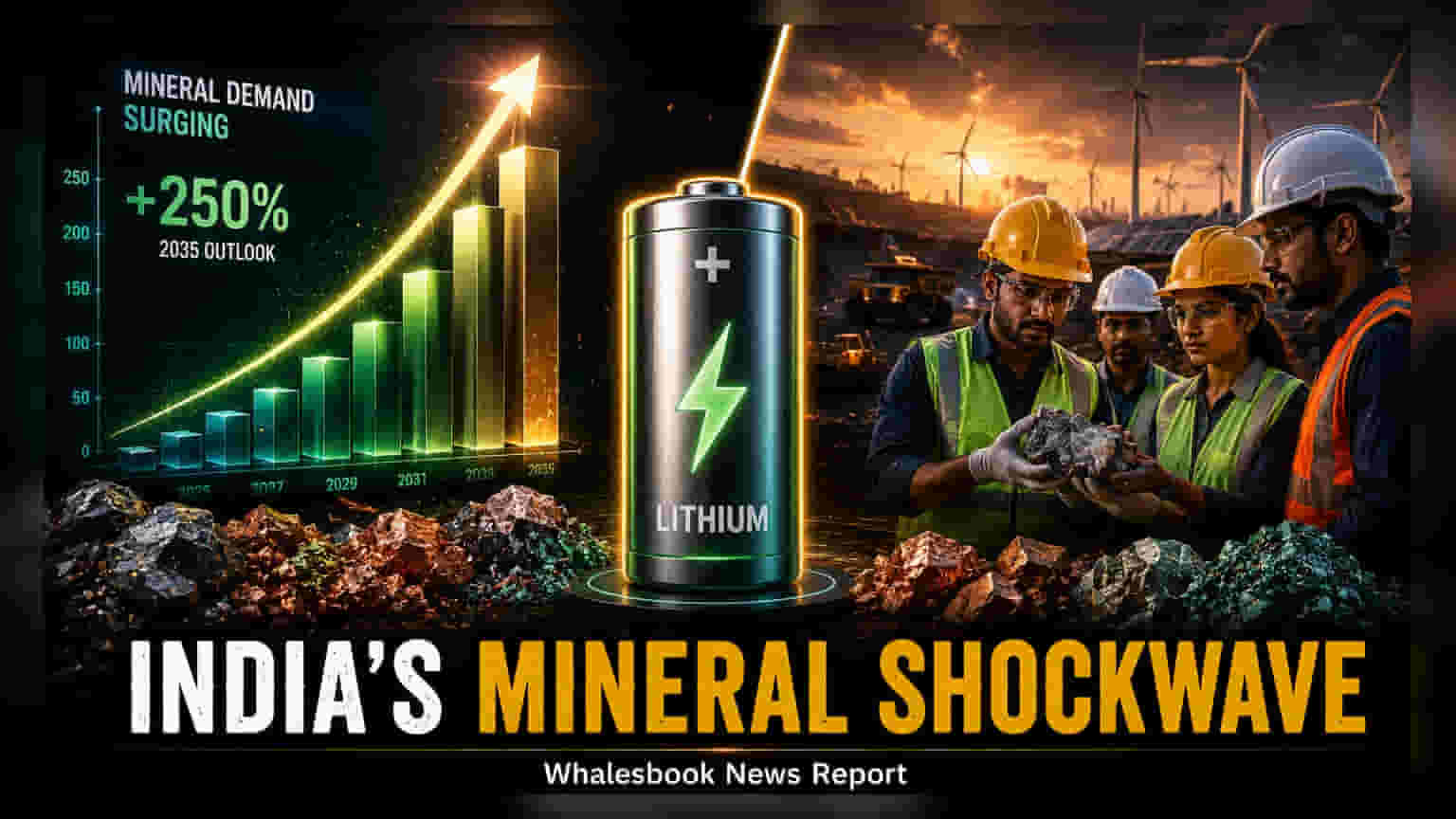
India’s demand for critical minerals like lithium and cobalt could rise ten-fold by 2047 due to the clean energy transition. The surge, driven largely by electric vehicle battery requirements, necessitates massive investment in domestic mining and recycling infrastructure.
India’s shift toward clean energy is creating a massive requirement for critical minerals, with consumption projected to increase between four and ten times by 2047. According to a recent analysis by Grant Thornton, the rapid expansion of the electric vehicle (EV) ecosystem is the primary catalyst, with battery production capacity needs expected to reach 110-130 GWh by 2030. To meet these targets, India will require thousands of tonnes of lithium, nickel, cobalt, and graphite annually.
Challenges in Financing and Execution
While the government has introduced the National Critical Mineral Mission with an outlay of ₹34,300 crore to provide policy support, the sector faces significant capital barriers. Projects involving mineral refining, separation, and recycling are highly capital-intensive and require long periods before they start generating returns. These factors create financial pressure for private players, particularly in the absence of specialized funding instruments for high-risk exploration and advanced refining. To bridge this gap, experts suggest a mix of green bonds, sovereign instruments, and government-backed de-risking mechanisms to support private participation.
Strategic Roadmap for Supply Security
Ensuring a steady supply of these minerals requires a multi-pronged approach that extends beyond domestic mining. The report suggests that India must prioritize the development of recycling infrastructure, aiming for industrial scale-up by 2031-36 to eventually achieve self-reliance. On the global front, the government is encouraged to secure overseas resources through a dedicated sovereign mineral fund and government-to-government agreements. Such measures are intended to reduce reliance on imports and protect the domestic manufacturing value chain from global price volatility.
Policy and Infrastructure Needs
For the sector to grow, significant policy reforms are necessary. This includes simplifying the project approval process, fostering inter-ministerial coordination, and encouraging domestic value addition rather than just raw material exports. As India aims to become a global hub for clean energy manufacturing, the focus will remain on how effectively the current policy framework can balance the need for rapid exploration with environmental and social governance standards. Investors should monitor the progress of specific mining auctions, the deployment of the National Critical Mineral Mission funds, and the speed at which recycling facilities are commissioned over the next few years.