

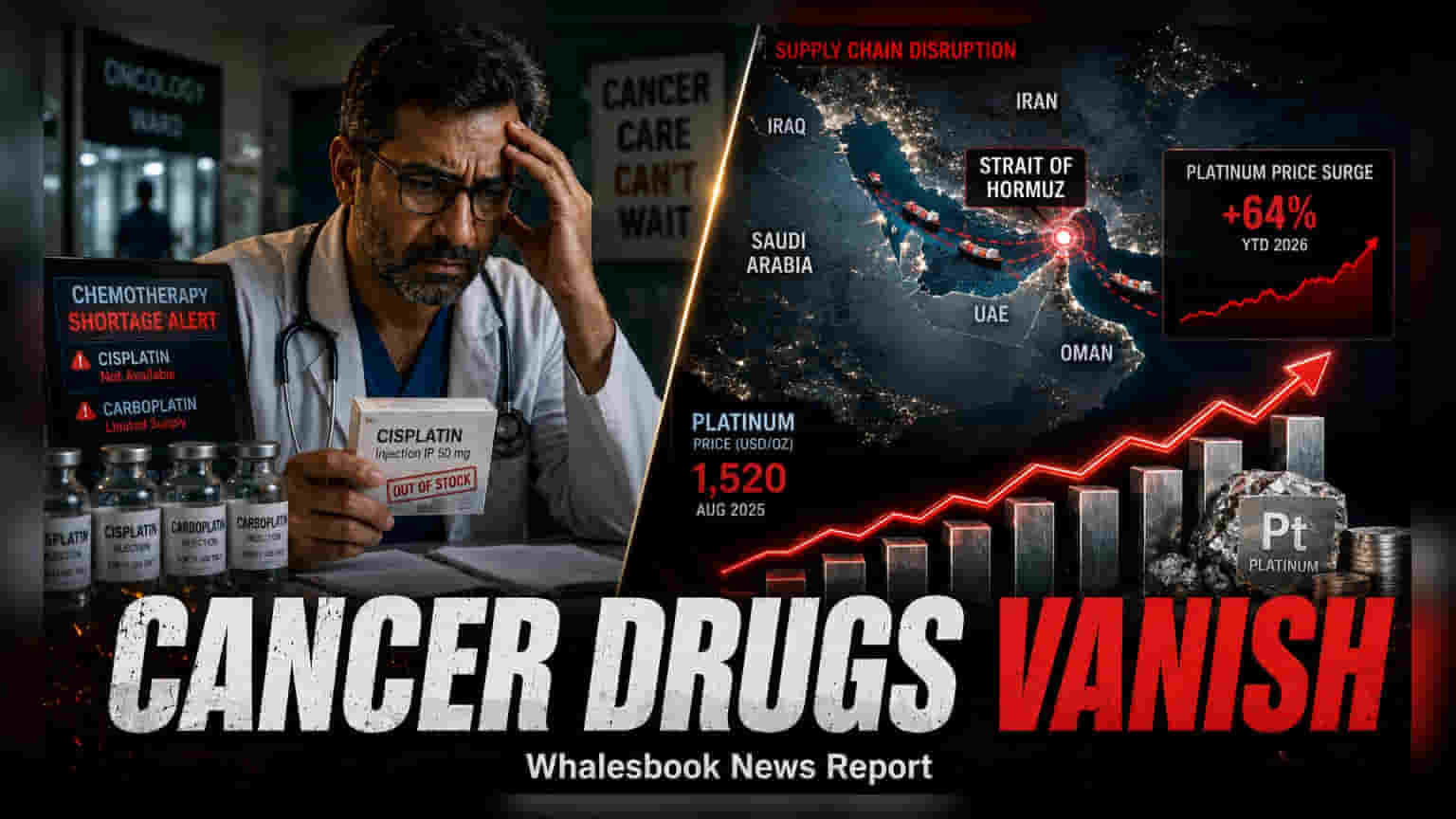
Essential drugs like cisplatin and carboplatin remain scarce in India due to soaring platinum costs and import delays. While the NPPA raised ceiling prices by 50% in June to support production, supply gaps continue to impact patient access. The situation highlights the challenge of maintaining medicine availability during raw material price volatility.
Cancer patients across India continue to face difficulties in accessing essential chemotherapy medications, specifically cisplatin and carboplatin. Despite government efforts to address the issue, pharmacies and hospitals in many regions report intermittent availability, forcing patients to look for alternative treatment centers or manage delays in their care cycles.
The current scarcity stems from a combination of global supply chain disruptions and surging commodity costs. Platinum, a critical raw material used in the production of these drugs, has seen a sharp price increase. Supply lines have been further complicated by shipping disruptions in West Asia, particularly near the Strait of Hormuz, which have slowed down the arrival of imported raw materials.
Impact of Price Controls on Manufacturing
These chemotherapy drugs fall under strict price controls through the National List of Essential Medicines and the Drug Price Control Order (DPCO). This regulatory framework sets a maximum ceiling price at which these drugs can be sold to consumers. When the cost of importing platinum skyrocketed, the production cost for many pharmaceutical manufacturers exceeded these government-mandated price caps. As a result, manufacturing became financially unviable, leading several companies to reduce or suspend production to avoid losses.
To address this, the National Pharmaceutical Pricing Authority (NPPA) intervened on June 12, 2026, by authorizing a temporary 50% increase in the ceiling prices for these essential drugs. This move was intended to make production sustainable again and encourage manufacturers to restore supply levels.
Investor and Sector Context
The situation underscores a significant operational risk for pharmaceutical companies that rely heavily on imported commodities. When raw material prices surge, manufacturers of price-controlled essential drugs face a tight squeeze between high input costs and fixed revenue ceilings. While the recent price hike provides some relief, the persistence of shortages into late August suggests that the supply chain and production lag may take time to normalize.
For investors and industry observers, the key monitorable remains the stability of raw material supply and the speed at which manufacturers can ramp up output to meet demand. The crisis highlights how quickly geopolitical tensions and commodity market volatility can impact the availability of life-saving medicines, potentially affecting the volume growth and profit margins of manufacturers until production fully recovers.