

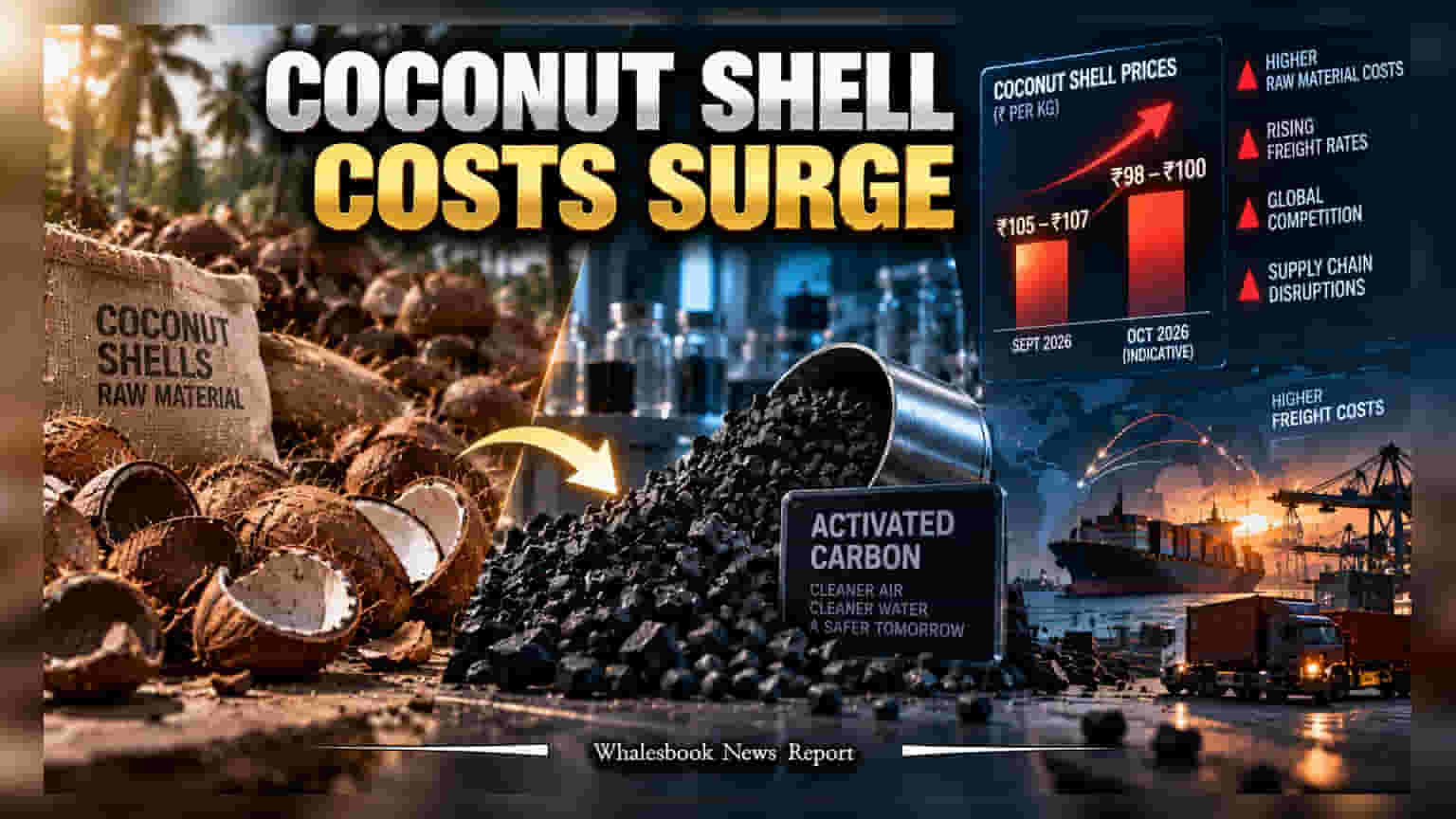
India’s ₹4,700 crore activated carbon export sector is facing stiff competition from Chinese rivals due to high coconut shell costs. To stabilize the supply chain, the industry association has introduced monthly price benchmarks for raw materials. Investors should monitor how these rising input and logistics costs impact the profitability of companies in this sector in the coming quarters.
Indian activated carbon exporters are navigating a difficult period as rising raw material costs and intense global competition threaten their market share. The sector, which generates roughly ₹4,700 crore in annual exports, is struggling to match the aggressive pricing strategies of Chinese competitors. While Indian manufacturers are dealing with volatile prices for coconut shells in southern India, Chinese firms have maintained a cost advantage by sourcing cheaper raw materials from Indonesia and the Philippines.
Industry Response to Price Volatility
To address this, the Activated Carbon Manufacturers Association of India (ACMAOI) has begun issuing monthly indicative pricing for coconut shells. This move is designed to provide a benchmark and stabilize costs, with an October 2026 target of ₹98–₹100 per kg, compared to the September range of ₹105–₹107 per kg. The industry is also lobbying for the inclusion of coconut shells and charcoal under the national GST framework. Producers believe this would bring more transparency to the market and help regulate an area currently lacking clear oversight.
Global Headwinds and Logistical Challenges
Beyond raw material issues, exporters are grappling with significant logistical hurdles. Rising ocean freight rates and a shortage of shipping vessels have driven up the cost of delivering products to global markets. These difficulties are compounded by geopolitical instability in West Asia, which has disrupted supply chain routes. Additionally, trade barriers, including US-imposed tariffs and the loss of access to key markets like Russia and Sudan, have created further pressure on export volumes.
What Investors Should Monitor
The combination of high input costs and global logistical problems creates a clear risk to profit margins. Companies in this industry are currently finding it difficult to pass these additional costs on to international buyers, given the stiff price competition from China. Investors should track upcoming quarterly results to see how individual companies are managing their operating margins and whether they can effectively control costs. The effectiveness of the new indicative pricing mechanism and any potential changes in government tax policy for the sector will be critical updates to watch in the coming months.