

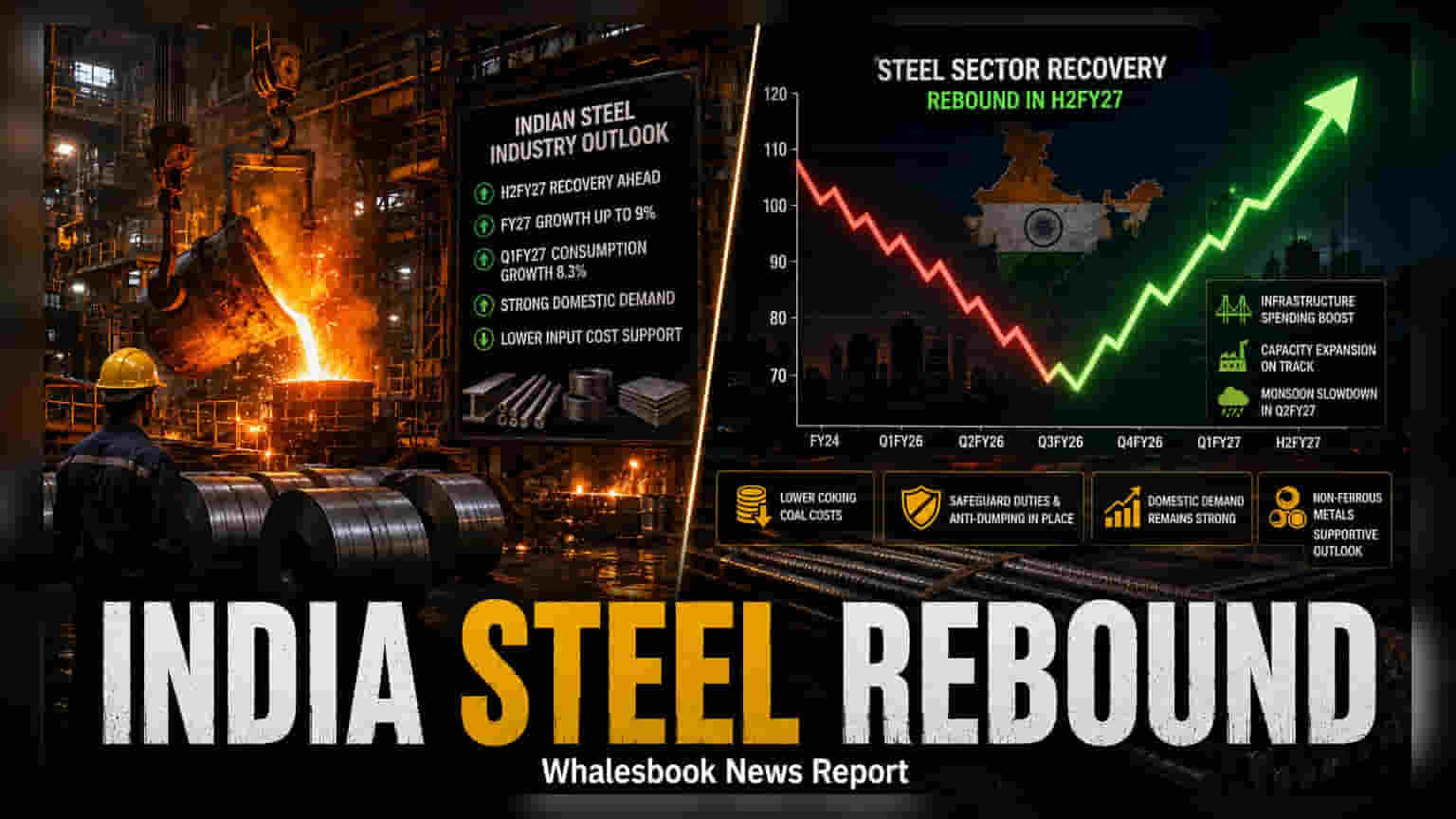
The Indian steel industry is expecting a volume-led recovery in the second half of fiscal year 2027, with analysts projecting a 9% growth rate for the year. While domestic infrastructure demand remains robust, investors should watch for risks like volatile coking coal prices and rising low-cost steel imports from international markets.
The Indian steel sector is preparing for a stronger performance in the second half of the current fiscal year (H2FY27), with industry projections pointing toward growth of up to 9% for the full year. This outlook follows a steady start to the fiscal year, with domestic steel consumption recording growth of 8.3% during the first quarter (April-June 2026).
The expected recovery is driven by a combination of factors. Lower input costs, particularly for coking coal, could provide much-needed relief to profit margins. Additionally, the industry is moving past a period of heavy maintenance shutdowns, which is expected to normalize production volumes. Domestic demand remains the primary backbone of this growth, supported by continued infrastructure-led spending across the country.
Despite the positive volume outlook, several risks remain that investors should monitor. Steel producers face ongoing margin pressure due to volatile global coking coal costs, which represent a significant portion of production expenses. Furthermore, steel imports from markets such as China, Japan, and Russia remain a critical point of concern. Even with existing safeguard duties and ongoing anti-dumping investigations, the potential influx of low-priced foreign steel can put pressure on domestic price realization.
Major steel producers are continuing their capacity expansion and efficiency projects as planned. While the second quarter (Q2FY27) may experience a seasonal slowdown due to the monsoon, industry sentiment remains constructive for the medium term. This expansion focus signals that companies are looking to secure a stronger competitive position despite short-term fluctuations.
Beyond the steel segment, the broader metals market—specifically non-ferrous metals like aluminum and zinc—also shows potential. Analysts expect the global aluminum market to remain in a supply deficit, which may act as a supporting factor for prices through the remainder of the fiscal year.
For investors, the most critical factors to track will be the volume and pricing of steel imports, the movement of global coking coal prices, and whether domestic consumption maintains its current momentum once the monsoon season concludes. Any deviation in these areas could impact the profit margins and production targets of major steel manufacturers.