

Domestic steel prices have reached a four-year peak, driven by soaring coking coal costs and consistent demand. For investors, the key focus is whether manufacturers can pass these input costs to end-users without impacting sales volume or margins.
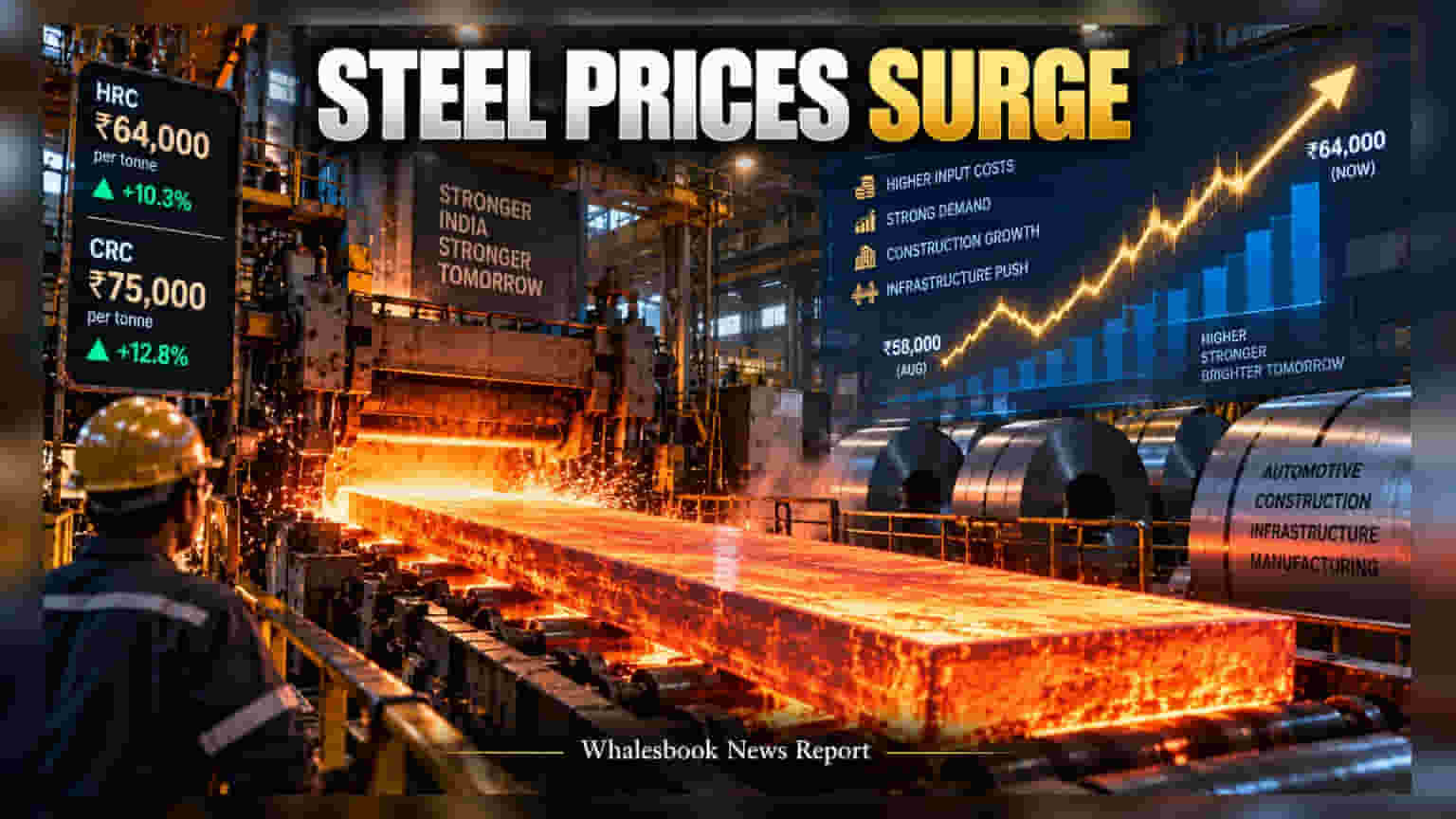
Steel prices in India have climbed to their highest levels since mid-2022, creating a complex situation for both manufacturers and the industries that rely on this metal. Hot rolled coils (HRC) are currently trading at Rs 64,000 per tonne, while cold rolled coils (CRC) have reached Rs 75,000 per tonne. These figures mark a sharp increase from prices seen just a few weeks ago in early August, when HRC and CRC traded at Rs 58,000 and Rs 66,500, respectively.
The Cost Push Factor
The primary driver behind this price rally is the volatility in global coking coal markets. Coking coal, a critical raw material for steel production via the blast furnace route, has seen its price rise by approximately USD 65 to reach USD 305 per tonne within a single month. Because coking coal represents over 30 percent of total production costs for primary steelmakers like Tata Steel, JSW Steel, SAIL, and Jindal Steel & Power, such a rapid increase creates immediate pressure on operating margins.
Demand and Downstream Impact
On the demand side, the market is currently supported by a steady recovery in domestic consumption. Between April and August of the current fiscal year, steel consumption grew by 7 percent year-on-year, reaching 70 million tonnes. This growth is largely supported by post-monsoon activity in the construction and infrastructure segments, which together account for about 60 percent of India’s steel demand. The automotive sector also continues to provide consistent volume, helping producers manage inventory levels despite higher output prices.
Investor Perspective and Risks
For investors, the critical monitorable is the ability of steel companies to successfully pass on these higher costs to customers. While price hikes can support revenue, they risk slowing down demand if end-users—particularly in the automotive, appliance, and construction sectors—find the material too expensive. Another inherent risk is the potential for increased steel imports. If domestic steel prices remain significantly higher than international benchmarks, cheaper imports may flood the market, limiting the ability of local manufacturers to sustain these price levels.
Investors should track the upcoming quarterly financial results of major steel producers to see how their profit margins are holding up against this raw material inflation. Additionally, monitoring the trend in coking coal prices and government policy regarding steel imports will be essential to understand the long-term sustainability of this pricing environment.