

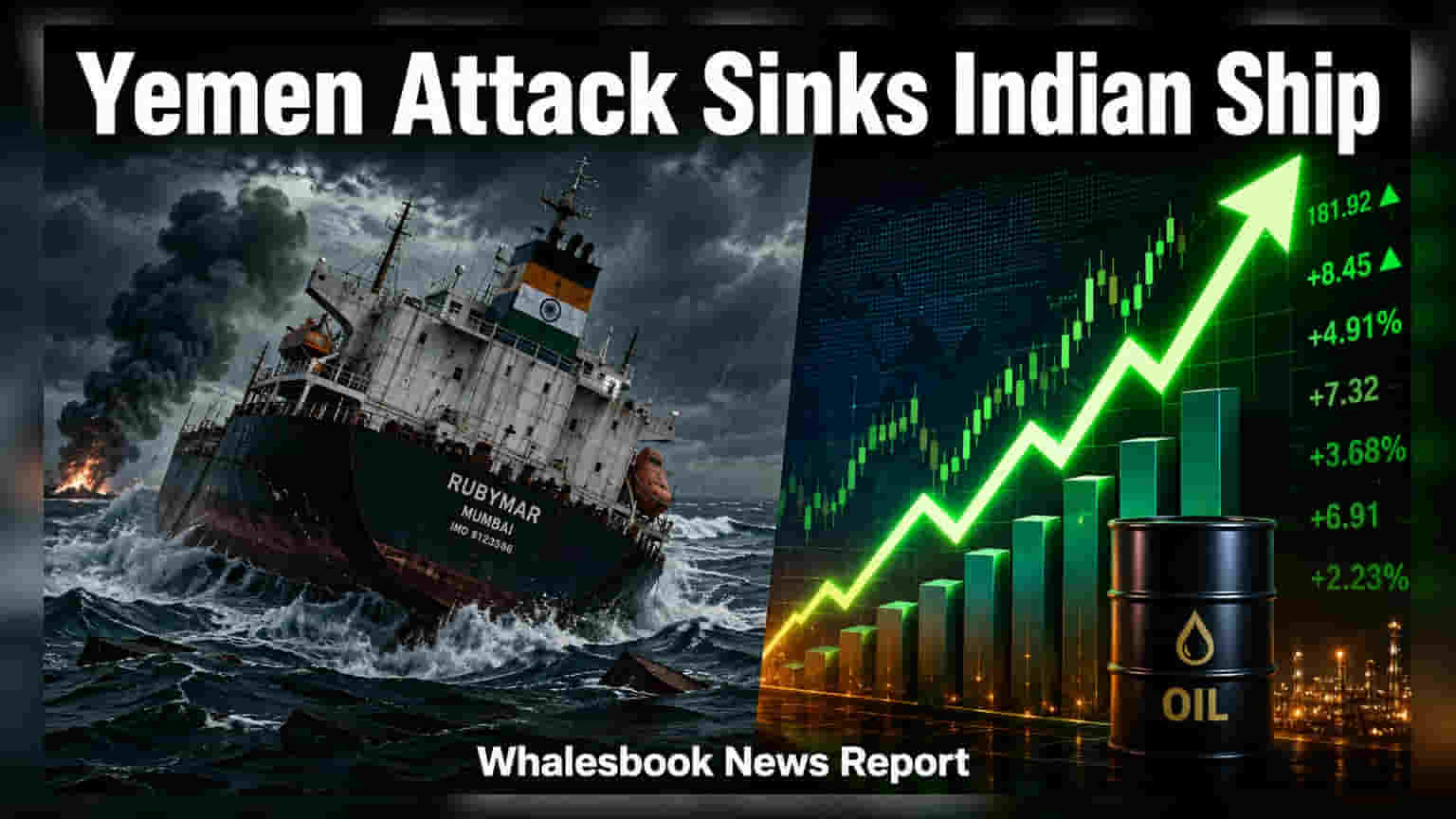
An Indian-flagged vessel, MSV Faize Noore Oliya, sank off Yemen on August 4 after a projectile strike, with all 14 crew members safely rescued. Simultaneously, Brent crude prices dropped over 5% to below $80 as US officials signaled progress in talks to reopen the Strait of Hormuz. The event highlights persistent security threats in maritime trade routes that impact India's energy import costs and supply chain stability.
On August 4, 2026, the Indian-flagged commercial vessel MSV Faize Noore Oliya sank in the Red Sea off the coast of Yemen after being struck by an unidentified projectile. The Indian government has strongly condemned the incident, which underscores the ongoing volatility and security challenges in vital maritime trade routes. All 14 crew members, including 13 Indian nationals, were rescued by the Yemeni Coast Guard and taken to the Port of Mokha.
While the attack highlights the risks faced by commercial shipping in the region, global oil markets reacted to a different development. Brent crude prices declined by more than 5%, falling below $80 a barrel. This shift was largely driven by comments from US officials, including Treasury Secretary Scott Bessent, who suggested that diplomatic progress with Iran could lead to the reopening of the Strait of Hormuz. The prospect of normalized energy flows through this critical chokepoint helped ease supply concerns among traders, leading to the price drop.
For Indian investors, the energy sector is a critical area to monitor following these events. As one of the world's largest importers of crude oil, India is sensitive to changes in global energy prices and shipping security. When maritime conflicts escalate, they often lead to higher marine insurance premiums and increased freight expenses. Even if global oil prices decrease, these additional logistics costs can put pressure on the operating margins of Indian refiners if they cannot pass on the expenses to consumers.
Furthermore, the safety of the Red Sea and the Bab el-Mandeb strait remains a significant factor for the supply chain of Indian energy companies. If attacks on commercial vessels persist, shipping firms and refiners may face difficult operational choices. They may have to decide between paying higher insurance costs or rerouting shipments around the Cape of Good Hope, which adds substantial time and cost to fuel imports.
Moving forward, market participants may track the progress of the US-led diplomatic discussions regarding the Strait of Hormuz, as any tangible agreement could stabilize energy supply routes. At the same time, the ability of international forces to restore security in the Red Sea will remain a key monitorable. Any further disruption to these essential maritime channels could impact the import costs and fuel supply timelines for domestic oil and gas companies.