

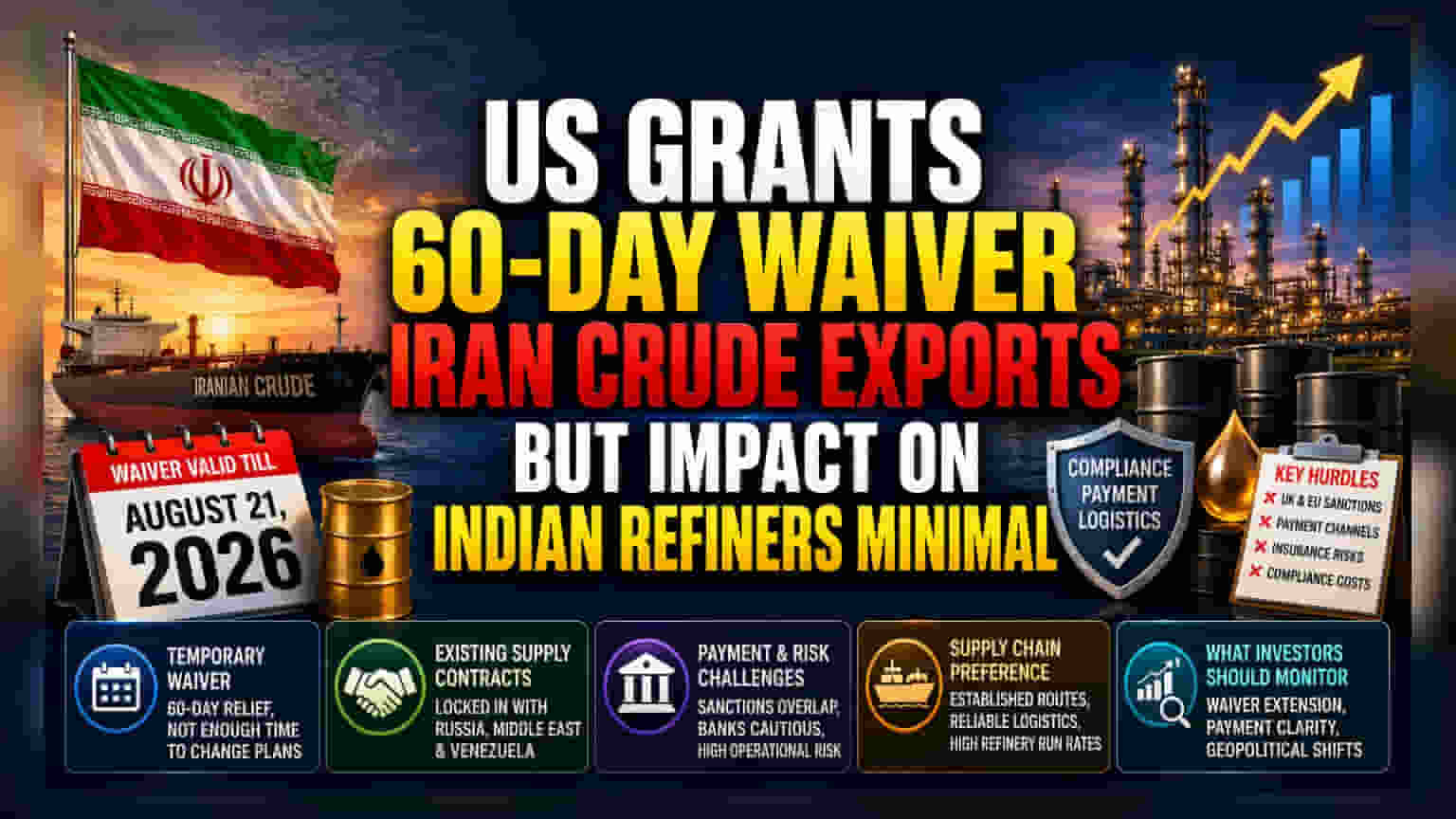
A 60-day US sanctions waiver on Iranian crude oil is unlikely to significantly change import patterns for Indian refiners. Complex payment mechanisms and insurance limitations remain the primary barriers. Indian oil companies continue to prioritize established supply chains from Russia and the Middle East, making an immediate shift in procurement strategy improbable.
What Happened
The United States has issued a 60-day sanctions waiver allowing for increased Iranian crude oil exports, effective until August 21, 2026. While the move is aimed at easing global crude supply tightness, the practical impact for Indian refining companies is expected to be minimal. The temporary nature of this relief acts as a significant deterrent, as refiners typically plan procurement strategies months in advance to ensure stability in their refinery operations.
Why This Matters For Business
For Indian refiners, the challenge of sourcing crude goes beyond the price per barrel. It involves ensuring a consistent flow of supply, secure logistics, and compliant payment channels. Most major Indian refiners have already locked in supply contracts for the coming months with established partners in Russia, the Middle East, and increasingly, Venezuela. These long-term arrangements offer the predictability required to maintain high utilization rates at refineries. Engaging with Iranian crude would require the setup of new, compliant payment and insurance frameworks, which is difficult to justify for a short-term, 60-day window.
The Payment And Risk Hurdle
The primary barrier to utilizing Iranian crude is not just the US waiver, but the complex geopolitical landscape. Even with the US Office of Foreign Assets Control (OFAC) issuing a general license for dollar-denominated payments, significant concerns remain regarding sanctions enforced by the United Kingdom and the European Union. These overlapping regulatory layers create substantial operational risks for Indian companies. Financial institutions, fearing secondary sanctions, remain cautious about facilitating transactions involving Iranian entities, even when waivers are in place. Ratings agency ICRA has noted that while the waiver is a positive step for crude availability, it does not immediately remove the logistical and payment hurdles for buyers outside of China.
The Supply Chain Preference
Indian refiners are currently focused on maximizing the efficiency of existing supply lines. With Russian crude availability remaining robust and logistical routes well-established, there is little incentive to disrupt these flows for opportunistic, short-term purchases. Unless Iranian oil is offered at deep discounts that offset the legal and logistical costs of managing compliance risks, refiners are likely to maintain their current sourcing strategies. Historical data from previous waiver periods also suggests that non-Chinese buyers generally show low participation due to these systemic complexities.
What Investors Should Monitor
Investors should focus on the stability of crude costs and the reliability of supply chains, which are critical to maintaining refining margins. The key monitorables include the potential for any extension of the sanctions waiver, clarity on long-term payment mechanisms, and any shifts in geopolitical tension that might ease insurance and logistical constraints. Significant shifts in these areas would be necessary to alter the current procurement approach of Indian refiners.