 Whalesbook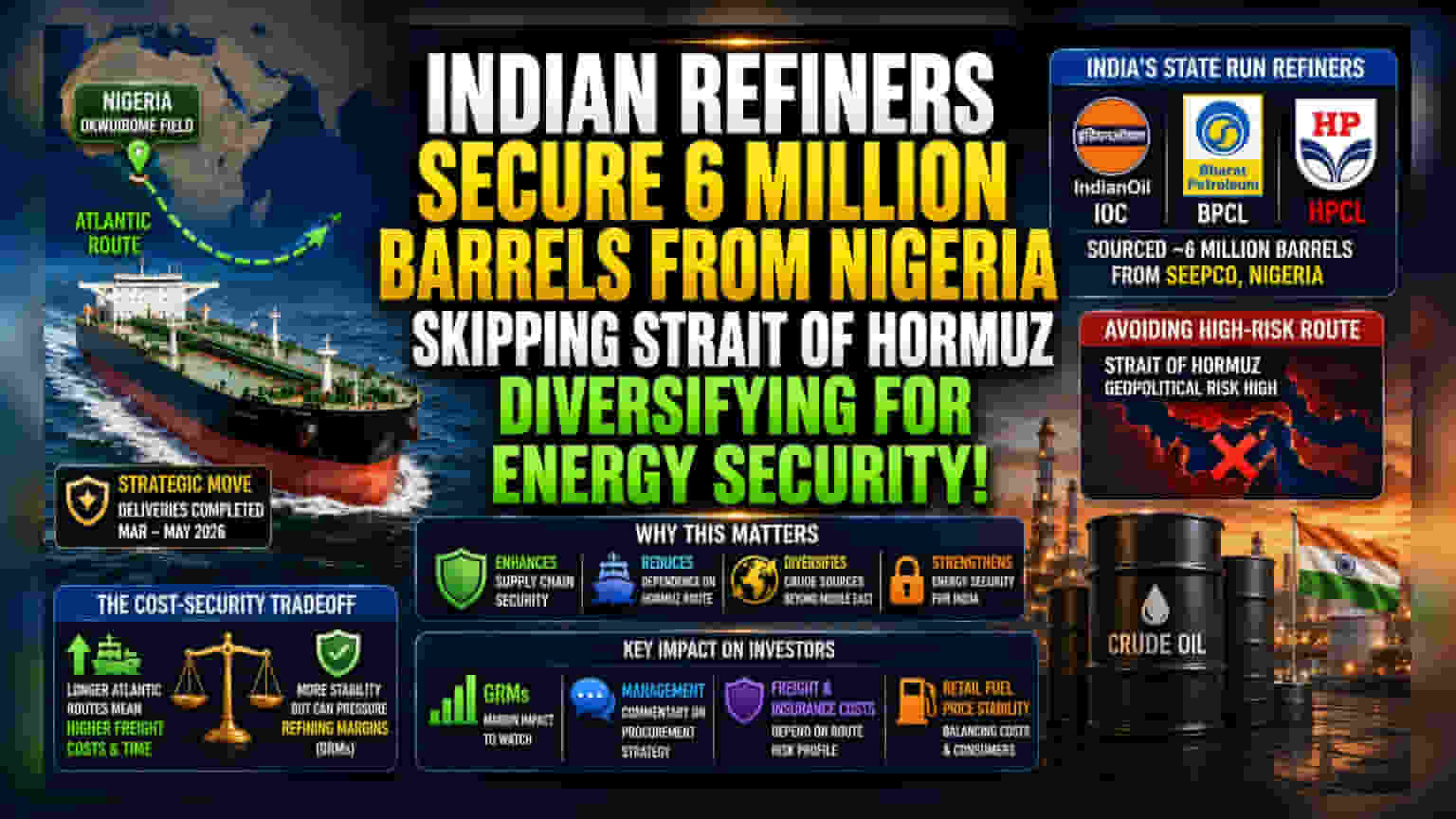


Indian state-run refiners IOC, BPCL, and HPCL have imported 6 million barrels of Nigerian crude oil via Atlantic routes. This strategic shift aims to bolster energy security by reducing dependence on the Strait of Hormuz, a critical waterway facing ongoing geopolitical tensions.
What Happened
State-run Indian refiners—Indian Oil Corporation (IOC), Bharat Petroleum Corporation Limited (BPCL), and Hindustan Petroleum Corporation Limited (HPCL)—have secured approximately six million barrels of crude oil from Sterling Oil Exploration & Energy Production Company Limited (SEEPCO). The delivery, which took place between March and May 2026, originated from the company’s Okwuibome field in Nigeria.
The oil was transported via Atlantic shipping routes rather than the traditional path through the Strait of Hormuz. This decision marks a deliberate attempt by India's major public-sector refiners to avoid a vital but highly volatile oil transit corridor currently under significant geopolitical pressure.
Why This Matters For Investors
For Indian oil marketing companies, crude procurement is not just about the cost of oil; it is about the security of supply chains. A large portion of India’s energy imports has historically relied on Middle Eastern producers, with many shipments passing through the narrow Strait of Hormuz. When this route faces disruptions or geopolitical uncertainty, refiners face risks related to shipping delays, higher insurance premiums, and the potential for a complete blockage of supply.
By sourcing from Nigeria and utilizing Atlantic routes, these refiners are diversifying their supply base. While this enhances operational resilience, investors should note the trade-off: Atlantic shipping routes are generally longer than the traditional routes from the Persian Gulf. Longer voyages involve higher freight costs and more time at sea, which can impact the overall landing cost of crude oil.
The Cost-Security Tradeoff
Diversification is a core pillar of India’s energy security policy, especially given that the country imports over 85% of its crude oil requirements. However, this strategy comes with financial implications. Shifting from short-haul Middle Eastern routes to long-haul alternatives like West Africa or Latin America often requires careful management of refinery margins.
If the freight cost for these longer routes remains elevated, it could put pressure on the gross refining margins (GRMs)—a key measure of profitability for refiners. Investors often look for a balance between the added stability of diversified sources and the potential impact on operating costs. In the past, government-backed refiners have navigated these pressures through a mix of long-term contracts and opportunistic spot purchases, but prolonged reliance on more expensive shipping lanes remains a variable to watch.
Peer and Sector Context
India's refining sector is currently navigating a period of heightened caution regarding supply stability. Peers and private players are also increasingly exploring diverse geographies—such as Russia, Brazil, and the US—to reduce reliance on any single transit point. While this move toward Nigeria highlights a structural shift in procurement, it aligns with a broader industry trend where state-owned entities prioritize long-term stability over the short-term cost advantages of traditional Gulf routes.
What Investors Should Track
Investors monitoring these companies should pay attention to future disclosures regarding crude sourcing mix and freight expenses. Key monitorables include:
- Changes in Gross Refining Margins (GRMs) in upcoming quarterly results, which may reflect the impact of higher shipping costs.
- Management commentary regarding their crude procurement strategy and the trade-offs between supply reliability and cost.
- Any updates on shipping insurance or freight insurance costs, which can fluctuate based on the risk profile of the routes used.
- The stability of domestic retail fuel prices, as state-owned refiners often manage the balance between international procurement costs and local consumer pricing.