

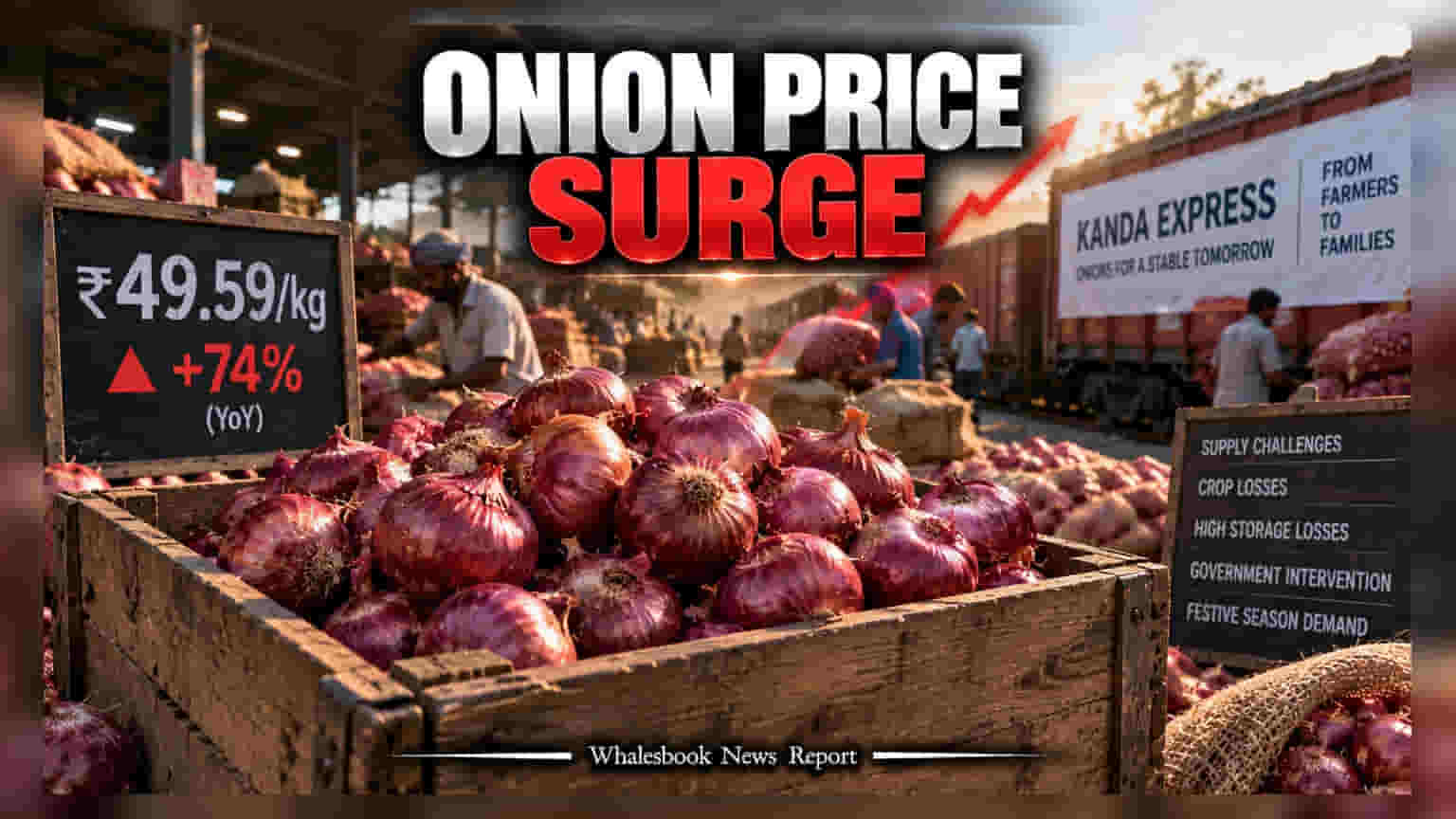
Retail onion prices have surged to an average of ₹49.59 per kilogram as storage losses and drought conditions in Karnataka restrict supply. The government has launched subsidized sales via rail and road to stabilize costs during the festive season.
Retail onion prices across India have witnessed a sharp increase, with the all-India average reaching approximately ₹49.59 per kilogram by September 2026. This reflects a significant year-on-year rise of over 74%, creating pressure on household budgets and raising concerns regarding food inflation during the upcoming festive period. The rapid price escalation is primarily driven by a severe supply-side crunch resulting from multiple environmental factors that have impacted production and storage.
Supply Chain Challenges and Crop Losses
The current price volatility is largely attributed to a combination of damaged rabi crops caused by unseasonal rains and high post-harvest storage losses. Industry estimates indicate that between 35% and 40% of stored onions have been lost due to quality issues such as rotting, which is exacerbated by extreme heat and moisture. Furthermore, the supply outlook has been clouded by drought conditions in Karnataka, a key kharif onion-producing state. Reports show a reduction of approximately 24% in onion cultivation acreage in the region, which has delayed the anticipated arrival of fresh produce to the market.
Government Market Intervention
To mitigate the impact of these shortages, the central government has initiated a calibrated release of onion buffer stocks. This includes the deployment of the 'Kanda Express' rail rakes alongside road transport to expedite the distribution of supplies to high-demand consumption centers. As part of this stabilization effort, subsidized onions are being sold at ₹35 per kilogram in 19 cities. State governments, including those in Tamil Nadu and Kerala, have also introduced local distribution channels, providing onions at controlled rates through the public distribution system to ration card holders.
Economic and Macro Implications
For the broader economy, persistent volatility in perishable commodity prices like onions remains a factor in food inflation tracking. As food items hold significant weight in the Consumer Price Index (CPI), fluctuations in vegetable prices are closely monitored by policymakers and market analysts. The effectiveness of the current government interventions, particularly the speed of distribution via the 'Kanda Express' and the ability of state-level supply chains to handle perishable goods, will determine the trajectory of retail prices in the coming weeks.
The most important monitorable for the near term is the timing and volume of the kharif harvest arrivals from Karnataka and Maharashtra. If the drought-affected regions continue to see delayed production, market prices may remain under pressure through the festive season despite the government's subsidized stock releases.