

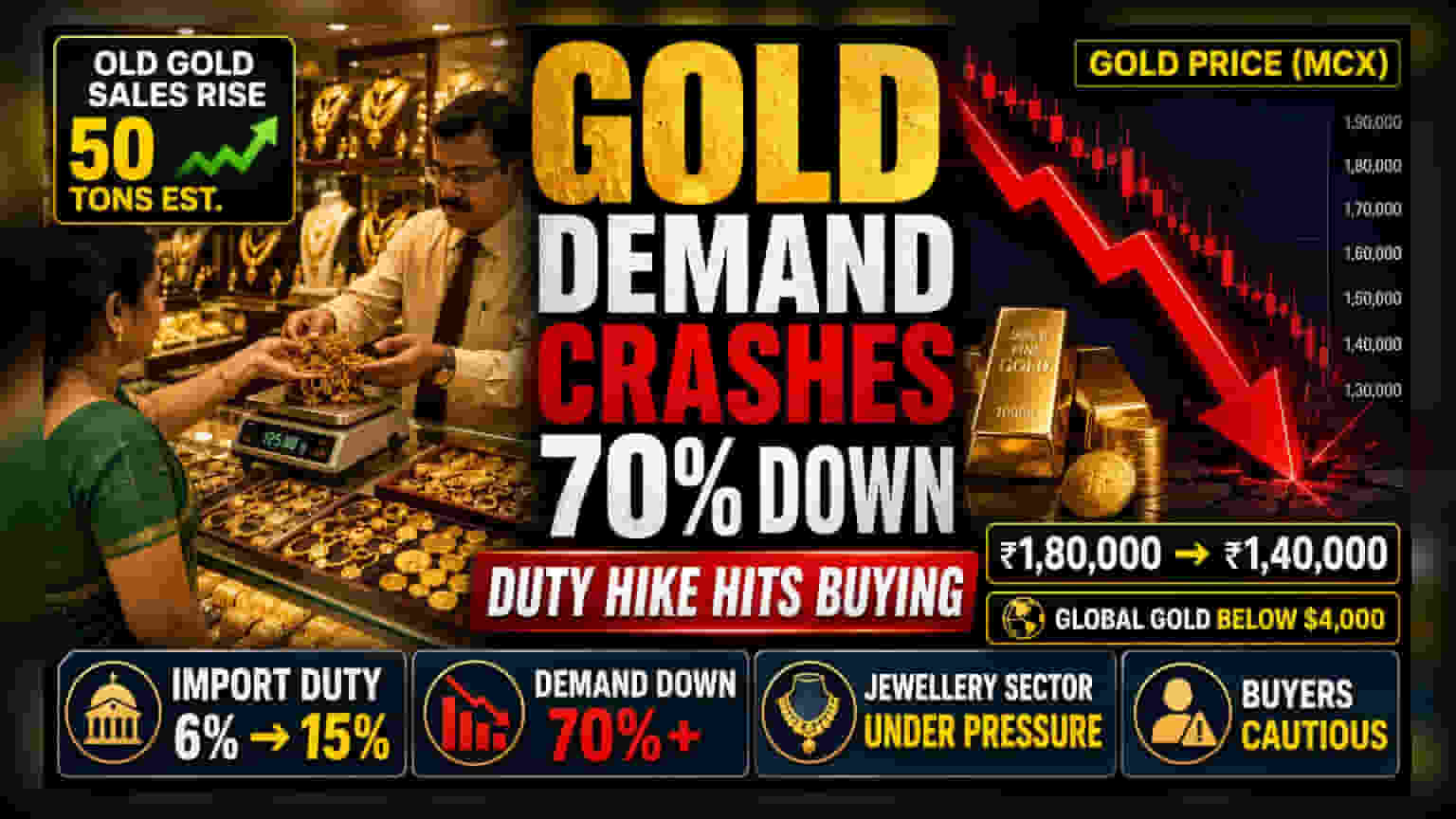
India’s gold demand has plummeted by over 70% following a sharp increase in import duties, while households are liquidating old jewelry amid falling prices. With gold prices correcting nearly 30% from January peaks, the market faces a significant slowdown in new retail buying. Investors in the jewellery sector may track how this demand dip affects upcoming sales volumes.
What Happened
India has seen a sharp decline in gold demand, which has dropped by more than 70% since mid-May 2026. This trend follows a significant government decision to raise import duties on gold from 6% to 15% on May 13. At the same time, the market is witnessing a rise in consumers selling back their old gold jewelry. Estimates from the India Bullion and Jewellers Association (IBJA) suggest that sales of old gold jewelry could reach 50 tons in the April-June quarter, a marked increase compared to previous periods.
Price Correction and Market Sentiment
Gold prices have undergone a major correction, falling nearly 30% since the start of January 2026. Prices retreated from a peak of over ₹1,80,000 per 10 grams in January to roughly ₹1,40,000 by the end of June. This cooling in prices, coupled with the higher cost of importing gold due to the duty hike, has led to a cautious approach among buyers. Global factors are also at play, with gold prices dipping below $4,000 internationally. Market reports point to concerns over US interest rate expectations and geopolitical tensions in the Middle East as key drivers putting pressure on the metal.
Impact on the Jewellery Sector
For investors in the Indian jewellery retail sector, this trend presents a challenge. Companies like Titan Company and Kalyan Jewellers rely heavily on consumer demand to drive volume growth. When demand drops by 70%, retailers often find it difficult to maintain the same level of sales volume growth seen in more stable periods. While jewellers do earn from processing charges and making high-value sales, a sustained slowdown in new jewelry purchases can squeeze top-line growth. Additionally, if the trend of consumers selling old jewelry continues, retailers may see an increase in inventory but potentially lower margins on new jewellery sales.
Why Consumers Are Selling
Historical data suggests that when gold prices experience a prolonged downward trend, consumers often choose to liquidate their existing holdings rather than purchase new assets. This behavior is driven by fears of further price erosion. As the value of gold has slipped from its highs, many households are opting to sell old ornaments to lock in value or free up cash, creating a feedback loop where supply in the secondary market increases while new retail buying remains subdued.
What Investors Should Track
Investors monitoring the jewellery sector should look for updates in three key areas. First, watch for any government announcements regarding adjustments to gold import duties, as policy changes directly impact the cost of raw material for retailers. Second, monitor the quarterly volume growth reported by major jewellery chains to assess if they are able to retain customers despite the broader demand slowdown. Finally, track the trend of gold prices, as a stabilization or recovery in prices often signals a return of consumer confidence and renewed buying interest.