 Whalesbook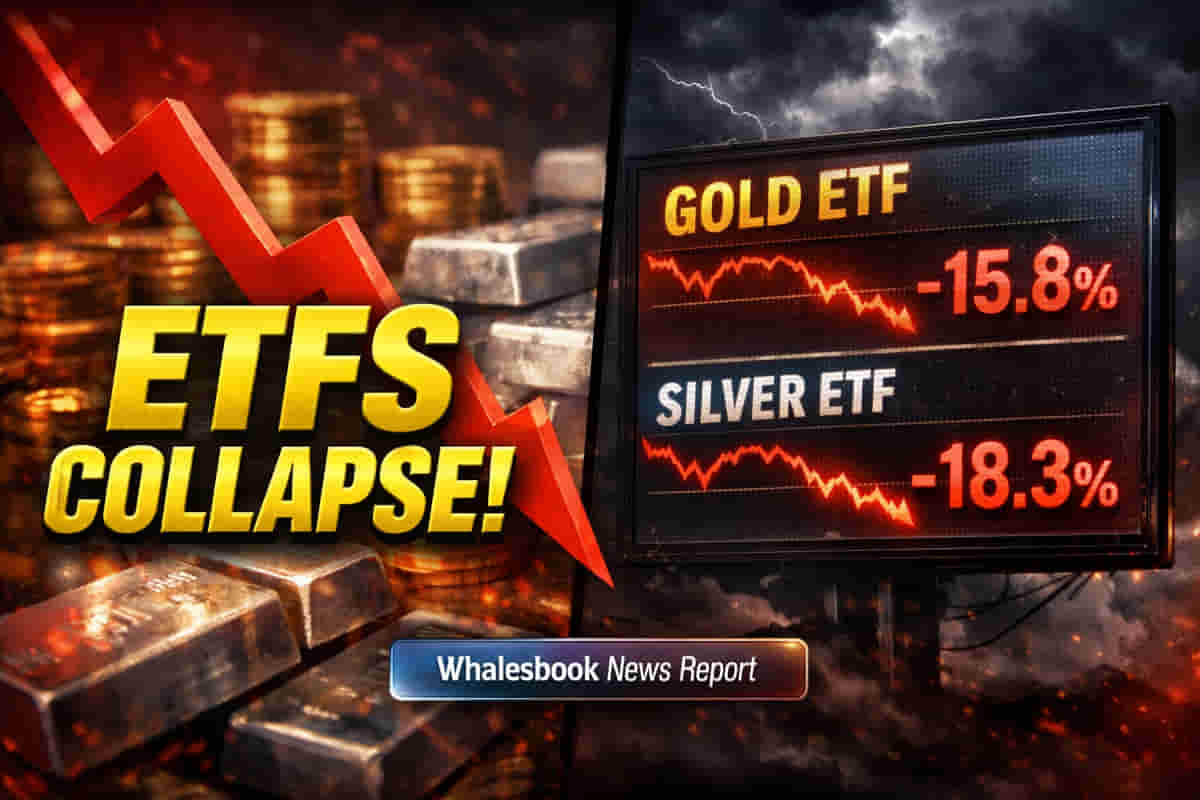


The Seam
The performance of Indian precious metal ETFs on Thursday, February 5, 2026, starkly illustrates the fragility of recent gains, as both silver and gold ETFs registered significant declines. This immediate fall underscores a market grappling with persistent speculation surrounding US monetary policy and broader geopolitical tensions, which have historically amplified volatility in these safe-haven assets.
The Core Catalyst
Silver ETFs bore the brunt of the day's selling pressure, with funds like Axis Silver ETF and Kotak Silver ETF tumbling by approximately 16-20%. HDFC Silver ETF, Nippon India Silver ETF, and SBI Silver ETF each saw declines around 15%. Gold ETFs, while also affected, experienced less severe drops, ranging from 4.5% to 6% across offerings from Aditya Birla Sun Life, Axis, Tata, Nippon India, and DSP.
This broad-based retreat directly mirrored the sharp fall in underlying bullion prices. On the Multi Commodity Exchange (MCX), gold futures for March delivery dipped 1.58% to approximately ₹1,48,455 per 10 grams, while March silver contracts plummeted 9% to ₹2,44,654 per kilogram. This selling pressure erased gains from a brief, two-day recovery that followed a dramatic sell-off last week, where silver and gold spot prices had previously fallen 32% and 13%, respectively.
The Analytical Deep Dive
Analysts attribute the renewed pressure to lingering market uncertainty, particularly regarding potential shifts in US Federal Reserve policy. News that US President Donald Trump would nominate Kevin Warsh to lead the Federal Reserve last week served as a trigger for Friday's sharp sell-off, with markets interpreting this as a signal for tighter monetary policy. This expectation tends to strengthen the US dollar, making dollar-denominated commodities like gold and silver less attractive.
While global gold ETFs saw declines of around 1% and global silver ETFs dropped about 4%, the steeper falls in Indian silver ETFs suggest a more pronounced reaction within domestic markets. This heightened volatility in silver is not entirely new; silver is generally three times more volatile than gold due to its dual role as a precious metal and an industrial commodity, making it more susceptible to economic cycle shifts and speculative trading. The thinner trading volume in silver markets compared to gold also amplifies price movements.
Historical precedent shows that speculation around Fed appointments significantly impacts precious metals. The period leading up to February 2026 has seen elevated volatility, with major price swings observed. Zerodha founder Nithin Kamath noted such market movements are "rare" and "violent," capable of causing substantial losses for traders, comparable only to the negative crude oil prices during the Covid-19 pandemic [cite: original news].
Analysts maintain a mixed outlook for precious metal ETFs in 2026. While the long-term case for gold remains strong as an inflation hedge, caution surrounds silver due to potential industrial demand slowdowns and its inherent volatility. The Indian Rupee's modest depreciation against the US dollar in early February 2026 typically supports gold prices, but this effect is currently overshadowed by the broader precious metal sell-off. Global inflation, though moderating, remains a persistent factor supporting precious metals as hedges.
The Future Outlook
Recent analyst commentary indicates that while the structural forces supporting gold demand, such as central bank purchases and diversification strategies, remain intact, the speculative overlay can cause significant short-term price distortions. For silver, the outlook is more nuanced, balancing industrial demand prospects against the risk of amplified volatility from speculative flows and policy shifts. Investors are advised to consider the higher risk profile of silver ETFs within their portfolio allocation, particularly during periods of heightened monetary policy uncertainty.