

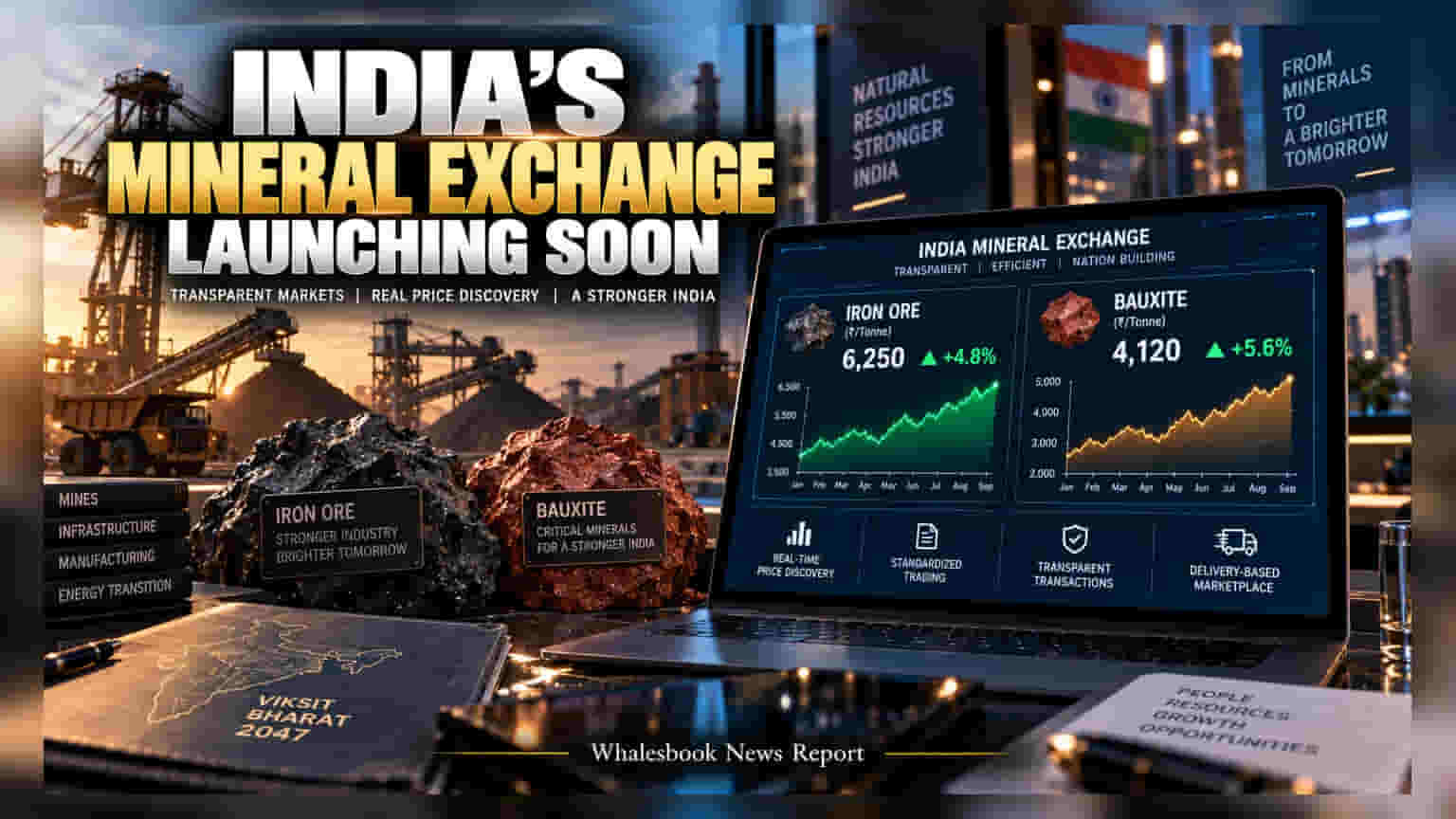
India is set to launch its first national mineral exchange by the next financial year to centralize raw material trading. The platform aims to create transparent pricing and help reduce the nation’s massive ₹10.12 lakh crore mineral import bill.
The Ministry of Mines is working to operationalize India’s first national mineral exchange by FY2027. Following the notification of the Mineral Exchange Rules, 2026, in June, the government is building an electronic marketplace to replace the current fragmented system of private contracts with a standardized, transparent, and delivery-based trading platform.
This shift is significant for the broader commodities market and major industrial players like NMDC, Coal India, and large steel producers. Currently, many mineral transactions occur through private deals where prices are not easily visible or standardized. By moving toward a central exchange, the government aims to create a level playing field where both domestic producers and industrial consumers can access real-time price discovery. This could potentially help local miners improve their profit margins by selling at market-driven rates rather than relying on negotiated private contracts.
However, the project faces practical implementation challenges. Under the Indian Constitution, mineral rights are a state subject, meaning individual states control mining leases and royalties. The success of a national exchange will heavily depend on whether the Ministry of Mines can successfully coordinate with state governments to integrate their local processes into the new digital platform. If states continue to manage their mineral sales independently, the exchange may struggle to achieve the scale needed to influence national pricing.
The strategic push is driven by the urgent need to manage India's high import dependency. In the 2025-26 fiscal year, the country faced an import bill of ₹10.12 lakh crore for various minerals. While domestic mineral production has shown growth, rising from a value of ₹50,000 crore in 2013-14 to ₹1.86 trillion by 2025-26, policymakers believe that current extraction levels are still not enough to meet the infrastructure and energy demands outlined in the Viksit Bharat 2047 roadmap.
Investors will likely track how quickly the platform gains traction among mining companies and whether it can effectively integrate the diverse regulatory requirements of different states. The ability of the exchange to handle large volumes of iron ore and other critical industrial minerals will be a key indicator of its success in reducing the reliance on external suppliers.