

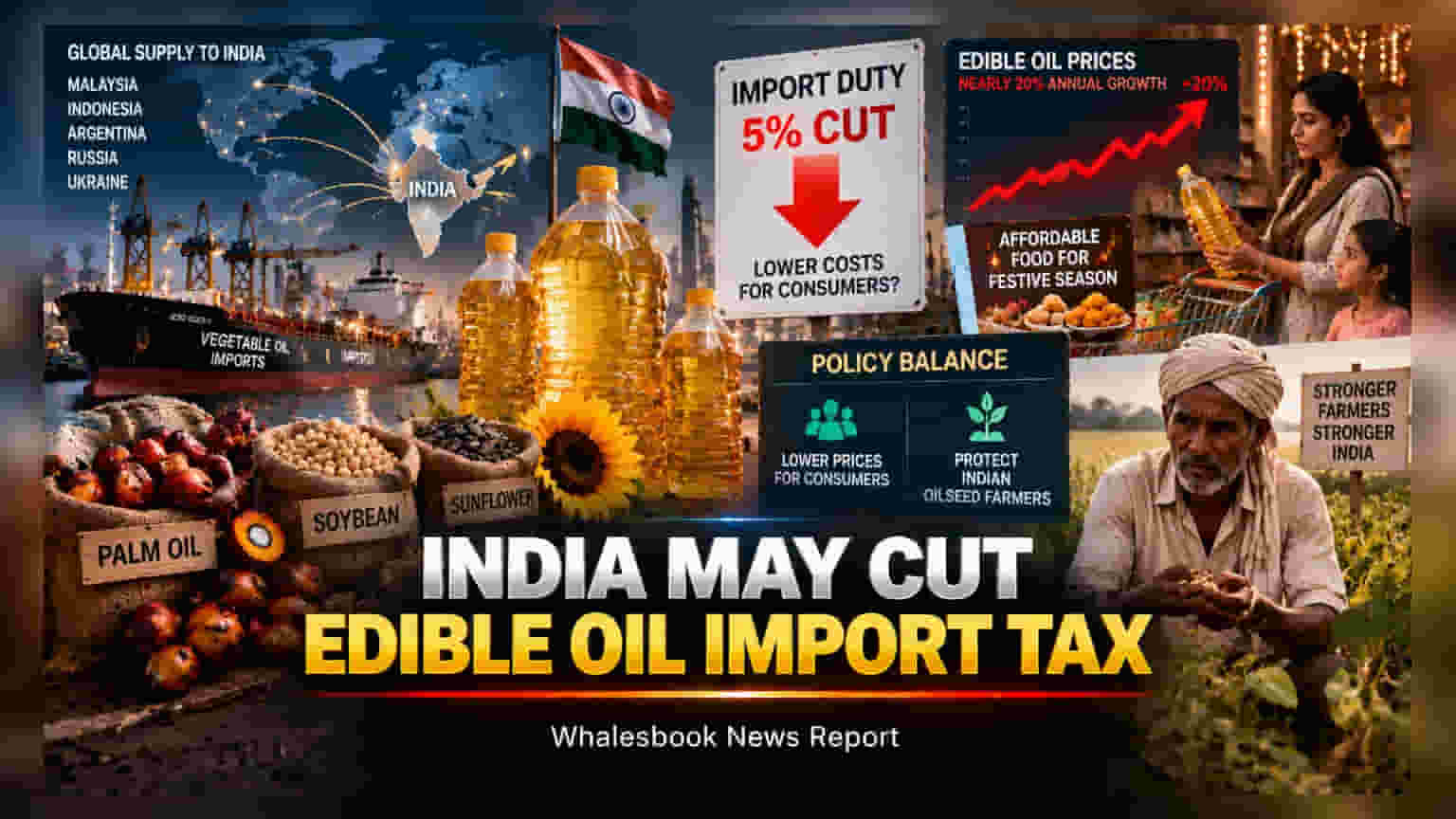
The Indian government is considering a 5% reduction in basic import duties on vegetable oils to help lower consumer food costs during the peak festival season. With edible oil prices currently 20% higher than last year, the policy aims to balance inflation relief against the need to support domestic oilseed farmers. Investors are monitoring how this potential move impacts both retail inflation and the profit margins of edible oil refining companies.
The Indian government is currently evaluating a potential reduction in import taxes on vegetable oils as it looks for ways to cool down rising food prices. Retail inflation, which accelerated in August 2026, has been partly driven by the high cost of edible oils. Officials are considering a 5% cut in the basic import duty, a move that could potentially lower costs for consumers as the country enters the busy September-to-November festival season when demand for cooking oil typically peaks.
This deliberation highlights the difficult balancing act faced by policymakers. On one side, India depends heavily on imports, sourcing nearly two-thirds of its vegetable oil from global markets, including Indonesia, Malaysia, Argentina, and Ukraine. Lowering import taxes could directly help reduce the cost of these essential items for households. On the other side, the government must protect Indian oilseed farmers. If imported oil becomes too cheap, it can force domestic prices down, hurting the earnings of local farmers who are currently harvesting their crops.
Adding complexity to this decision is the fact that the government had actually increased tariff values for crude palm oil, RBD palm oil, and crude soybean oil effective September 1, 2026. This recent hike was aimed at managing import valuations, making the current discussion about a duty cut a significant pivot in strategy. Investors in the edible oil sector, including companies like Adani Wilmar and Patanjali Foods, closely follow these tax changes as they directly influence raw material costs and the ability to pass those savings on to consumers.
One significant risk, however, is that tax cuts do not always lead to lower prices for the end user. History has shown that when India reduces import duties, global prices for palm and soyoil sometimes rise. This happens because exporting nations may react to higher Indian demand by raising their own export prices, effectively capturing the benefit of the duty cut. If this happens, Indian consumers might not see the expected relief in their grocery bills.
Furthermore, edible oil refining companies face a delicate situation. While lower import duties generally reduce input costs, their profitability depends on their ability to manage this volatility. If import prices remain unstable or if global suppliers increase their prices to match the duty cut, the benefit to refiners' profit margins could be limited. Market observers will be waiting for an official notification from the government to clarify whether a duty cut will be implemented and what the specific terms will be. The key monitorable for investors and consumers alike will be whether the move effectively lowers retail prices or if it triggers a rise in international commodity prices.