 Whalesbook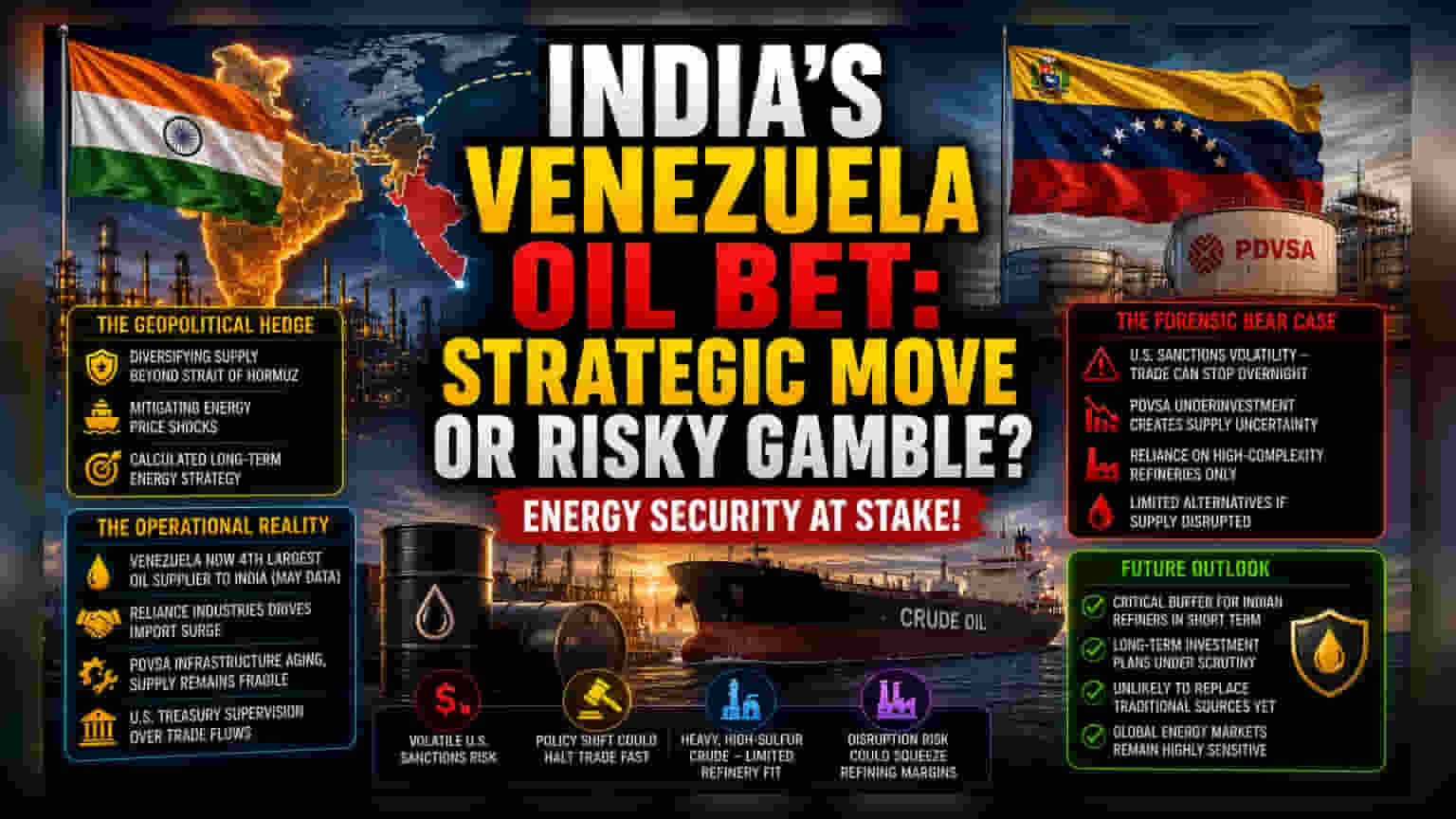


The Geopolitical Hedge
India’s strategic pivot back toward Venezuelan crude oil represents a calculated maneuver to mitigate systemic energy risks. By diversifying supply away from the volatile Strait of Hormuz—a bottleneck that currently threatens the primary energy arteries of the Indian economy—New Delhi is attempting to insulate its domestic refining sector from extreme price shocks. This shift is not merely opportunistic; it reflects a long-term recalibration of India’s energy import dependency as regional conflicts persist across the Middle East.
The Operational Realities of the Trade
Reliance Industries acts as the primary engine for this import surge, leveraging the recent relaxation of U.S. sanctions. Data trends for May indicate that Venezuela has clawed its way back to becoming the fourth-largest oil supplier to the Indian market. Unlike traditional trade arrangements, these flows remain heavily supervised by the U.S. Treasury Department. The efficiency of these imports is constrained by the aging infrastructure of the Venezuelan national oil company, PDVSA, which has struggled with chronic underinvestment and operational decline for over a decade. Consequently, Indian refiners are navigating a supply chain that, while currently accessible, remains fragile and susceptible to rapid shifts in global regulatory compliance.
The Forensic Bear Case
Investors should view the longevity of this partnership with significant skepticism. The primary vulnerability lies in the volatility of the U.S. regulatory environment. Previous sanctions completely halted these trade flows, and any sudden reversal in Washington’s policy regarding Caracas could force Indian refiners to abandon their Venezuelan intake within weeks. Furthermore, the quality of Venezuelan crude is notoriously heavy and sulfurous, requiring specific high-complexity refinery configurations that limit the pool of Indian buyers primarily to massive private conglomerates. Any technical or political disruption to these specific refining facilities would leave Indian energy importers with few immediate alternatives, potentially causing a severe margin squeeze if alternative light-crude sources command a premium during regional supply crunches.
Future Outlook and Market Sensitivity
Market analysts remain focused on the sustainability of the current import volumes. With global energy security entering a period of heightened structural sensitivity, any move by the Indian government to formalize long-term upstream investment in Venezuela will be met with intense scrutiny. Analysts expect that while the current flow of crude provides a necessary buffer for Indian refiners, it will likely remain secondary to traditional sources until domestic energy security policies shift toward more permanent, stable supply agreements.