

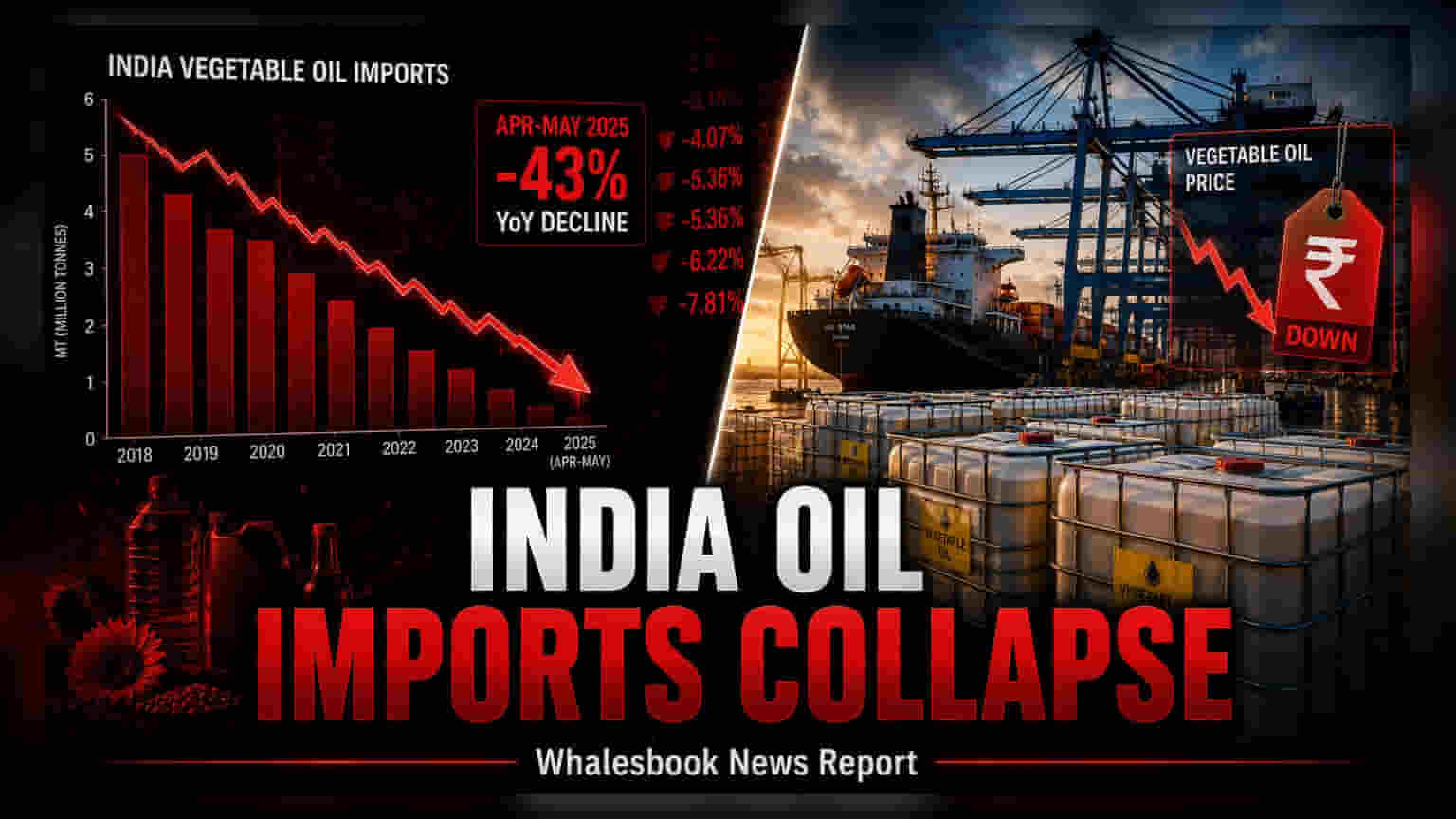
India's vegetable oil imports fell 29% year-on-year in June to 11.46 lakh tonnes, the lowest level this oil year. The decline follows a narrowing price gap between palm oil and alternatives like soybean oil, which reduced import appeal. Despite this monthly slump, total imports for the current oil year remain higher than last year’s levels.
India's vegetable oil imports experienced a notable cooling in June, dropping 29% compared to the same period last year. According to data from the Solvent Extractors' Association of India (SEA), total imports for the month stood at 11.46 lakh tonnes. This figure represents the lowest monthly intake since the current oil year commenced in November 2025, signaling a shift in procurement patterns driven by changing global price dynamics.
Impact of Narrowing Price Gaps on Palm Oil
The primary driver behind the decline is the shrinking price advantage of palm oil. Historically, palm oil is imported by India in large volumes due to its significant discount over other edible oils. However, as the price difference between palm oil and alternatives like soybean oil narrowed to less than $50 per tonne, the cost-benefit for importers diminished. Consequently, crude palm oil imports fell to 488,863 tonnes in June, down from 546,456 tonnes in May. This trend suggests that domestic processors are becoming more sensitive to price parity when deciding which oils to import.
Shifting Import Mix and Stock Levels
While palm oil volumes retreated, the import mix showed varied trends for other commodities. Soybean oil imports also faced pressure, declining 23% to 381,000 tonnes from the previous month. Conversely, sunflower oil imports saw an uptick, rising to 242,870 tonnes in June from 195,726 tonnes in May. Notably, for the second month in a row, imports of refined cooking oils remained at zero, reflecting current trade policies and market demand. As of July 1, 2026, total domestic vegetable oil stocks were reported at 20.09 lakh tonnes, lower than the 22.16 lakh tonnes recorded a year earlier, indicating that the industry is managing tighter inventory levels.
Cumulative Growth and Regional Trade Dynamics
Despite the sharp decline in June, the broader picture for the current oil year remains one of high demand. Cumulative imports for the first eight months, spanning November 2025 to June 2026, reached 105.7 lakh tonnes, outpacing the 99.55 lakh tonnes imported during the same period in the previous cycle. Investors tracking the sector may note that refined oil shipments from Nepal continue to play a role in the Indian market. Under the South Asian Free Trade Area (SAFTA) pact, which facilitates duty-free imports, Nepal exported over 3.3 lakh tonnes of refined oils to India between November 2025 and April 2026. The pace of these imports, alongside domestic demand trends and fluctuations in global commodity prices, will be essential for monitoring margin stability for edible oil companies in the coming quarters.