 Whalesbook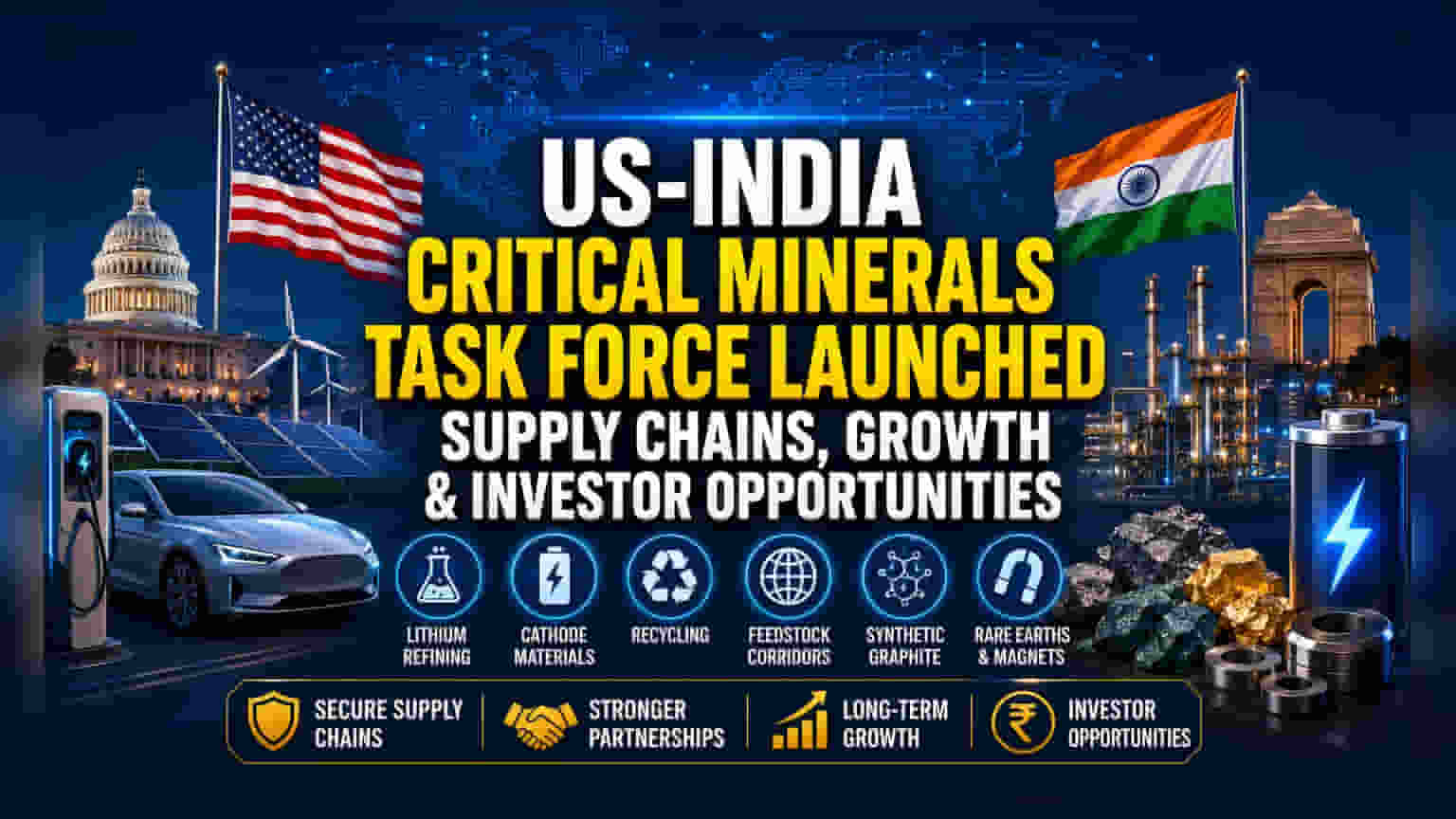


The US-India Business Council has launched a task force to build resilient supply chains for critical minerals like lithium and rare earths. This move targets reducing dependence on China and supports India’s growing electric vehicle and defense industries. For investors, this signals a long-term strategic shift toward domestic manufacturing and processing, though success will depend on massive capital investment and complex technology adoption.
What Happened
The US-India Business Council (USIBC) has officially launched a Critical Minerals Security Task Force. This initiative follows a recent bilateral agreement between the two nations aimed at securing supply chains for materials vital to modern technology. The task force is designed to reduce the current heavy reliance on global markets, specifically where a single country holds dominant control over processing, by fostering deep cooperation between Indian and American industries.
The task force will focus on five primary areas: lithium refining, cathode active materials, recycling, feedstock corridors, and synthetic graphite production. It also prioritizes rare earth processing and the manufacturing of rare earth permanent magnets, which are essential components for industries ranging from electric mobility to renewable energy and national defense.
Why This Matters For Investors
This partnership is significant because the world is currently facing a supply chain bottleneck for critical minerals. China currently controls roughly 90% of the global processing capacity for these materials. For Indian investors, this initiative highlights a long-term industrial shift. The government has already set ambitious goals, such as supporting the production of 6,000 metric tonnes per annum of integrated rare earth permanent magnets.
Companies involved in the electric vehicle (EV) supply chain, battery technology, renewable energy equipment, and specialized metal processing are the most relevant to this development. By creating formal channels for technology partnerships and investment, the initiative aims to build a more secure local ecosystem. This could eventually provide Indian companies with better access to technology and capital, reducing the risks associated with global supply chain disruptions.
The Capital And Technology Challenge
While the strategic intent is clear, investors should be aware that the critical minerals sector is extremely capital-intensive. Building refineries, recycling plants, and processing facilities requires massive upfront spending, or capital expenditure. Unlike software or service businesses, this sector has a long gestation period, meaning it takes several years for these projects to become operational and generate revenue.
Furthermore, many of these processes involve proprietary technology that is currently concentrated in a few global hubs. Accessing this technology through partnerships is a key hurdle. Indian companies may need to navigate complex technology transfer agreements, which can be costly and time-consuming to execute. The ability of domestic firms to successfully implement this technology without significant cost overruns will be a key performance indicator.
Sector Pressure and Risks
Investors must also consider the inherent risks in the commodity and specialty chemicals sector. Prices of critical minerals like lithium and rare earths can be highly volatile, influenced by global demand-supply dynamics, geopolitical tensions, and changes in export policies. A sudden drop in global mineral prices could squeeze profit margins for companies that have invested heavily in high-cost extraction or processing facilities.
Additionally, environmental and regulatory standards for mining and processing are stringent. Any delay in receiving environmental clearances or changes in local mining laws could stall projects, leading to increased debt burdens for companies that rely on heavy borrowing to fund their expansion.
What Investors Should Track
Moving forward, the success of this task force will depend on the tangible outcomes of its four workstreams: supply chain security, technology and innovation, investment and finance, and policy and regulation. Investors should look for updates on actual joint ventures or technology licensing deals, rather than just policy announcements.
Key monitorables include the capital allocation plans of major industrial players in the battery and metal sectors, the pace of ground-level project execution, and government policies that offer incentives for critical mineral processing. Keeping a close watch on the progress of the Mineral Security Partnership and other similar bilateral frameworks will also provide clues about how effectively the industry is scaling up its capabilities.