

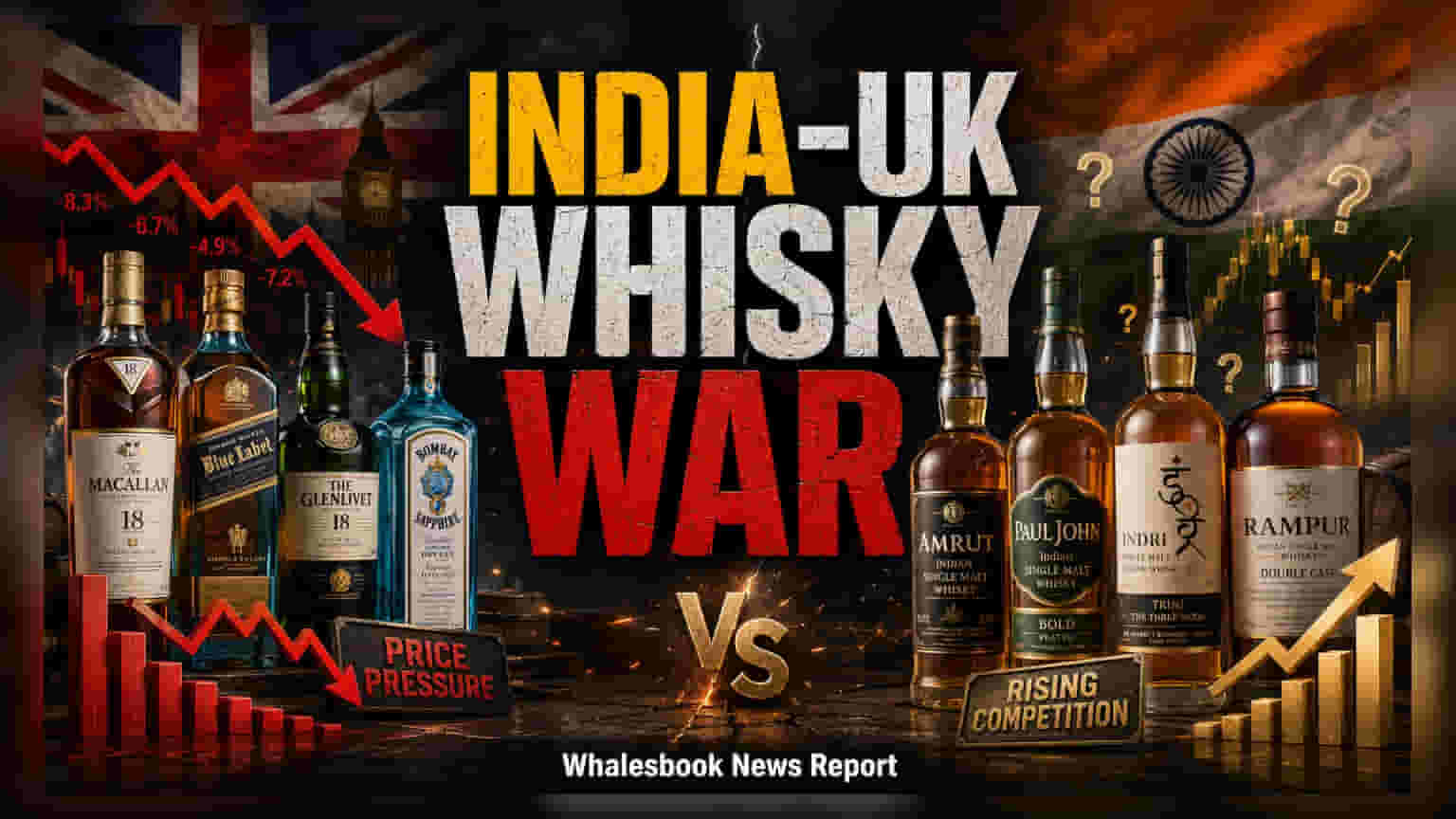
India has halved import duties on UK-made Scotch whisky and gin from 150% to 75% under a new trade agreement. While this could lower costs for domestic blenders using imported spirits, it increases competitive pressure on Indian single malt distillers. The final impact on retail prices will depend on state-level tax structures.
The recently signed India-UK free trade agreement has introduced immediate changes to the spirits sector, specifically reducing import duties on Scotch whisky and gin. The tax on these imports has been cut from 150% to 75%, with a roadmap for further gradual reductions over the coming decade. This policy shift is expected to influence both production costs for domestic liquor companies and the pricing environment for premium spirits.
Impact on Indian Blenders
A significant portion of Scotch imports into India, estimated at nearly 80% by volume, consists of bulk spirits. Many Indian liquor manufacturers rely on this bulk Scotch to create premium whisky blends for the domestic market. With the reduction in import duties, companies may see a decrease in input costs, which could improve profit margins or allow for the introduction of higher-quality blended products. This shift aligns with a broader trend in the Indian market toward premium products, where consumers are increasingly opting for higher-value spirits.
Challenges for Domestic Single Malts
While blenders may benefit, the deal creates a new competitive environment for India’s growing single malt whisky segment. Historically, Indian single malt producers have competed against imported Scotch by offering quality products at a price advantage. With the duty reduction making imported Scotch more affordable, local distillers may face pressure to adjust their pricing or marketing strategies. Investors should monitor how this increased competition affects the growth plans and capital spending of domestic distilleries, as some industry participants have indicated that expansion or new project investments may require re-evaluation in light of the changing cost dynamics.
Retail Price Variability and State Taxes
The actual benefit for consumers and the potential for increased sales volume will depend heavily on state-level policies. In India, liquor is a state subject, meaning excise duties and other local taxes are determined by individual state governments. While estimates suggest retail prices for imported Scotch could drop by 7% to 10% in various regions, the reduction could be more pronounced in states with more favorable tax structures, such as Maharashtra, where price declines could reach 12% to 13%. Because of this, the financial impact on liquor companies will vary depending on their geographic presence and distribution strength. The primary long-term monitorable for investors will be whether this price adjustment drives enough volume growth to offset the increased competition from imported labels in the premium market segment.