

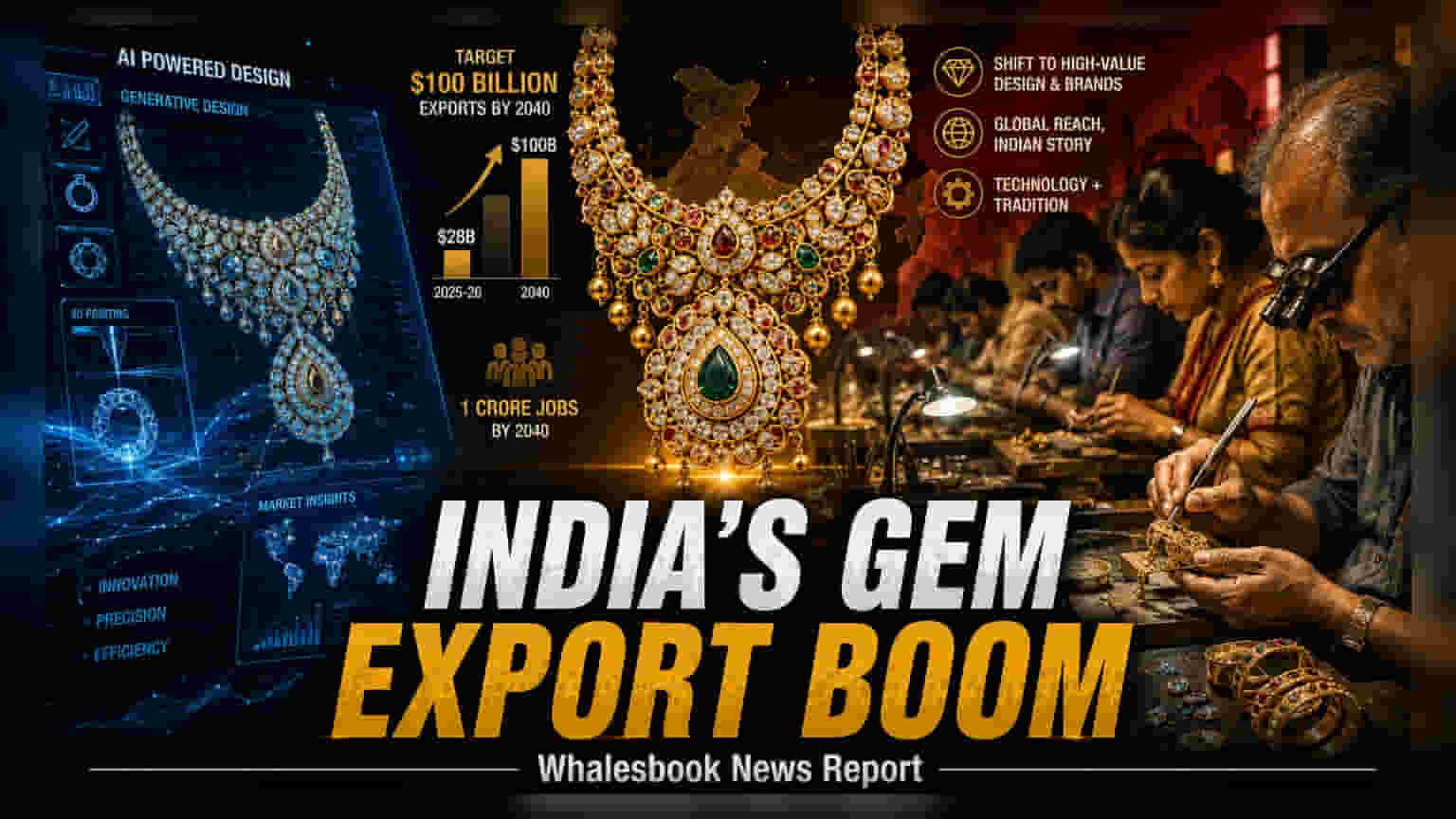
The Indian government and the GJEPC have set a target to grow gems and jewellery exports to $100 billion by 2040, up from roughly $28 billion in 2025-26. The roadmap aims to shift the sector from basic manufacturing to high-value, design-led branding to improve profit margins.
India’s gems and jewellery sector is entering a new phase of growth with a long-term goal to reach $100 billion in exports by 2040. This plan, unveiled by the government in partnership with the Gem & Jewellery Export Promotion Council (GJEPC), represents a massive scale-up from the estimated $28 billion recorded in the 2025-26 fiscal year. The vision is to increase the sector's contribution to India’s total merchandise exports to 14% and its share of the national GDP to 1.2% over the next 15 years.
Moving Toward High-Value Design
A central part of this strategy is a structural shift in how Indian companies operate. Historically, much of the industry has focused on low-margin contract manufacturing, often called original equipment manufacturing (OEM), where companies make jewellery designed by others. The new roadmap encourages a move toward original design manufacturing (ODM) and global branding. By focusing on Indian storytelling, cultural designs, and proprietary brands, companies aim to move up the value chain where profit margins are typically higher than in basic diamond cutting or simple gold jewellery exports.
To support this transition, the government plans to emphasize the use of advanced technology, including artificial intelligence and 3D printing. These tools are expected to help designers create complex patterns faster, reduce wastage, and meet the specific demands of younger consumers in international markets. The strategy also targets massive job creation, with a goal to employ 1 crore people in the sector by 2040.
Challenges and Risks
While the growth target is ambitious, the industry faces significant hurdles that could impact performance. Global trade stability is a primary concern. Geopolitical tensions, particularly in West Asia, can disrupt critical shipping routes and affect buyer confidence. Additionally, the gems and jewellery sector is highly sensitive to rising freight and insurance costs. Inflationary pressures in major consuming nations like the U.S. or Europe can also lower demand for luxury goods, squeezing the profit margins of exporters.
Another significant challenge is the high cost of building global brands. Unlike bulk manufacturing, creating a recognized brand requires sustained investment in marketing, distribution, and design, which may strain cash flows for smaller or mid-sized players in the short term. The long-term success of this $100 billion target will depend on how effectively Indian firms manage these costs while scaling their international presence.
Investors monitoring the sector may track how major jewellery retailers and exporters adapt their business models. Key indicators to watch include the share of branded versus non-branded sales, the ability to pass on raw material price volatility to consumers, and the successful adoption of new manufacturing technologies. Companies that demonstrate a consistent shift toward higher-margin, design-led products may be better positioned to benefit from this long-term industry expansion.