

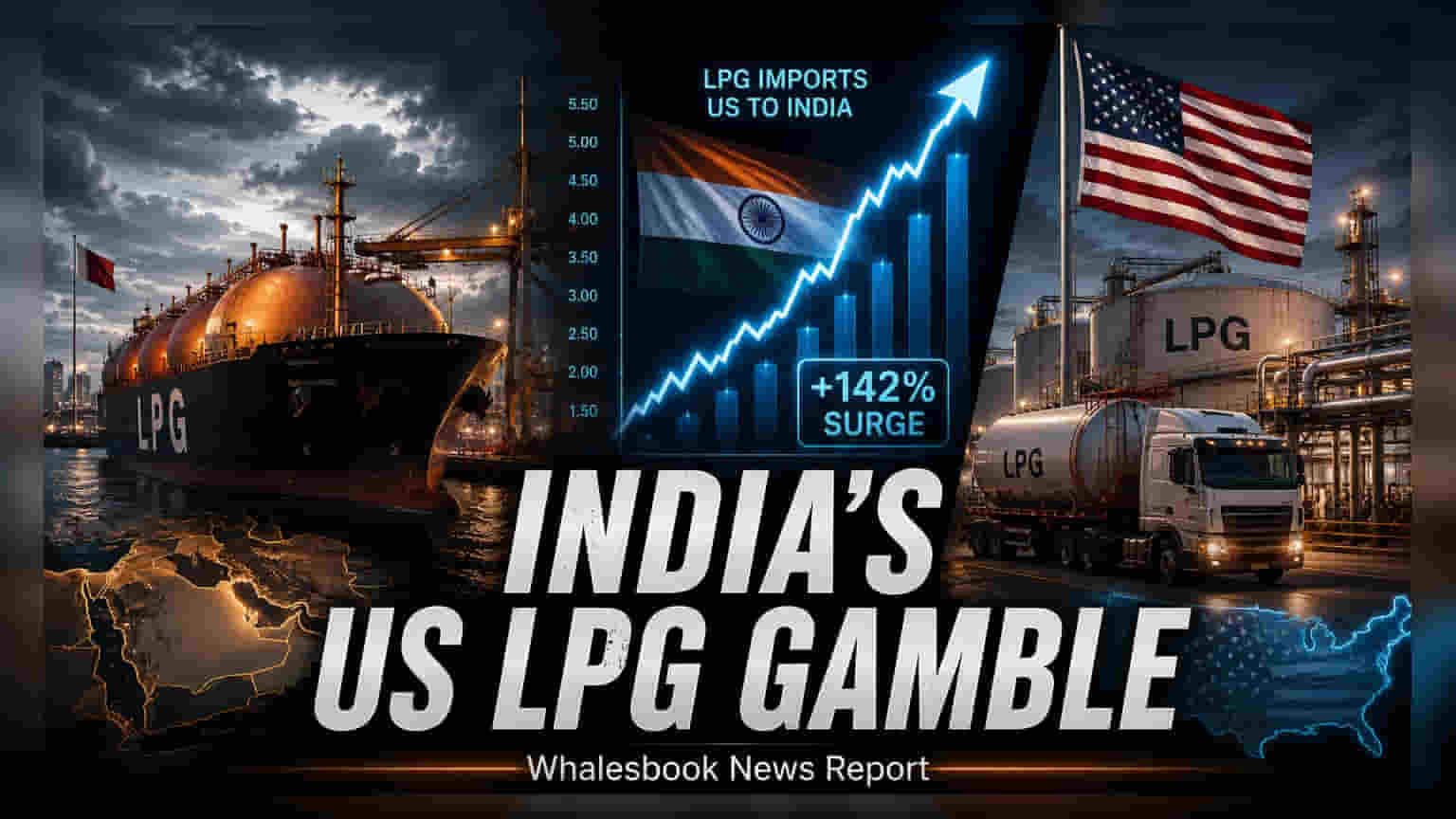
India plans to source one-quarter of its LPG from the US by 2027 to lower reliance on Middle Eastern suppliers. State-owned refiners will soon issue tenders to secure these supplies, a move aimed at enhancing energy security following recent regional supply disruptions.
Detailed Coverage
India is undertaking a significant shift in its energy procurement strategy by planning to source up to 25% of its liquefied petroleum gas (LPG) from the United States by 2027. This transition is designed to move away from a heavy dependency on traditional Middle Eastern suppliers, which accounted for approximately 90% of India’s 21.85 million metric tons of LPG imports in 2025. Given that imports satisfy nearly two-thirds of India's total LPG consumption, this move is critical for maintaining domestic energy stability.
The urgency for this diversification follows periods of supply volatility. Earlier this year, regional conflicts affecting shipping routes through the Strait of Hormuz led to LPG shortages. To protect household consumers, the government had to divert industrial petrochemical feedstocks, which highlighted the risks of concentrating supply sources in a geopolitically sensitive region. To address this, state-owned giants Indian Oil Corporation, Bharat Petroleum Corporation, and Hindustan Petroleum are preparing to release fresh tenders for U.S.-sourced LPG within the next 30 to 60 days.
Strategic Trade and Energy Goals
Beyond energy security, this shift aligns with India’s broader economic objectives regarding the United States. New Delhi is actively working toward finalizing a trade agreement with Washington within the next few months. Increasing energy imports is seen as a way to address concerns regarding India's trade surplus with the U.S. and fulfills past commitments to scale up U.S. energy purchases by $10 billion to $25 billion. These efforts are part of a larger, long-term roadmap that targets $500 billion in bilateral trade by 2030.
India has already begun increasing its reliance on spot market purchases from the U.S. and other alternative regions. Data shows that U.S. LPG imports into India topped 1 million tons in June alone. Current projections suggest that total annual contract volumes for 2026 are likely to surpass the previously set goal of 2.2 million tons.
Investor Considerations and Next Steps
For investors monitoring the oil and gas sector, the key aspect of this diversification is the impact on logistics and cost. While securing U.S. supplies enhances energy resilience, transporting LPG from the United States involves longer shipping routes compared to traditional Middle Eastern suppliers, which may influence freight costs and, consequently, the landed price of LPG. Additionally, the move to diversify will require state refiners to manage complex long-term contracts alongside volatile spot market dynamics. The market will look to the upcoming tender process and subsequent management commentary for details on pricing terms and the stability of these new supply chains. Future updates on the finalization of the U.S.-India trade deal will also be a major trigger for sector-wide sentiment.