

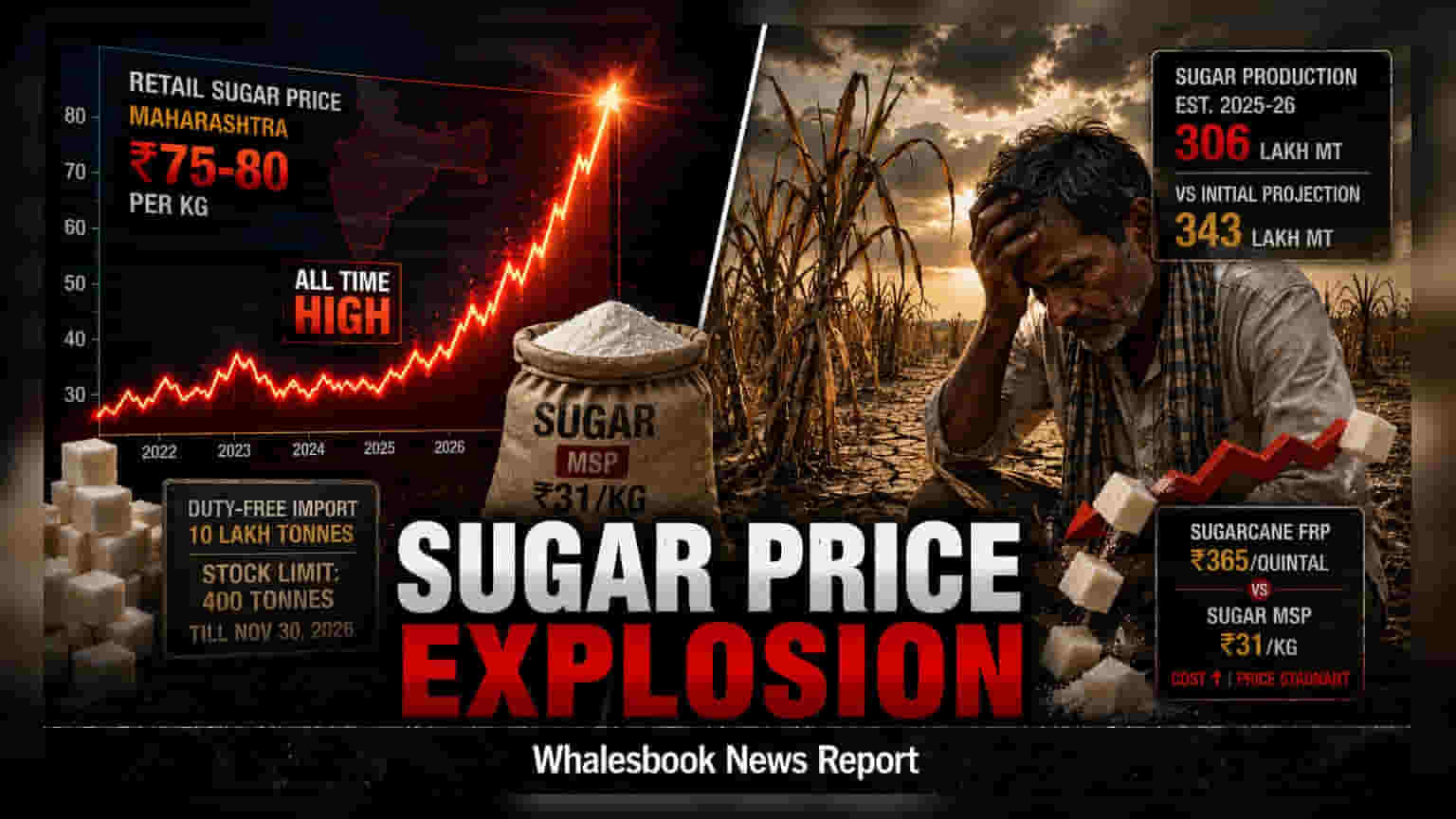
Retail sugar prices have reached ₹75-80 per kg in Maharashtra amid supply concerns and speculative hoarding. To stabilize the market, the government has permitted 10 lakh tonnes of duty-free raw sugar imports and imposed strict dealer stock limits. Investors are closely monitoring the impact on sugar mill margins, which remain pressured by the gap between rising sugarcane costs and fixed selling prices.
Retail sugar prices have surged to record levels in parts of India, with loose sugar costing ₹75-80 per kg in markets like Maharashtra. This sharp increase follows a consistent trend of supply-side constraints, as domestic production has struggled to meet expectations. For the 2025-26 season, sugar production is estimated at 306 lakh metric tonnes, falling well short of the initial projection of 343 lakh metric tonnes. This deficit has been caused by factors like crop disease and weather volatility, which have reduced yields in key sugarcane-growing states.
Government Intervention and Regulatory Moves
The central government has taken steps to control price volatility ahead of the festive season. To boost domestic supply, authorities have allowed the duty-free import of 10 lakh tonnes of raw sugar. Furthermore, a nationwide stock limit of 400 tonnes has been placed on sugar dealers, effective until November 30, 2026. These measures aim to curb speculative hoarding, which experts identified as a major driver of the recent price spikes. Officials have also formally rejected claims that ethanol production is responsible for the current shortage, noting that the diversion of sugar for ethanol is now at a significantly lower share than in previous years.
Financial Pressure on Sugar Mills
While consumers face higher retail prices, the situation presents a complex challenge for sugar mills. The primary concern for investors is the widening gap between the rising cost of raw material and the stagnant selling price of the finished product. For the 2026-27 season, the Fair and Remunerative Price (FRP) for sugarcane has been set at ₹365 per quintal. In contrast, the Minimum Selling Price (MSP) for sugar remains fixed at ₹31 per kg. This structural mismatch creates financial strain on mills, as their production costs increase due to higher cane prices while their revenue is constrained by the government's price floor for sugar.
What Investors Should Monitor
Moving forward, the financial stability of sugar companies will depend heavily on whether the government adjusts the Minimum Selling Price to reflect the rising cost of sugarcane production. Additionally, the success of the duty-free imports in cooling domestic prices will be a critical indicator of government policy direction for the coming months. Production forecasts for the 2026-27 season, which could be affected by further weather uncertainties or El Niño patterns, will also remain a key factor for the industry’s outlook. Investors may watch for official updates on domestic crushing progress and any potential changes to the MSP framework, as these will directly influence the margins and profitability of sugar manufacturers.