

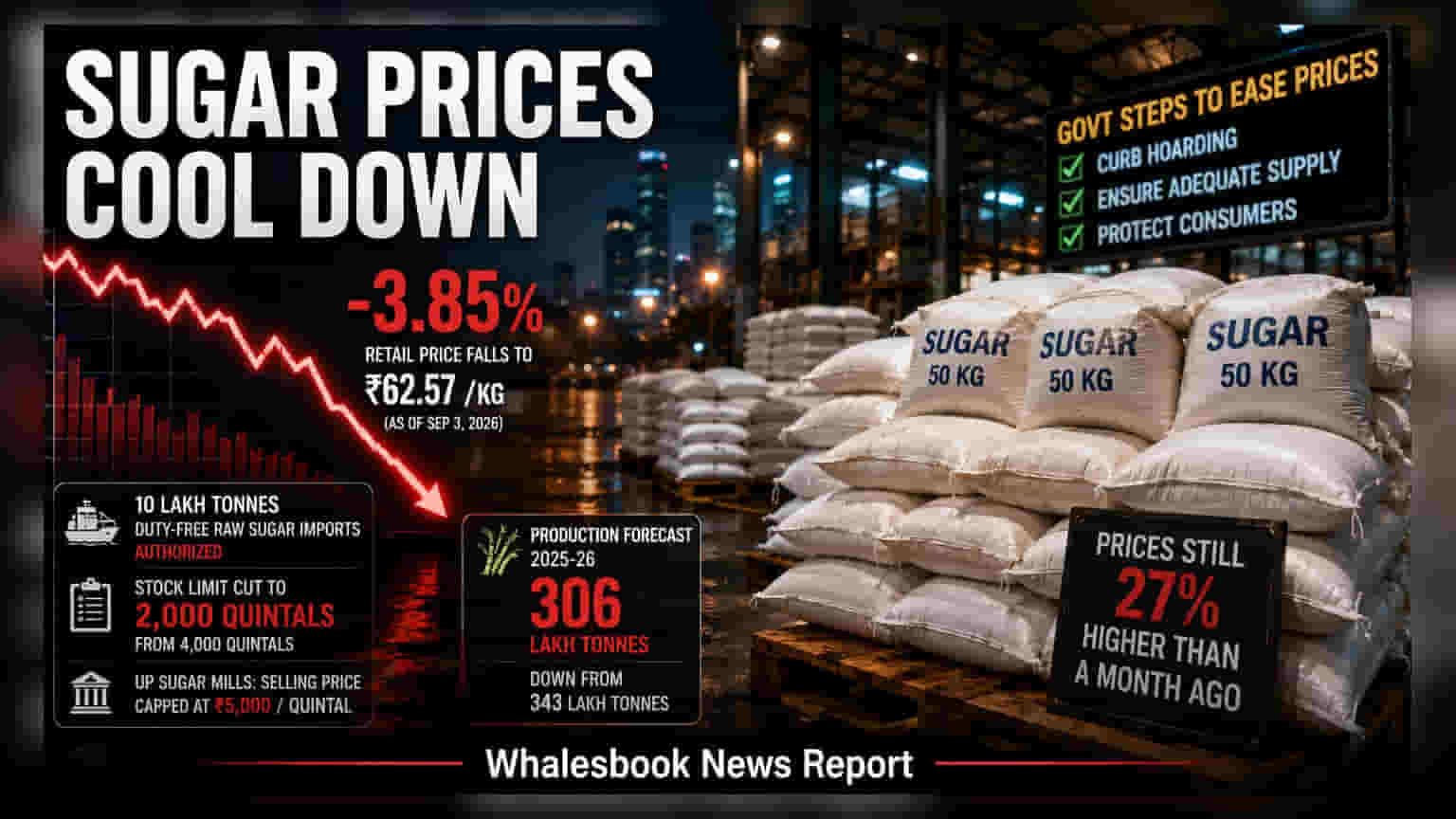
Retail sugar prices have eased to Rs 62.57 per kg following the government's decision to allow 10 lakh tonnes of raw sugar imports. While this offers short-term cooling, investors should monitor how tighter stock-holding limits and lower production forecasts impact the profitability of sugar manufacturers.
Retail sugar prices in India have eased by 3.85% over the past week, falling to an average of Rs 62.57 per kg as of September 3, 2026. This correction follows a series of government interventions designed to cool domestic prices ahead of the festive season, which typically sees a spike in demand for the sweetener.
The government has responded to price volatility by authorizing the import of 10 lakh tonnes of duty-free raw sugar. Additionally, officials have tightened stock-holding limits for sugar dealers, reducing the permissible limit to 2,000 quintals from 4,000 quintals, effective from mid-September through November. In specific regions like Uttar Pradesh, regulators have also directed mills to cap selling prices at Rs 5,000 per quintal. These measures are intended to prevent speculative hoarding and ensure sufficient supply in the open market.
For investors, these policy shifts carry important implications for the sugar manufacturing sector. While the government aims to manage food inflation, regulatory caps and inventory restrictions can directly impact the profit margins of sugar mills. If mills are forced to sell at lower prices while facing high operating costs or stagnant cane prices, their financial performance in upcoming quarters may come under pressure. Market analysts often watch these interventions closely, as they can limit the ability of producers to pass on costs to consumers.
Despite the recent retail price cooling, prices remain roughly 27% higher than they were a month ago. This suggests that the market continues to face underlying pressure from supply concerns. The 2025-26 production forecast has been revised downward to 306 lakh tonnes, significantly lower than earlier projections of 343 lakh tonnes. This adjustment is largely attributed to adverse weather conditions and the spread of crop diseases, specifically Red Rot and Top Borer, which have affected yields in major growing regions.
The transmission of these wholesale price corrections to retail shelves remains slow, with a lag of approximately ten days as retailers look to clear inventory purchased at higher wholesale rates. Investors should track whether the authorized imports actually reach the market in sufficient volumes to offset the production shortfall. The key monitorable for the coming months will be whether festive season demand absorbs the existing supply or if the production constraints continue to keep prices volatile, potentially triggering further regulatory actions that could impact the sector's profitability.