

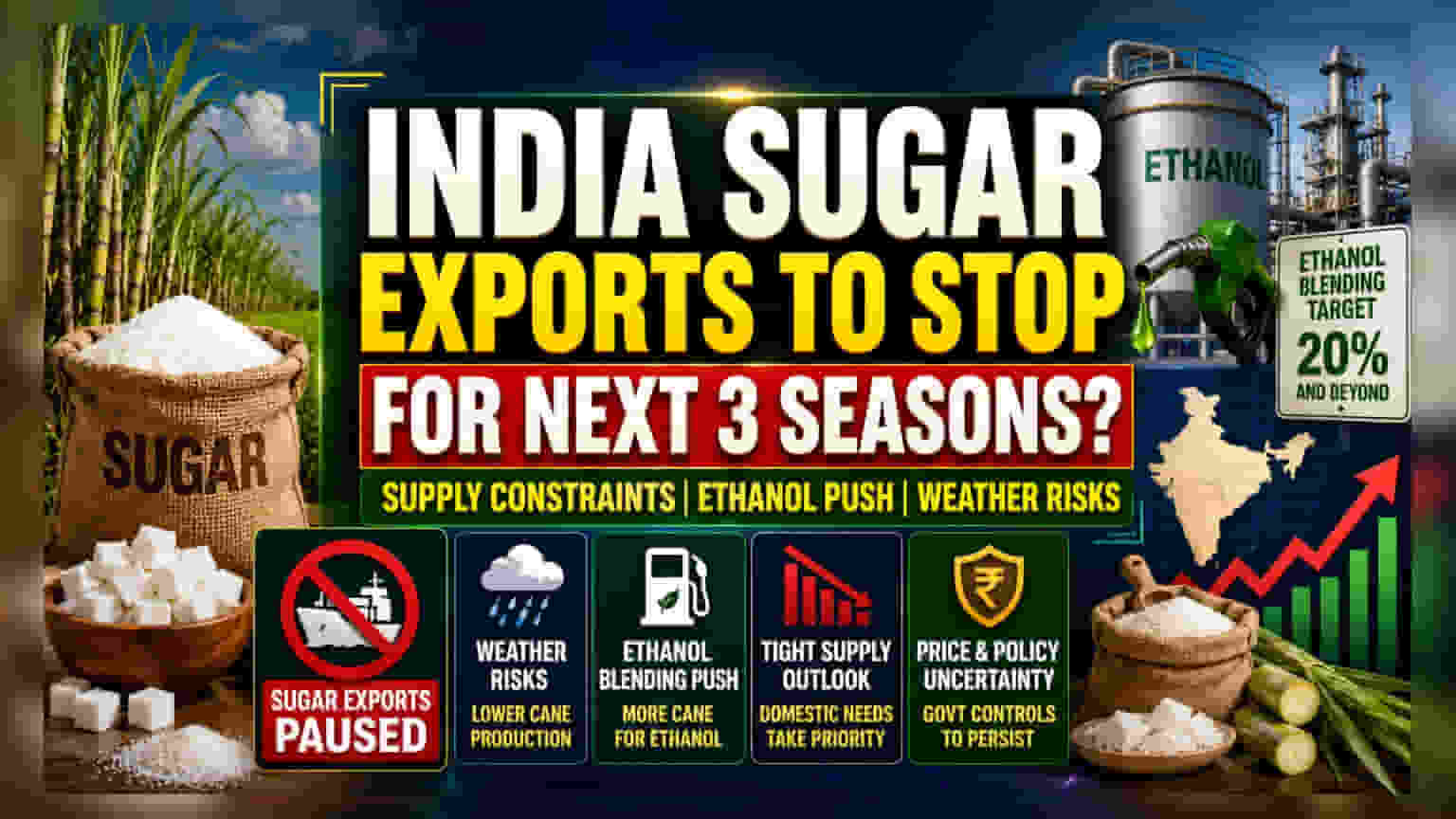
India may pause sugar exports for the next three seasons due to falling output and rising demand for ethanol production. This shift highlights a strategic priority toward domestic food security and fuel blending mandates, a change that could impact global sugar prices and force a reassessment of the revenue models for Indian sugar manufacturers.
What Happened
Industry projections suggest that India, traditionally a major player in the global sugar market, may stop exporting sugar for at least the next three seasons. This potential move is driven by a combination of weather-related supply constraints and a surge in domestic demand for ethanol. Reports indicate that lower sugarcane availability, coupled with the government’s push for ethanol blending in petrol, is creating a scenario where domestic production may struggle to comfortably exceed consumption. As a result, the government is expected to maintain strict controls on exports to prioritize local supplies.
The Ethanol-Sugar Trade-Off
The core of this shift lies in India's aggressive ethanol blending programme. The government has incentivized sugar mills to divert sugarcane juice and molasses toward ethanol production to reduce reliance on crude oil imports. While this diversification provides mills with an alternative revenue stream, it consumes a significant portion of the feedstock that would otherwise be used for sugar production. With the government pushing for higher blending targets, this diversion is likely to persist, fundamentally changing the business model for sugar companies from being pure sugar producers to integrated energy-linked manufacturers.
Impact On Sugar Producers
For investors in sugar stocks, this environment presents both opportunities and risks. On the positive side, steady demand from the oil marketing companies for ethanol provides a reliable, high-volume customer. This can help stabilize revenues that might otherwise fluctuate with global sugar prices. However, the risk lies in regulatory intervention. When domestic supply tightens, the government has historically moved to curb exports and cap domestic sugar prices to control inflation. If production drops due to adverse weather, mills may face pressure on profit margins if they cannot pass on the increased cost of raw materials to consumers.
Weather And Supply Risks
Weather remains a critical monitorable for the industry. Forecasts related to the El Niño weather pattern have raised concerns about monsoon performance, which directly impacts sugarcane yields. A deficit in rainfall can lead to reduced cane acreage as farmers may opt for less water-intensive crops, such as pulses or oilseeds. This creates an execution risk for sugar companies that rely on high capacity utilization to maintain efficiency and profitability. If inventories fall to historical lows, the risk of the government imposing import duties or allowing duty-free imports to cool down local prices increases, which could further squeeze domestic producer margins.
What Investors Should Track
Investors may want to monitor several factors in the coming quarters. First, government notifications regarding export quotas and sugar release orders will indicate the comfort level regarding domestic availability. Second, the progress of the monsoon season is crucial for estimating the next harvest. Third, tracking the volume of ethanol supplied by mills to oil companies will provide insight into how much revenue is being protected by the government's energy mandates. Finally, monitoring inventory levels at the mill level will reveal whether production is keeping pace with demand or if supply constraints are truly tightening.