

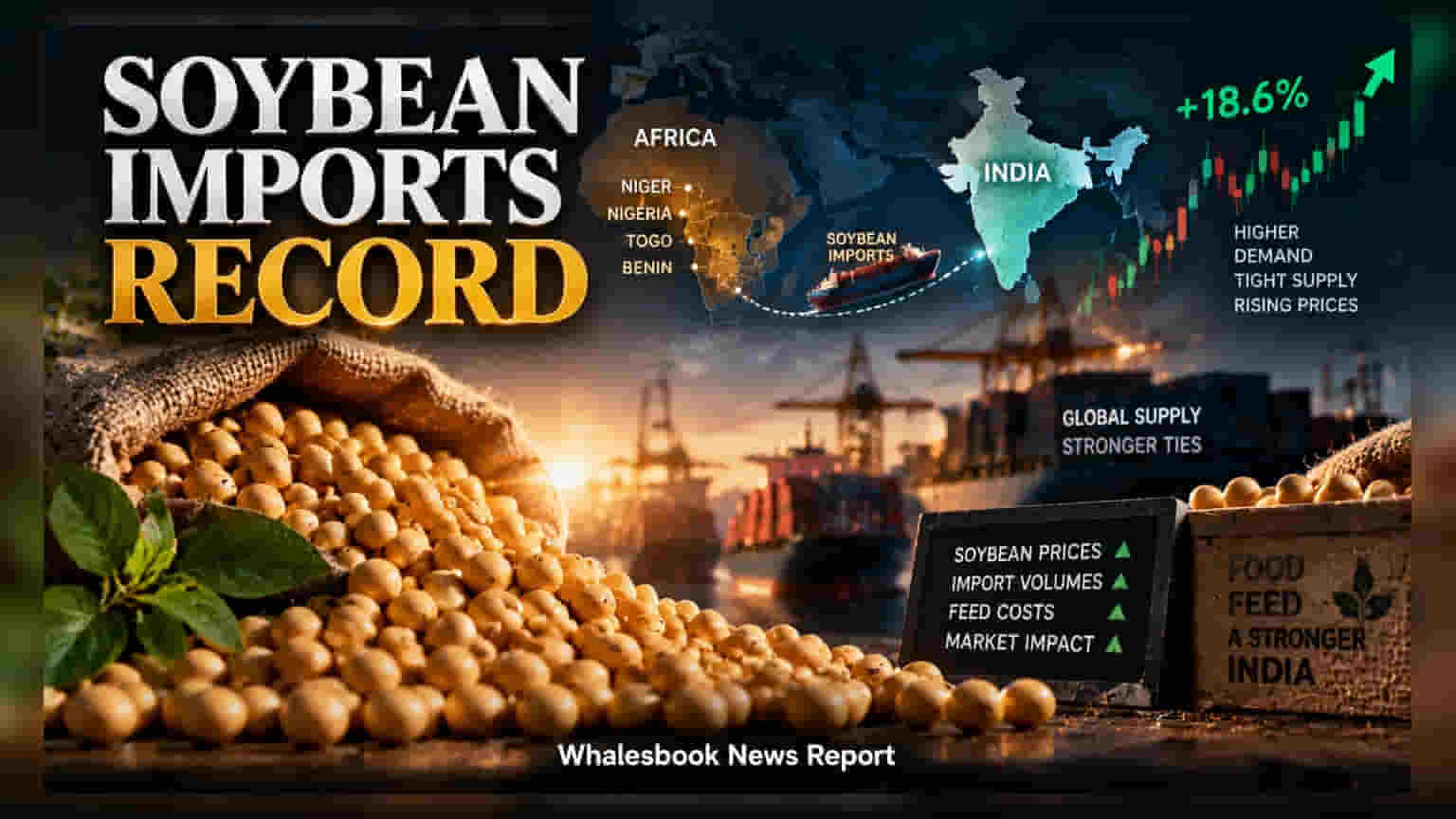
India’s soybean imports are projected to reach a record 9-10 lakh tonnes in the 2025-26 season following a 14% drop in domestic output. This shift from exporter to importer is pressuring processing margins and increasing feed costs for the poultry and livestock sectors.
India is witnessing a significant shift in its soybean trade dynamics as the country transitions from a traditional exporter of soymeal to a record-level importer of raw soybeans. For the 2025-26 marketing year, import volumes are expected to reach nearly one million tonnes, a stark reversal for a sector that historically relied on domestic production to meet local demand.
The current supply crunch stems from a sharp contraction in local output, which is estimated at approximately 110 lakh tonnes for the season. This represents a 14% decline compared to the previous year’s output of 128 lakh tonnes. The decline is largely attributed to erratic monsoon rains across major producing regions like Maharashtra and Karnataka, which hampered crop yields. Furthermore, farmers have been shifting acreage away from soybeans toward more profitable alternatives like cotton and corn, further tightening availability.
This supply deficit has created a ripple effect across the value chain. Domestic soybean prices have remained elevated, consistently trading well above the government’s Minimum Support Price. This price pressure has forced a recalibration in the processing sector, where total crushing estimates have fallen. The lack of competitive domestic pricing has also led to the cancellation of soymeal export contracts, as Indian producers struggle to match global price parity.
For investors, the impact extends beyond the oilseed processing companies. The poultry and livestock industries, which rely heavily on soybean meal and maize as critical animal feed, are facing significant margin pressure due to these soaring input costs. With feed costs accounting for a large portion of operational expenses, profitability in the livestock segment remains sensitive to the current supply instability.
To bridge the supply gap, India has turned to imports of non-GM soybeans, primarily sourcing from Sub-Saharan African nations such as Benin, Togo, Nigeria, and Niger. These imports benefit from zero-tariff arrangements for least-developed nations. However, this reliance introduces new logistical challenges, including port congestion and supply chain volatility.
Looking ahead, market participants will likely monitor the next planting cycle and monsoon patterns, as these will determine whether India can recover its domestic production levels. Additionally, analysts are watching for any expansion in processing capacity within the African supplier nations, which could eventually tighten the availability of raw beans in the global market, further impacting India's import costs.