

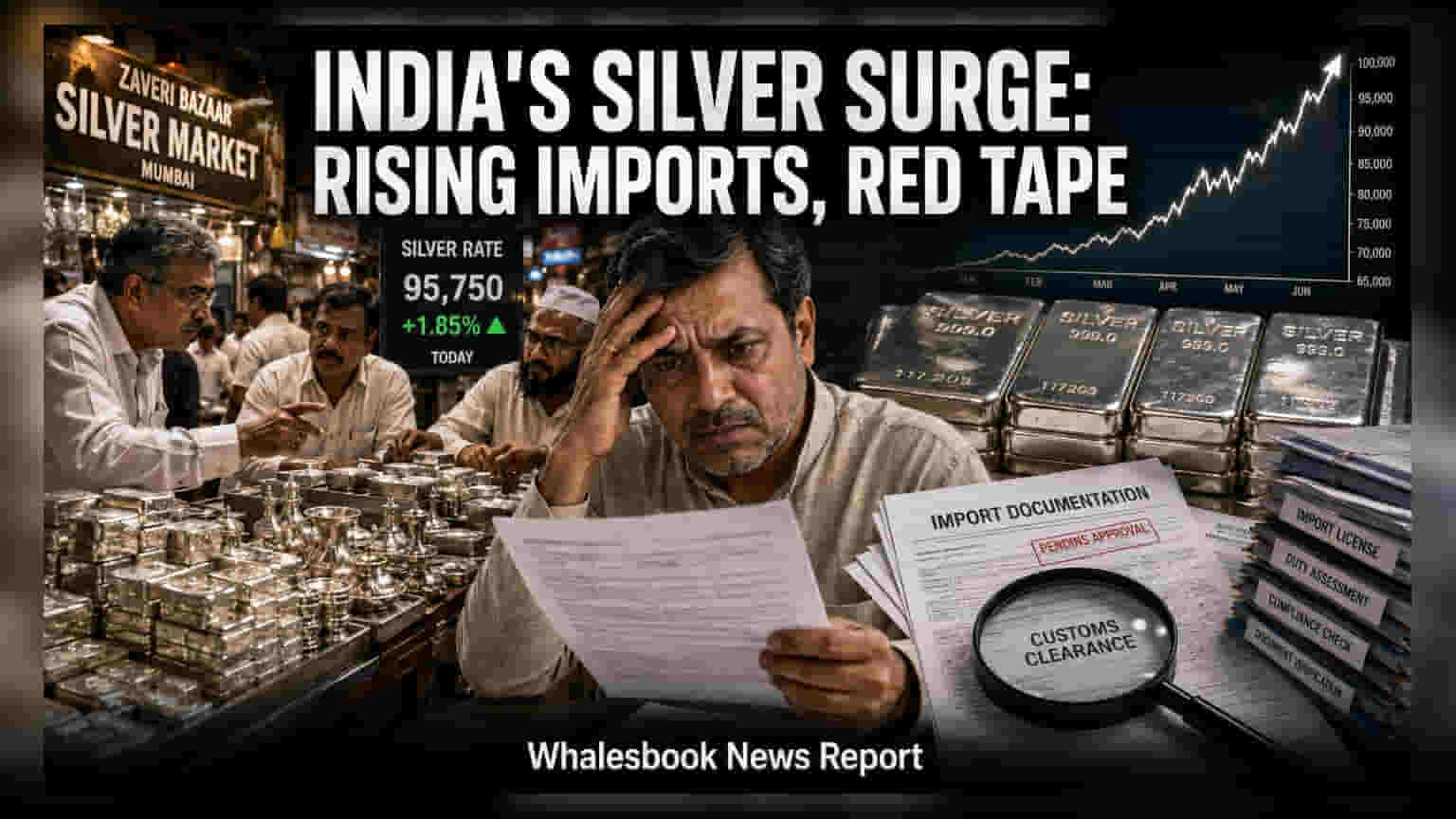
Silver imports into India are recovering, with approximately 90 tons cleared through the India International Bullion Exchange in August. While this improved supply has helped lower local premiums, importers continue to face delays due to strict new documentation requirements. The market remains sensitive to these administrative hurdles as demand from the upcoming festive season begins to build.
Silver imports into India, the world’s second-largest consumer of the metal, are beginning to recover after a challenging six-month period. Following a sharp decline earlier this year, fresh data shows that approximately 89.81 tons of silver were imported through the India International Bullion Exchange (IIBX) in August. This development is a notable shift, as it suggests that traders are finally navigating the licensing bottlenecks that had previously stalled supply flows.
This recovery follows the implementation of a new import licensing regime in May 2026. The Indian government introduced these rules to manage foreign exchange reserves more effectively, which inadvertently caused a significant slowdown in silver shipments. For several months, banks and traders struggled to secure the necessary permits to bring the metal into the country. The recent increase in import volumes indicates that, while the process is still difficult, more market participants are successfully obtaining the required approvals.
Despite the rise in supply, the import process remains far from smooth. Market participants are reporting persistent delays at customs, primarily driven by strict documentation requirements. Under the current rules, each shipment must be accompanied by a formal certificate of production origin. This is a standard not typically required for silver bullion, and many traders find it difficult to obtain this paperwork from suppliers abroad in a timely manner. As a result, importers are actively seeking sources in countries that can provide this documentation without delay, while others continue to face logistical bottlenecks that extend the time it takes for silver to reach the local market.
These supply chain issues have directly influenced domestic pricing. Earlier this year, the scarcity of silver kept local premiums significantly higher than global prices. With the recent increase in imports, these premiums have started to narrow, currently averaging around $4 an ounce. This reduction in the cost of importing is vital for the local industry, which relies on consistent supply to meet demand from jewelers and industrial users.
Looking ahead, the market’s focus is shifting toward the upcoming festive and wedding seasons. This time of year usually brings a surge in silver demand for both jewelry and investment purposes. While the recent increase in imports provides some relief, the industry remains dependent on a steady flow of new metal. Because logistical challenges and customs documentation requirements can add several weeks to the supply chain, the market is currently relying on a mix of existing inventories and the slow, consistent arrival of new shipments.
For market participants, the key monitorable remains the stability of the import policy. Since the licensing regime is tied to broader economic goals like managing foreign exchange reserves, any change in the currency or trade environment could lead to further policy adjustments. Traders and jewelers will be watching closely to see if the government eases documentation demands or if the current licensing process remains a permanent fixture of the trade.