

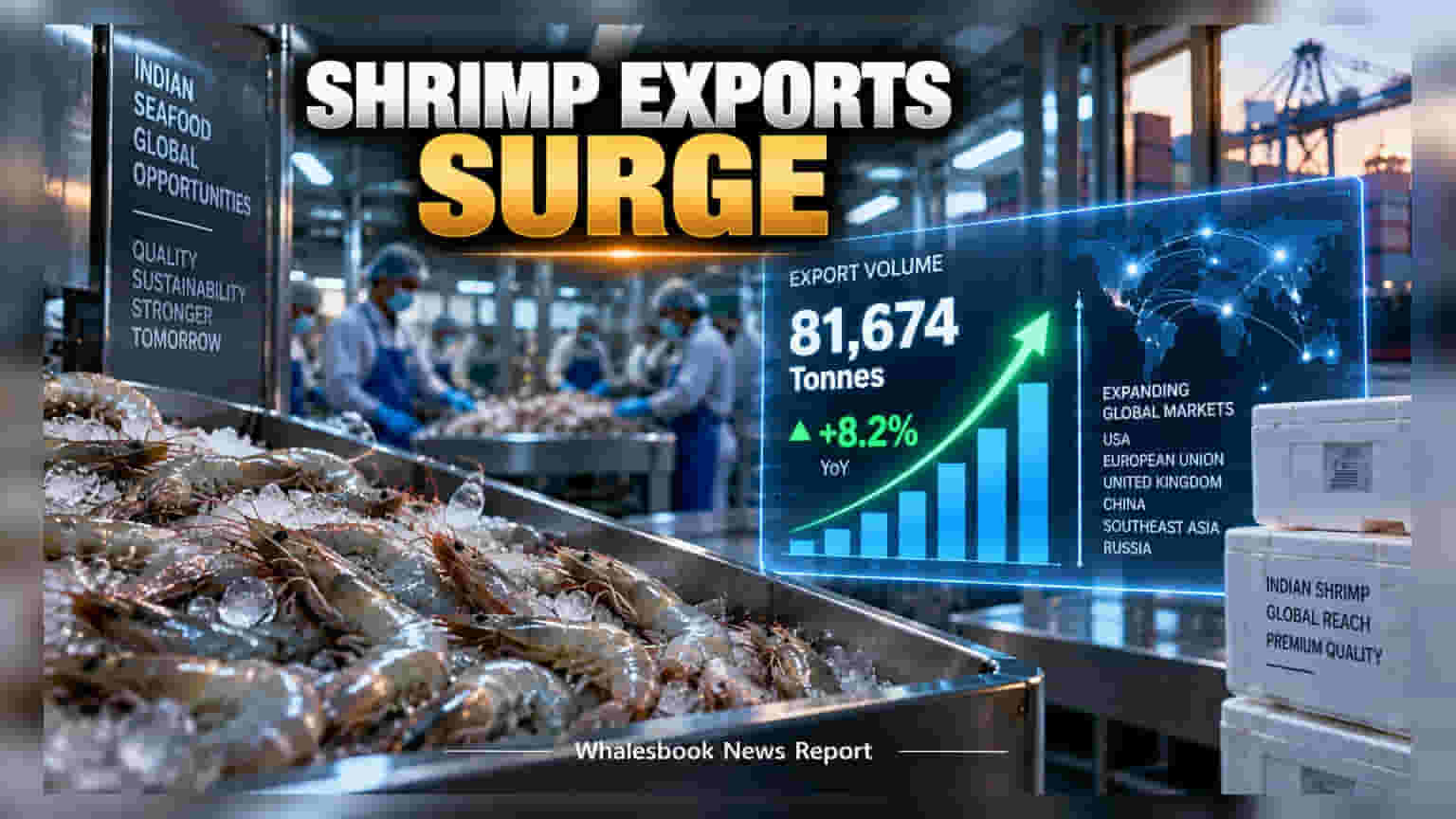
India’s shrimp exports reached a record 81,674 tonnes in July 2026, marking an 8.2% annual growth. This recovery signals a rebound for the seafood sector after a slow start to the year, driven by market diversification. Investors should note how this volume growth impacts the revenue and profit margins of major listed seafood exporters.
India’s seafood industry has reported a strong performance in July 2026, with shrimp export volumes hitting a record of 81,674 tonnes. This represents an 8.2% increase compared to the same month last year. For the first seven months of 2026, total export volumes have reached 455,489 tonnes, a 1% year-on-year increase that helps the sector recover from the slower growth seen during the first quarter.
This shift in export volume is largely attributed to a change in strategy by the industry. Rather than relying heavily on a single product for the US market, Indian exporters are now focusing on a broader mix of species. The production of black tiger shrimp, for instance, has found a growing audience in Southeast and East Asian markets. Additionally, exporters are expanding their reach into the European Union, the United Kingdom, Russia, and China to reduce their dependence on any single country.
For investors monitoring the sector, companies like Apex Frozen Foods and Avanti Feeds are often viewed as key players in this space. While higher volumes generally point to better top-line growth, profitability in this sector is sensitive to several factors. The transition to higher-value products can help, but it requires consistent demand and efficient supply chain management.
Despite the positive volume data, the sector faces inherent risks that investors should monitor. Stricter quality and antibiotic residue standards in key importing nations like the US and EU remain a significant hurdle. If shipments are rejected due to quality issues, it leads to financial losses and reputational damage. Furthermore, the cost of raw materials, such as feed, can fluctuate, which often puts pressure on the profit margins of seafood companies. Changes in container shipping costs and availability also impact the final realization for exporters.
Looking ahead, the market is waiting to see if this monthly growth rate can be sustained. As the US market shows signs of normalizing, the industry's ability to maintain its momentum in newer markets will be crucial. Investors should track future quarterly financial results to see if higher export volumes are successfully translating into better profit margins and cash flow, rather than just higher revenue.