

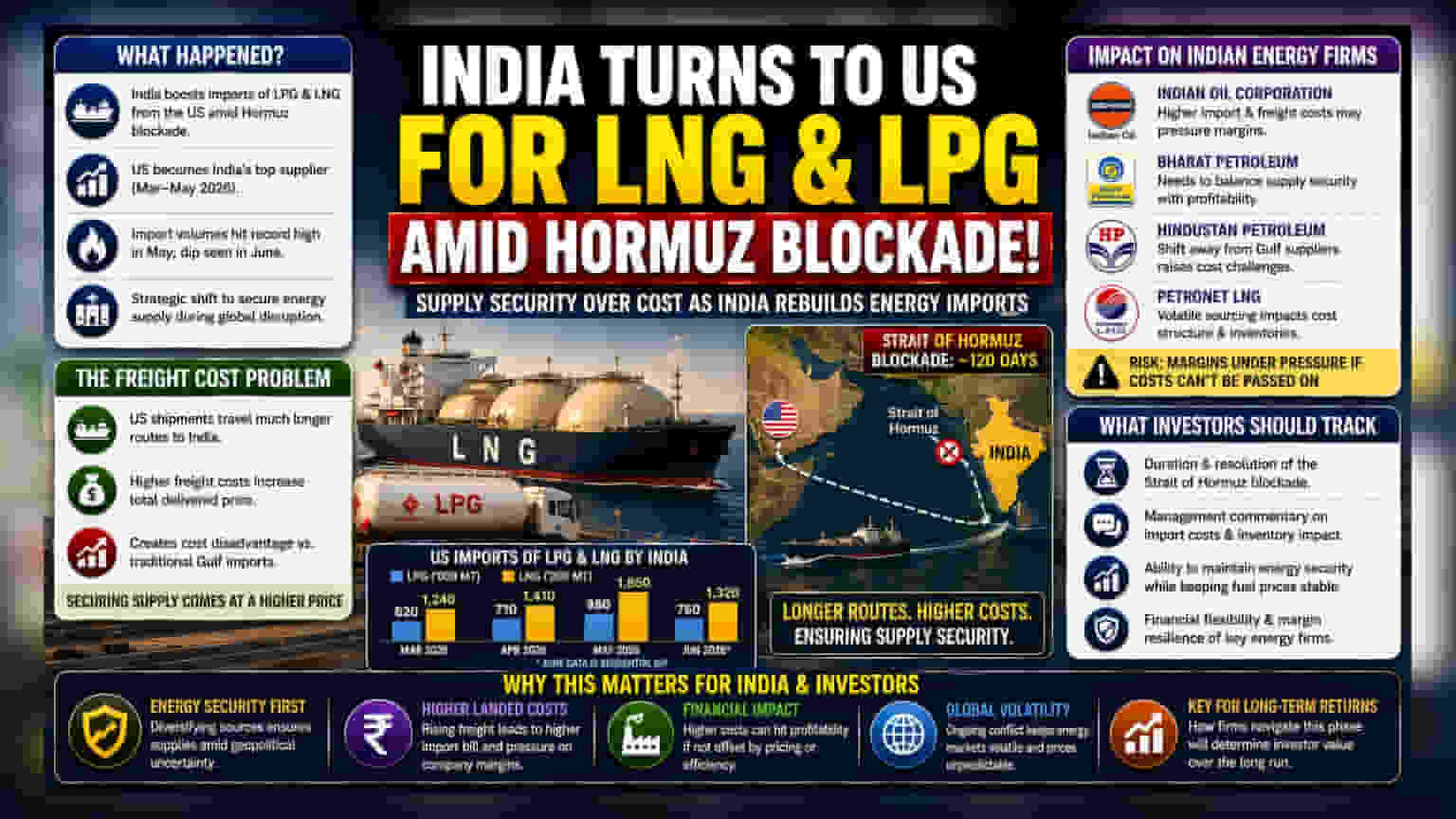
India has turned to the US as its primary supplier of LPG and LNG for three months, bypassing traditional Gulf routes due to the 120-day Strait of Hormuz blockade. While this diversification secures energy needs, the longer freight routes are increasing delivered costs, which could impact the margins of domestic energy firms.
What Happened
India has significantly altered its energy import strategy by increasing reliance on the United States for Liquefied Petroleum Gas (LPG) and Liquefied Natural Gas (LNG). This shift follows the ongoing blockade of the Strait of Hormuz, a critical maritime chokepoint that has now persisted for approximately 120 days. Data shows that the US emerged as India’s top supplier for these energy products from March 2026 to May 2026. While import volumes from the US reached record highs in May, there has been a sequential dip in June, reflecting the volatility in global energy supply chains and the immediate pressures of the ongoing conflict in West Asia.
The Freight Cost Problem
Moving energy supplies from the United States to India involves significantly longer shipping routes compared to the traditional sourcing routes from the Gulf region. This logistical change has directly resulted in higher freight costs, which increases the total delivered price of these commodities. For an energy-import-dependent nation like India, rising freight charges can impact the overall cost of energy. Analysts note that while this shift is necessary to ensure supply security during the blockade, it creates a cost disadvantage compared to traditional, shorter-haul imports from the Middle East.
Impact on Indian Energy Firms
Major Indian energy players, including Public Sector Oil Marketing Companies (OMCs) like Indian Oil Corporation, Bharat Petroleum, and Hindustan Petroleum, as well as gas importers like Petronet LNG, are at the center of this supply chain transition. These companies typically manage the balance between ensuring consistent fuel supply and maintaining stable profit margins. When import costs rise due to higher freight and logistics, there is a risk that profit margins could come under pressure if these companies cannot pass the additional costs to the end consumers. The shift away from Gulf suppliers, who historically provided a more cost-effective logistics solution, requires these firms to recalibrate their purchasing strategies to manage financial performance.
What Investors Should Track
For investors, the key monitorable is the duration and resolution of the Strait of Hormuz blockade. A return to traditional sourcing from Gulf countries would likely lower freight costs and improve the operating environment for Indian energy importers. Investors may also track management commentary from companies like Indian Oil Corporation and Petronet LNG regarding their import cost structures and any inventory valuation impacts. Finally, the ability of these companies to manage energy security while keeping fuel prices stable for the domestic market remains a crucial factor in evaluating their financial flexibility during this period of global supply uncertainty.