

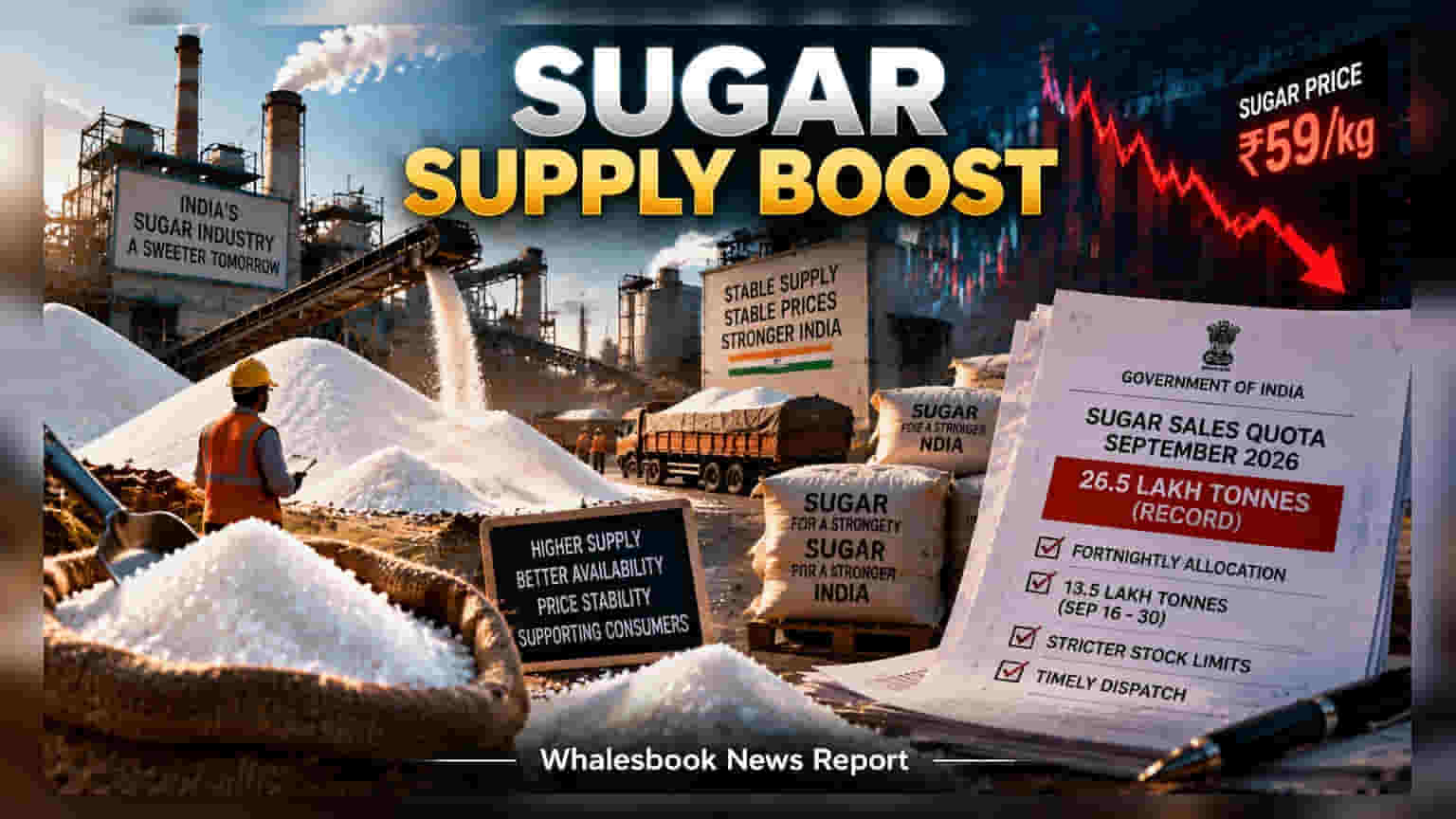
The government has increased the September sugar sales quota to a record 26.5 lakh tonnes, adopting a new fortnightly allocation system to curb retail price volatility ahead of the festive season. This move aims to ensure adequate supply and prevent hoarding, though it places increased operational pressure on sugar mills to meet strict sales and dispatch deadlines.
The Indian government has set the total sugar sales quota for September 2026 at a record 26.5 lakh tonnes. In a significant shift from previous practices, the government has transitioned from a monthly allocation system to a fortnightly structure to better manage supply and control retail prices during the busy festive season.
For the second half of the month, covering September 16 to 30, the government has allocated 13.5 lakh tonnes. This move is part of a broader effort to prevent price spikes, with retail sugar prices currently hovering near ₹59 per kg. Alongside the higher sales quotas, the government has also implemented stricter controls, including a reduction in stock-holding limits for sugar dealers to 2,000 quintals, effective September 15, 2026.
Operational Pressure on Mills
The new regulations bring strict compliance requirements for sugar mills. Under the fortnightly system, mills are mandated to sell at least 40% of their allocated quantity within the first week of the period, with the remaining 60% to be sold in the second week. Furthermore, the government has set a strict timeline for logistics, requiring sugar to be dispatched within seven days of invoice generation.
These measures are designed to ensure that sugar actually reaches the market rather than remaining in mill warehouses or dealer stocks. The ministry has clearly indicated that unsold quantities from previous periods will not receive extensions, and failure to comply or provide valid explanations could lead to restrictions on future allocations. For sugar companies, this implies a need for tighter logistical planning and cash flow management to align with these shorter sales cycles.
Investor Context and Market Risks
While the government's move aims to keep consumer prices stable, it introduces specific challenges for sugar manufacturers. The mandate to liquidate inventory within strict, shorter windows may create pressure on realization prices, especially if market supply becomes excessive. If the government’s intervention succeeds in dampening retail prices, mills may see a moderation in their profit margins compared to periods of supply shortages.
Additionally, the operational cost of managing strict fortnightly sales and 7-day dispatch mandates could impact the working capital cycle for some players. The duty-free import of 10 lakh tonnes of raw sugar, which remains a key government policy, further highlights the focus on maintaining domestic supply. Investors monitoring the sector should track how these stricter sales targets and the overall import policy influence the profit margins and inventory turnover of major sugar producers in the coming quarters. The impact of these controls on the retail price trend and mill compliance will be the next key updates to watch.