

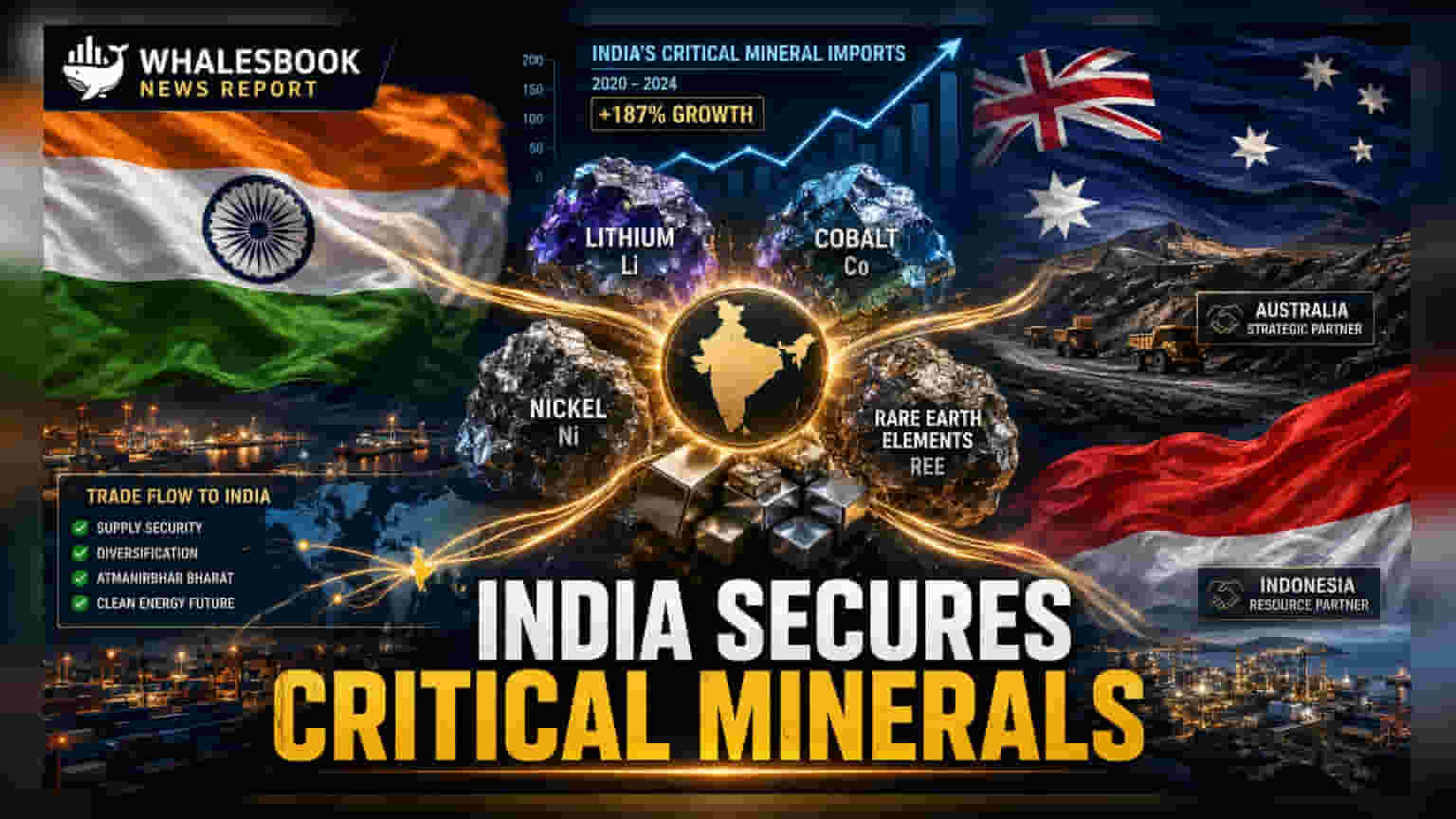
India is working to secure critical mineral supplies from Australia and Indonesia to support its electric vehicle and renewable energy industries. This strategic move aims to reduce the nation's heavy reliance on Chinese imports, which currently dominate the global supply chain for these essential resources.
India is actively pursuing new trade partnerships with Australia and Indonesia to source critical minerals, which are essential for the production of electric vehicle batteries and renewable energy technologies. By diversifying its supply sources, New Delhi is attempting to lower its dependence on China, a country that maintains a dominant position in the global trade of these strategic materials.
Current Trade Gaps and Future Potential
While the strategic intent is clear, official trade data shows that actual imports remain limited. India currently accounts for only 0.11% of Australia’s total critical mineral exports, which amounts to approximately $3.7 million. Similarly, India’s imports from Indonesia make up just 2.06% of that nation's global supply. On the flip side, these two countries currently provide only a small fraction of India’s total mineral needs, with Australia and Indonesia accounting for 0.14% and 0.28% of India's imports, respectively. This data indicates that while the current trade volume is low, there is significant room for growth as India's domestic manufacturing needs for batteries and clean energy hardware rise.
Challenges in Shifting Supply Chains
Breaking into these markets involves navigating existing trade dynamics, as China remains a primary partner for both nations. China currently absorbs roughly 91% of Australia’s critical mineral exports and also serves as a major destination for Indonesian shipments. China’s 17.6% share of global exports in this category creates a high barrier for entry. For Indian companies and the government, the challenge lies in creating competitive supply chain logistics and long-term off-take agreements to attract these resources away from established trade routes.
Uranium and Energy Security
In addition to industrial minerals, India is exploring a potential uranium pact with Australia, which holds some of the world's largest uranium reserves. Such an agreement would fit into India's broader goal of energy security. Expanding into these resources could stabilize input costs for the Indian energy sector, though investors should monitor the timeline for these trade agreements and the associated costs of setting up new supply chain infrastructure. The ultimate benefit to Indian manufacturers will depend on how quickly these trade channels can be scaled and whether the cost of importing from these new partners remains competitive compared to existing global sources.